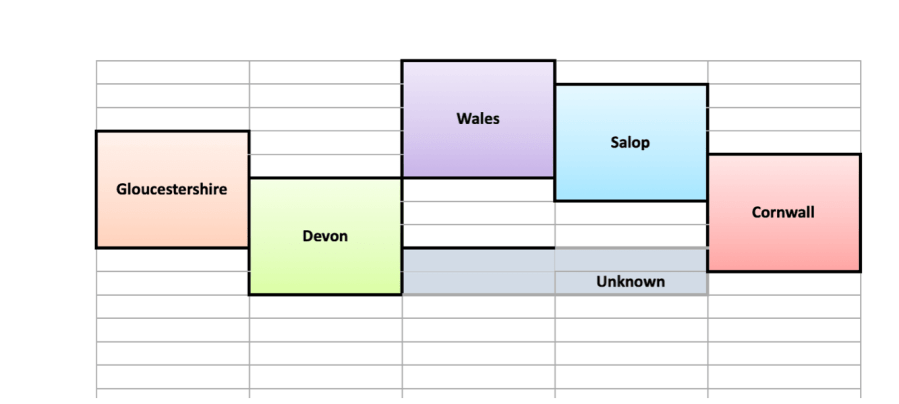
‘Mapping your Ancestors’ A Simple Guide Part 1 – #MyColourfulAncestry

The idea is simple. Start with yourself on the left and put your geographical details – usually place of birth. Then do the same for each generation of your ancestors in the following columns. Parents, grandparents etc. I have chosen to use English counties and ‘Wales’ as the county names were rather long! You could be more specific with towns or Parishes, or if your ancestors emigrated widely perhaps use countries.

(Download a blank 5 generation chart. Many thanks to J Paul Hawthorne https://geneaspy.com, and to Sophie@Derbygenes for bringing it to my attention)
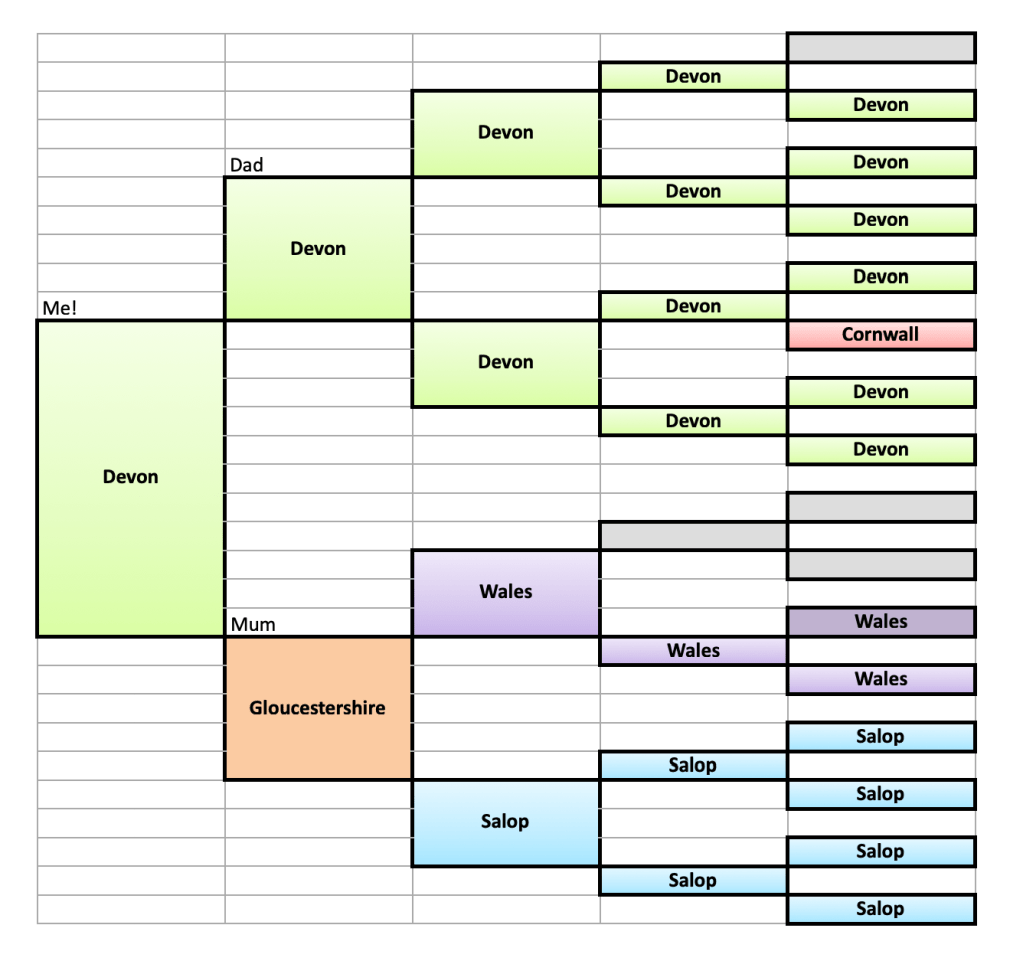
5 generation chart of birth places

From this, with a little IT magic it should be possible to create a map of the ancestors origins. (Anyone like to tell me an easy way to do that?)

I was born in Okehampton (the nearest town) as was my father, but we lived in Sticklepath. All the other Devon ancestors except one were born in Sticklepath or in Sampford Courtenay Parish of which Sticklepath was a part.

Salop is the old name for Shropshire or Shrewsbury. My Welsh grandfather was born in Merionethshire and his mother and her parents were from Denbighshire. The grey boxes are unknown ancestors who I hope soon to investigate using DNA.

It makes a colourful image to add to our family history, but this analysis also helps us investigate those unknown ancestors. Considering the geography helps when trying to identify which ‘Sarah Jones’ is likely to be the right one – logical reasoning using a map can help make sense of our evidence.

Always bear in mind however there will be ‘oddities’ like my Mother, the only one born in Gloucestershire. Such individuals stand out clearly and that draws us in to investigate. Why did her parents move? And, especially for more ancient ancestors, how – by canal, sea, rail or road.

Many trains from Wales went through Shrewsbury (See map). This was where my Welsh grandfather moved, in order to work in Bradley’s gentleman’s outfitters. Relatively easy access to visit family back in Wales. There he met his Shropshire lass and they moved to work in Wotton-Under-Edge, Gloucestershire, where Mum was born, before buying a shop in Bristol. From there my mother went to University in Devon and never really left!

If only I was artistic I would draw a map showing the Welsh shopkeeper whose son went to Shrewsbury by train where he met his love in a hat shop, then moved to Bristol to work for the aerospace industry alongside running their own greengrocer’s shop. Their student daughter travelled from Bristol, again by train, to Exeter’s University, gaining her degree. She took bicycle trips and some walks on Dartmoor during courtship, then helped her new Devonian husband run a lorry business. They took pit props and steel to Wales, thus completing the circle! They also transported some of the construction materials for ‘British Steel’, the yacht in which Chay Blyth circumnavigated the globe ‘the wrong way’ in the 1970s.

What would your ancestral maps look like?

For more inspiration Google ‘illustrated maps’. For some great examples, see Tom Woolley who offers articles on how to create your own too.

The next in this series will be accessible here
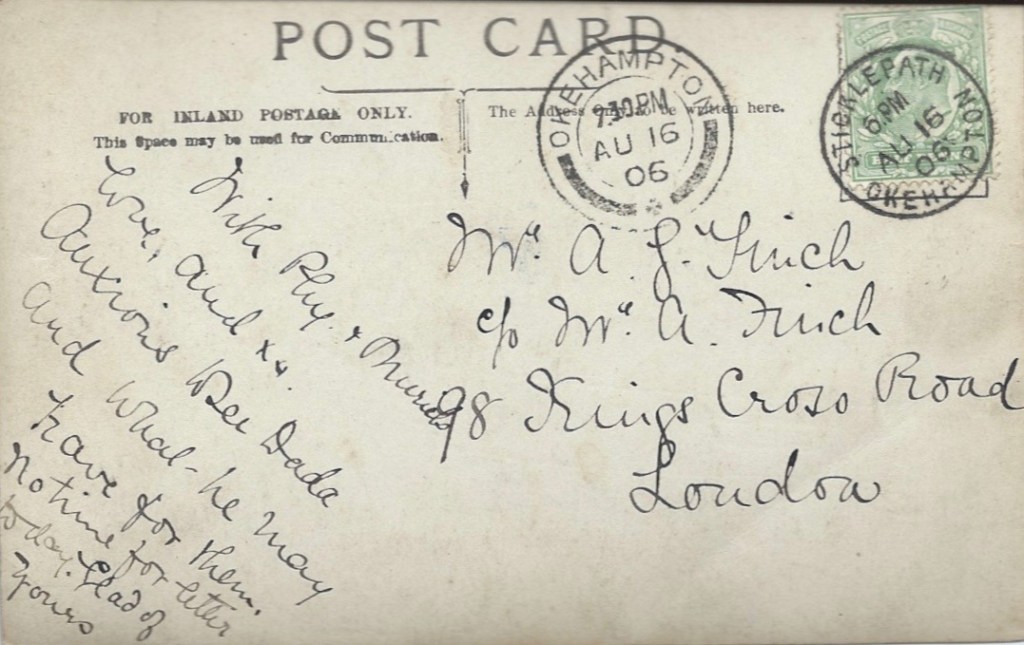
A Message to Dada

With Phyllis and Muriel’s love and kisses.

Anxious to see Dada and What he may have for them.

No time for letter today.

Glad of yours.

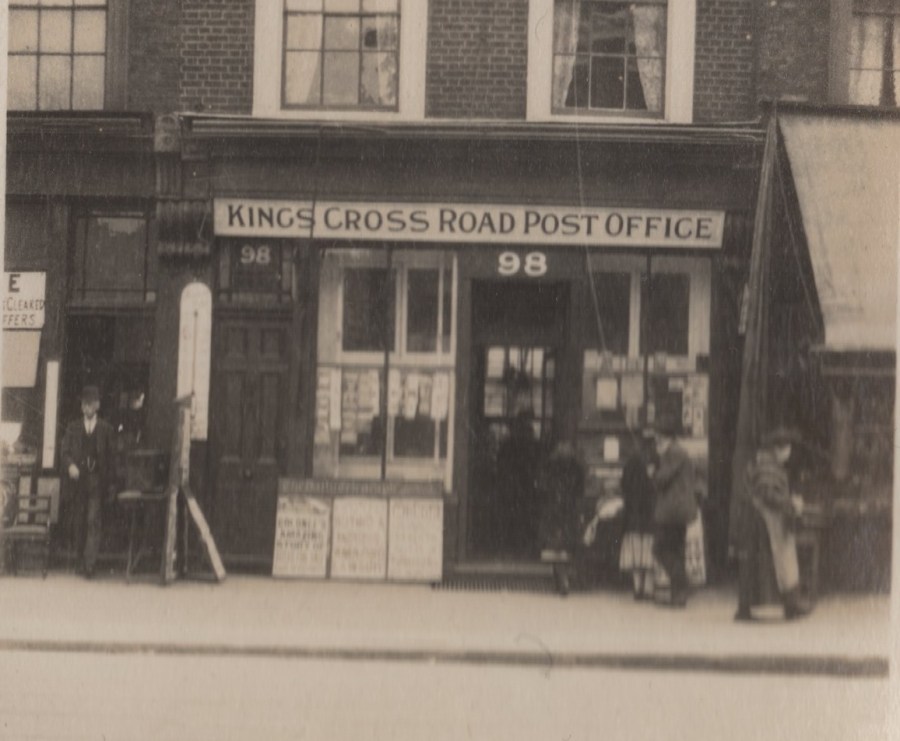
This postcard is addressed to Mr Albany George Finch ℅ Mr Albert Finch at 98 Kings Cross Road, London.

‘Cousin Albert’ Finch and his wife Susan ran the post office at 98 Kings Cross Road. Susan was born Finch too, sister to Albany George. The postcard was posted in Sticklepath, probably at the end of the day, franked 6pm and then travelled to Okehampton where it was franked again at 7.30pm on 16 August 1906. Muriel wasn’t quite two and Phyllis was not yet four years old. It is almost certainly written by their mother, Georgina (nee Ching), wife to Albany, who seems in a rush!

When we think of our ancestors, do we think of them at their age of death? Or perhaps at a particular time associated with a life event or story? Or do we consider all their roles across their lifetime, son, father, friend and so on? In her 80’s Muriel always referred to Albany as ‘my father’ in a rather formal way. I had never before pictured Albany as ‘Dada’.

It feels intrusive to read this intensely personal note, and that sense is not diminished by the 115 years that have passed since it was written.

Then there is that brief message. The children are ‘Anxious to see Dada and What he may have for them’. Do you think this is a veiled instruction reminding him to bring a little something home for his daughters? Or perhaps he often brought something from his travels? As the ‘sales rep’, so to speak, for Finch Bros. Edgetool Makers of Sticklepath he travelled quite extensively in Devon, Cornwall and Somerset.

The postcard tells us that on 16 August 1906 Albany was visiting relatives in the big city. Quite a journey, and for several days it seems. I wonder why he was there? His hosts Albert and Susan were at this address in both the 1901 and 1911 census records, so it was not to assist with a house move. Perhaps Susan was ill or needed his help for another reason? Could it have been a business trip? Perhaps a family matter that Albany preferred to disclose or discuss in person? Or could it have been his faith, his role as a local preacher within the Methodist Church, perhaps a conference that called him to London?

It seems likely he would have travelled by train from Okehampton or possibly Sampford Courtenay station via Exeter to London. Even if he were delivering belongings or collecting tools he would almost certainly have transported them by train.

As usual a small piece of evidence adds to his story but leaves us with more questions than answers! Do please share any other suggestions for his trip.

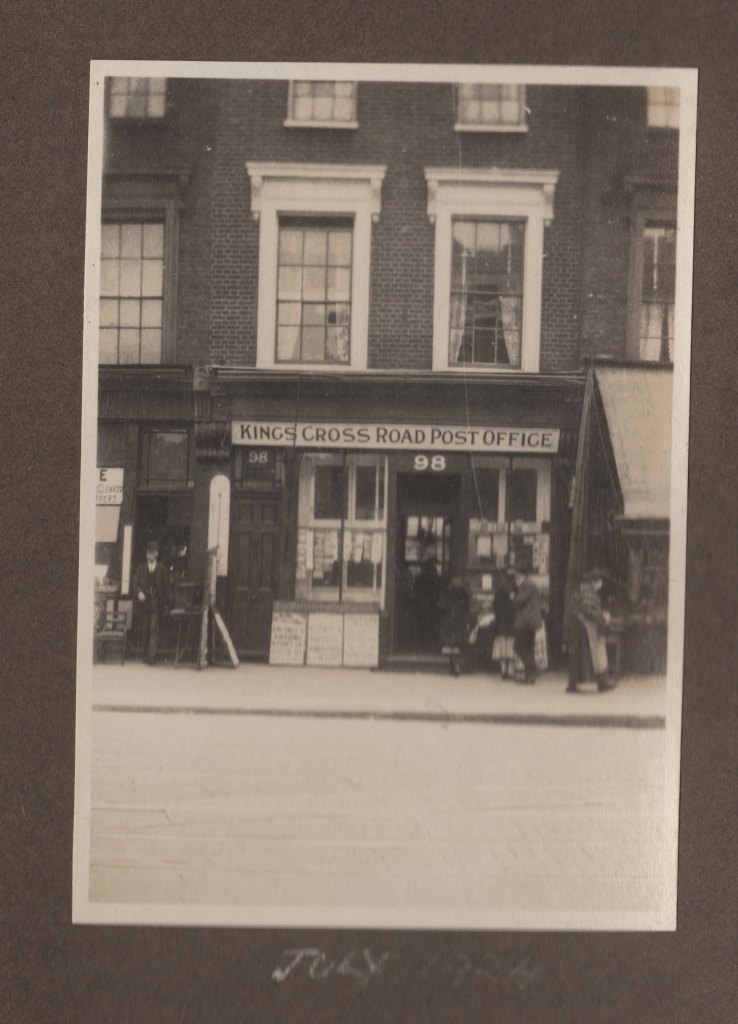
July 1924 Snap taken when Albany took his two daughters to London, well after both Albert and Susan had died. It will be interesting to see who lived there on the 1921 census when it is released next year.

Post Card captures a December train ride:

#OnePlaceWednesday

I love to collect #oldpostcards and photos with any relationship to #Sticklepath, its people, places or events. Often the picture shows things in the background or fashion for example that add interest. In my view the best postcards have been posted. Of course the stamp and postmark can be of interest but messages can allow us a fascinating glimpse into past lives. For example:

“I just caught the train at Oke, it was moving when the guard opened the door for me, the other was so late from B. Love D. All Good Wishes”.

The postmark is Tavistock 24th December 1909. Had she been visiting relatives? Taking Christmas greetings and a pot of jam to family? Or attending a nephew’s nativity play perhaps? Can you imagine her running along the platform in her ankle length dress and buttoned boots, the steam billowing in the frosty air? Or could this message be from a man?

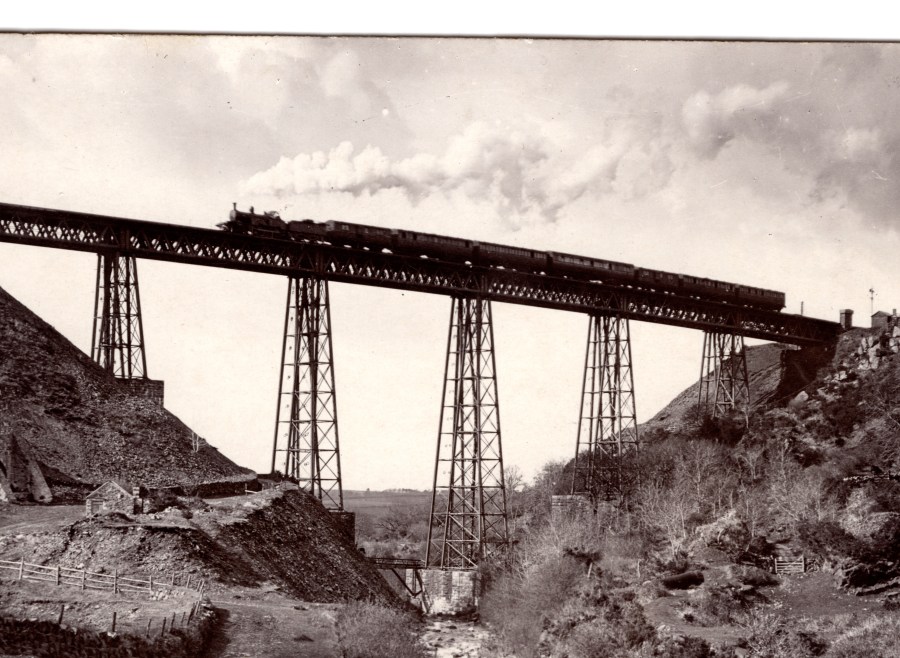
It seems our sender, D, had come from visiting the addressee, Miss Henning in Stratton. She would have caught the first train from Bude station to Okehampton and changed trains for the journey home to Tavistock. (The Bude line split from the main Plymouth line just after Meldon Viaduct, pictured above). Bude station opened in 1898 but very little evidence of the line or station remains today, being a victim of Dr Beechings cuts in 1966.

‘Oke’ or Okehampton Station, which opened in 1871, was similarly ‘cut’ and closed in 1971, but with the government ‘Restoring Your Railway’ initiative, services on the Dartmoor Line are expected to restart at some point in 2021 providing a regular, daily passenger rail service between Okehampton and Exeter.

As children we took a special train ride to Exeter before the line closed. I wonder how many people did that?

Cyndi’s list has a page all about genealogy postcards.

Read more about postcards from Family Tree Magazine.

Road Map to give an idea of the geography.