When heartache turns to happiness – for #52ancestors Valentine

The back of a photo postcard has two verses hand written on it. The first a Vera Lynn song, the second perhaps more personal?

Yours ’til the stars lose their glory
Yours ’til the birds fail to sing
Yours to the end of life’s journey* (original word was Story*)
This pledge to you dear, I bring

Yours in the grey of December
Here or on far distant shores

I’ve never loved anyone the way I love you
How could I, when I was born to be JUST YOURS

Signed “G’ from Gladys Cooper nee Underhill whose photo is on the other side.

It’s hard sometimes to realise, that you are half the world away. When to you my thoughts are turning, at the closing of the day. When the tasks are laid aside, and quietness steals upon the heart You seem to stand beside me dear, so near that all my fears depart. Then I am strangely comforted, and life takes on a brighter hue.

In the secret world of dreams it seems I talk and walk with you. And this must suffice until the time when you and more come back to me When heartache turns to happiness, and dreaming, to reality. G
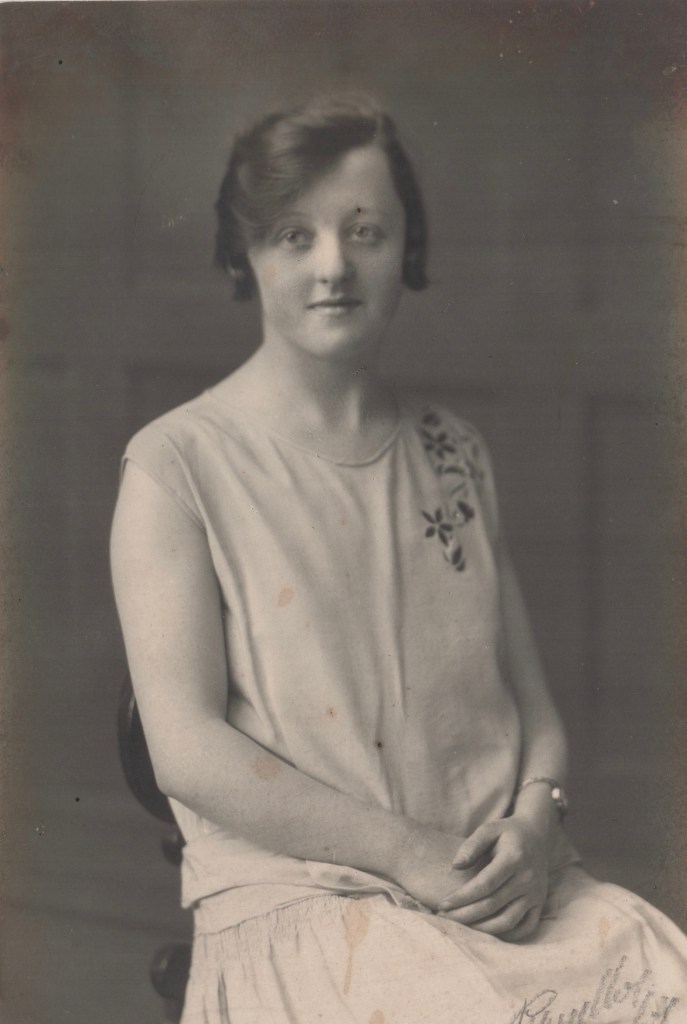
Gladys Cooper nee Underhill

I like to think her husband Jim took this little postcard or its twin with him in his breast pocket when he went to war. But then he went missing. It is a story of 16 months heartache, Gladys not knowing where her husband was. The newspaper takes up the story. (All articles held by The British Library, accessed via Britishnewspaperarchive.co.uk February 2021). The Western Times on Friday 27 March 1942 tells us:
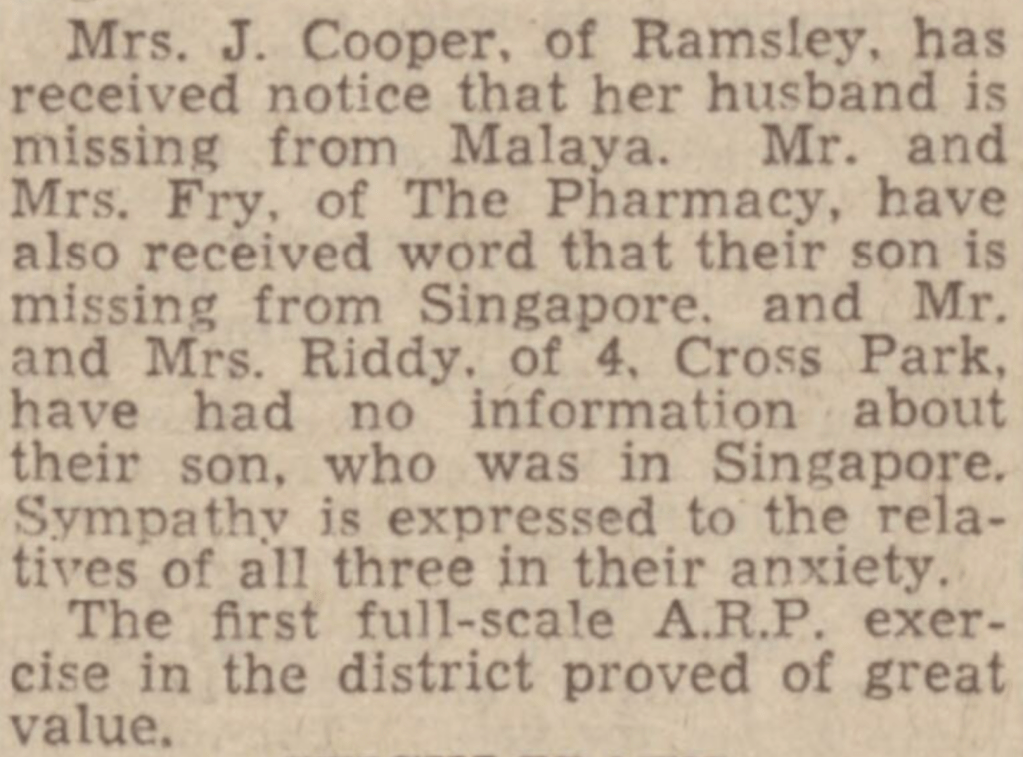
We next find in the Western Times on Friday 25 June 1943:
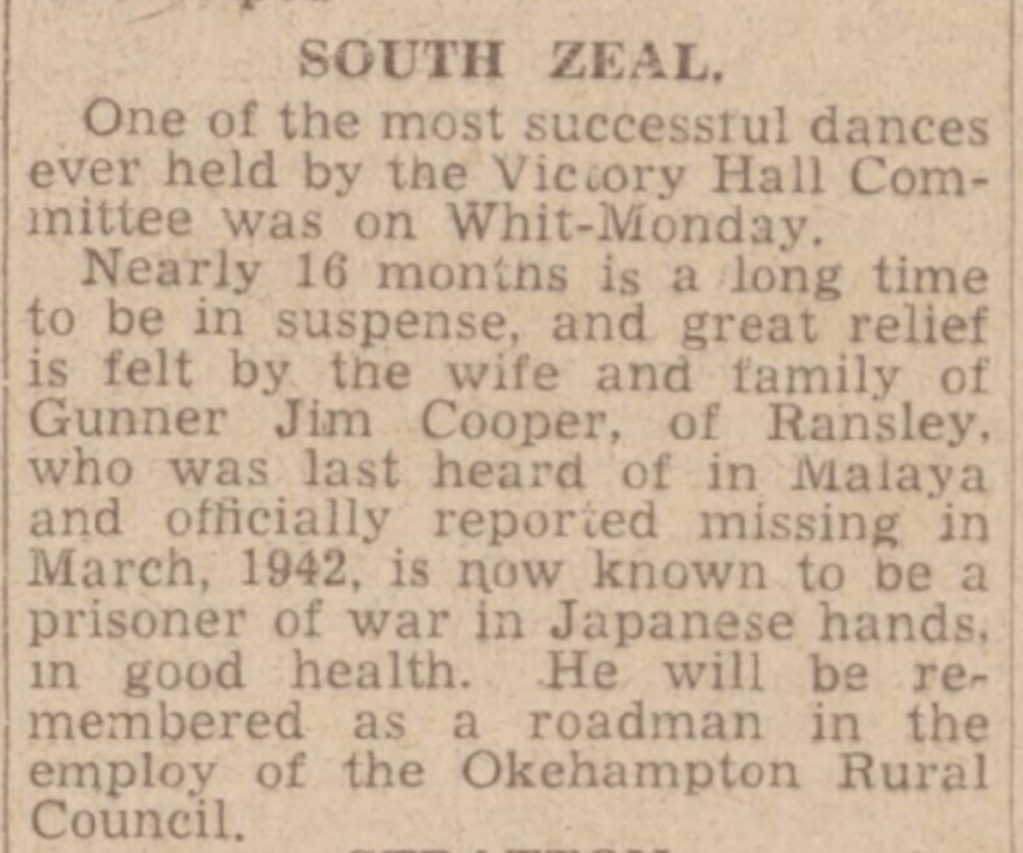
Whilst he is said to be in good health, we know many died in P.O.W.camps and all suffered hunger and many deprivations. What a relief must have been felt when an air mail arrived from Australia saying he was safe. Gladys will have been over-joyed. The Western Times – Friday 05 October 1945:

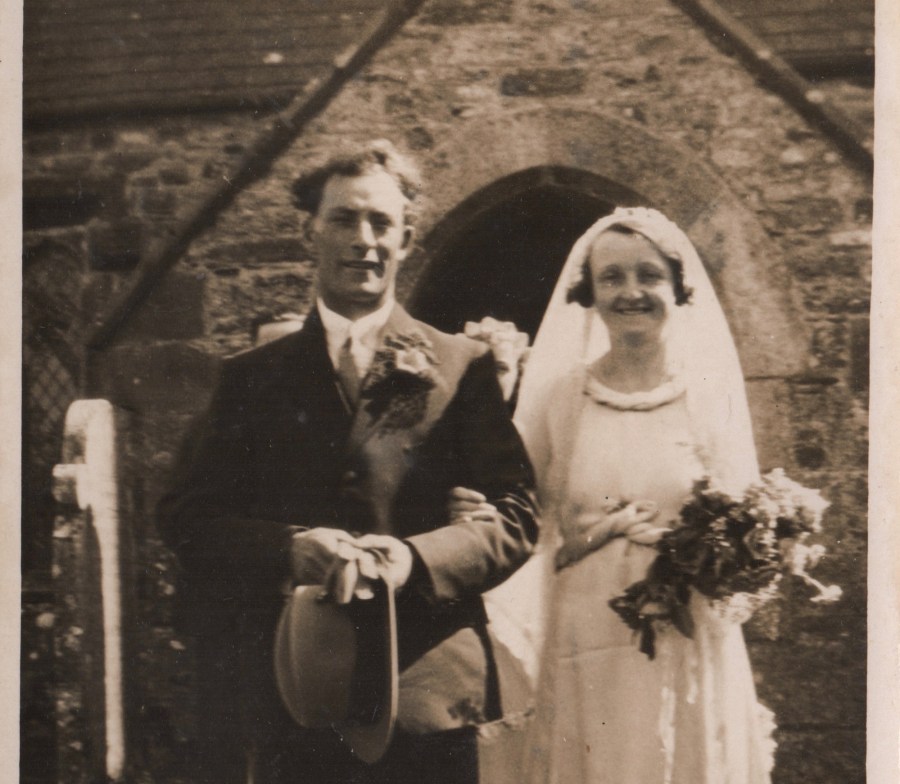
I wonder how many times Gladys had sat staring at her wedding photo during that long 16 months.

22 Sept 1935 James Cooper and Gladys Underhill

#SticklepathOne, #Sticklepath, #OnePlaceStudies, #OnePlaceJoys, #WWII,

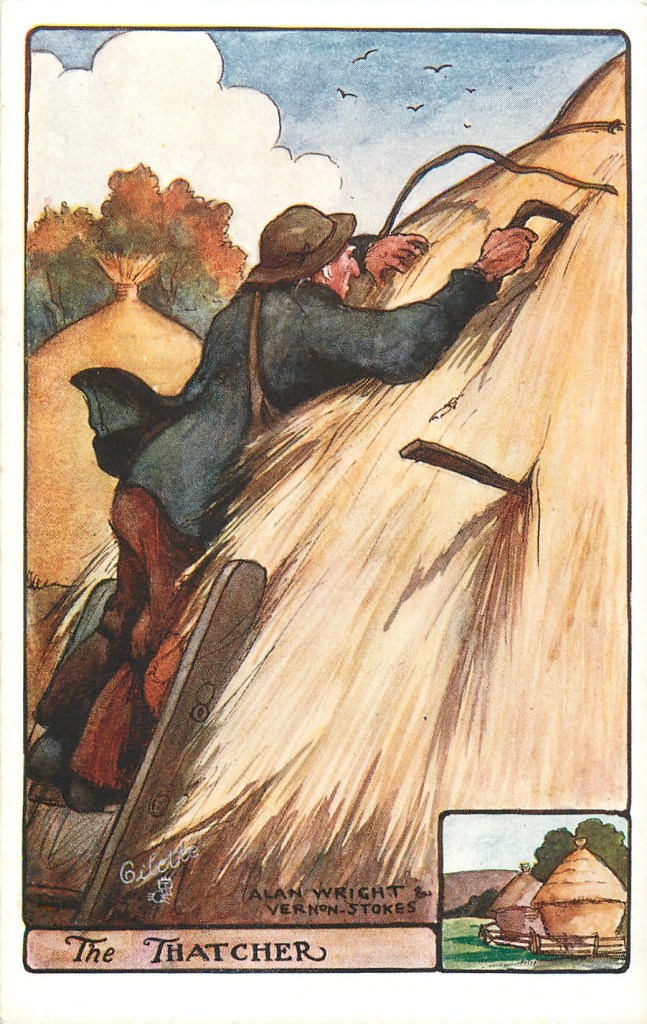
The Thatcher – 5 generations living side-by-side?

This is becoming more common now as people live longer, but 5 generations living in Sticklepath in 1851?

Let’s start with the family I am calling household ‘5’ in the 1841 census. It is hard to know where exactly they were living, but somewhere near Oaktree Park and the current village shop in Sticklepath. John Yeo, aged 42, an ag. lab. was living with his wife Jemima aged 40, his 4 children and his grandfather. The children were James, 17, also an ag.lab., Mary a worsted spinner aged 15, John aged 9, and William aged 3 months. The grandfather (baby William’s great grandfather) was William Way aged 78 who is described as a thatcher. Was he still thatching at 78? We will probably never know.

1907 The Thatcher a DB Tuck postcard https://tuckdbpostcards.org/items/73156

Ten years later 1851 census, taken 30 March shows William Waye (different spelling) ‘former thatcher’. It seems John Yeo may have died as Jemima Yeo and son John aged 10 are now living, along with our thatcher, in the household of James Crocker aged 28y, Cordwainer, and his wife Mary A Crocker aged 25 a wool sorter.

For every record you find there are immediately at least two more records needed and several questions you need to go and find the answers to! There should be records of John Yeo’s death and burial, and of a marriage for Mary Yeo to James Crocker, and of course we need to follow the family to the next census. A Cordwainer is a shoe-maker, especially one who makes new shoes as compared to a cobbler who mends old shoes for example. Mary having been a worsted spinner at 15 is now a wool sorter – is that a promotion I wonder?

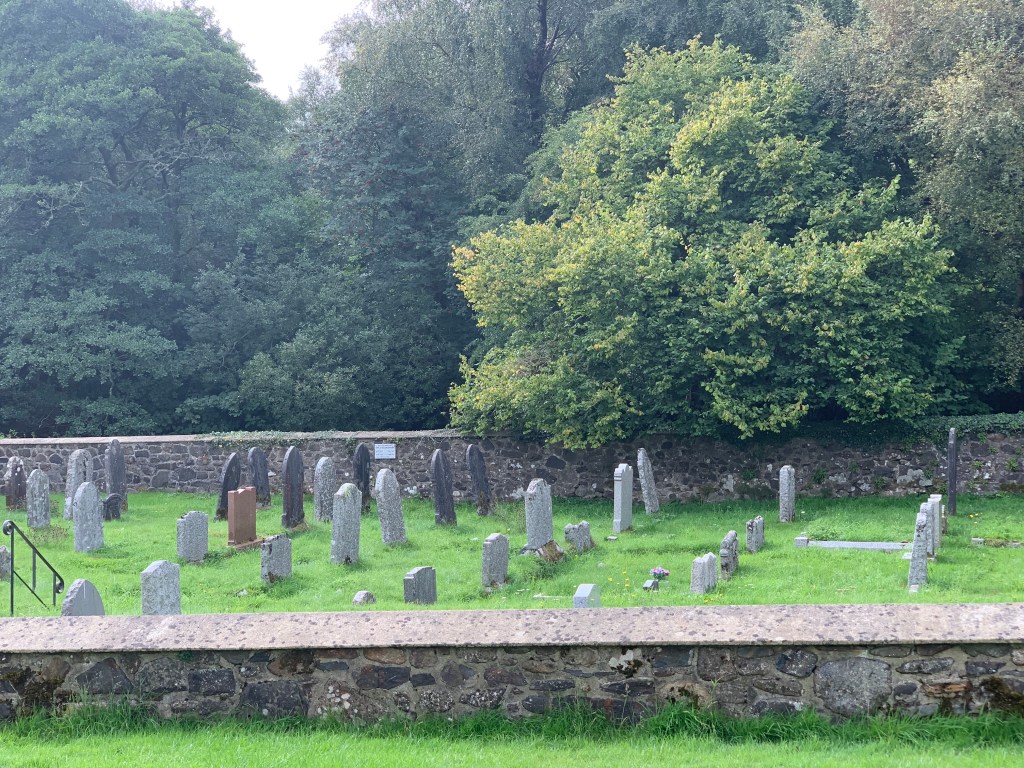
Sadly though, the burial records show that just one month later, on 29 April 1851 William Waye was buried by Rev WS Best in Sticklepath ‘Quaker burying ground’. A note is made in the register that at his graveside were children, grandchildren, great grandchildren and great great grandchildren. So a day or two earlier if passing through Sticklepath we could have seen 5 generations of the one family.

It is always a good idea to look at other burials in close proximity in the register. Sadly on 21 May, less than 4 weeks after that, the family would have been mourning the loss of William Waye Clarke, great great grandson of the thatcher.

Sticklepath Quaker Burying Ground 2020

Did you wear a school uniform?

Jayne Shrimpton has written an interesting article about school uniforms in this month’s ‘Discover Your Ancestors’ periodical. I am sure we all have school uniform stories and memories, please share some.

Sticklepath school (Sampford Courtenay Sticklepath Council School) which took pupils aged 5-14 up to 1931, did not have a uniform, but on 26th September 1921 they obtained football jerseys for the team with vertical blue and white stripes. There was not uniform when I went, by which time it was a ‘junior’ school only.

Later I went to Edgehill College, Bideford, which took international students, so no local uniform shop for me or quick ‘pop in’ to BHS! I had to go to Dickins & Jones in London to get my uniform suit and blazer and beret. We paraded in these every Sunday to chapel and church. Although I was unaware of the shop’s history*, I felt the pressure of its status and was thoroughly intimidated. A little Devon girl, used to inheriting hand-me-down clothes, in the big city after a long journey, being properly measured by austere ladies, fitted and kitted out! On a more day to day basis we had open necked shirts and jumpers (1971). We certainly were not allowed to wear trousers!

Photographs of the brother school Shebbear show an even more formal and uniform uniform in about 1950:

Prize day? About 1950?

with regulation short and tidy slicked back hair, though the loose fitting trousers and most importantly, the ‘see your face in it’ rigorously hand-polished shoes are in danger of being overlooked in the photo above!

Roger Bowden with lifelong friend Matron Blight

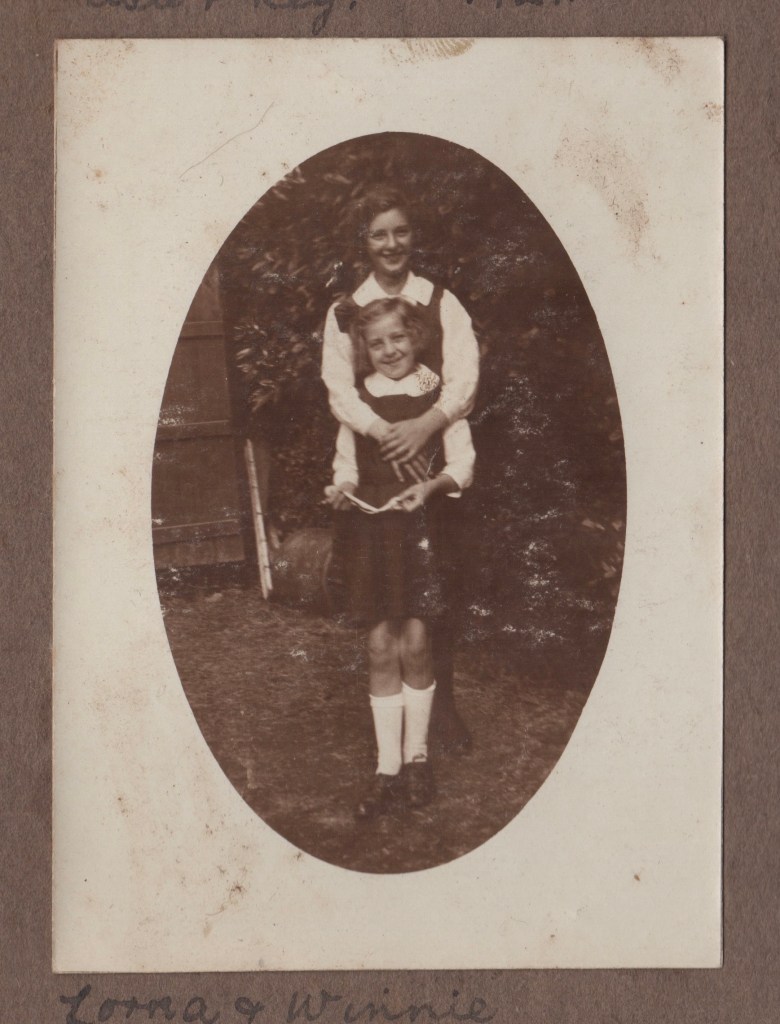
Looking a little further back, to the 1920s I note the younger students wore white socks – we used to joke in the 1970s that we should wear white socks for our music exams as they would make us look younger and the examiner might be more sympathetic! These are from Miss Phyllis Finch’s album. She was a geography teacher, in training, during the early 1920s.

The older girls as above wore thick dark stockings.

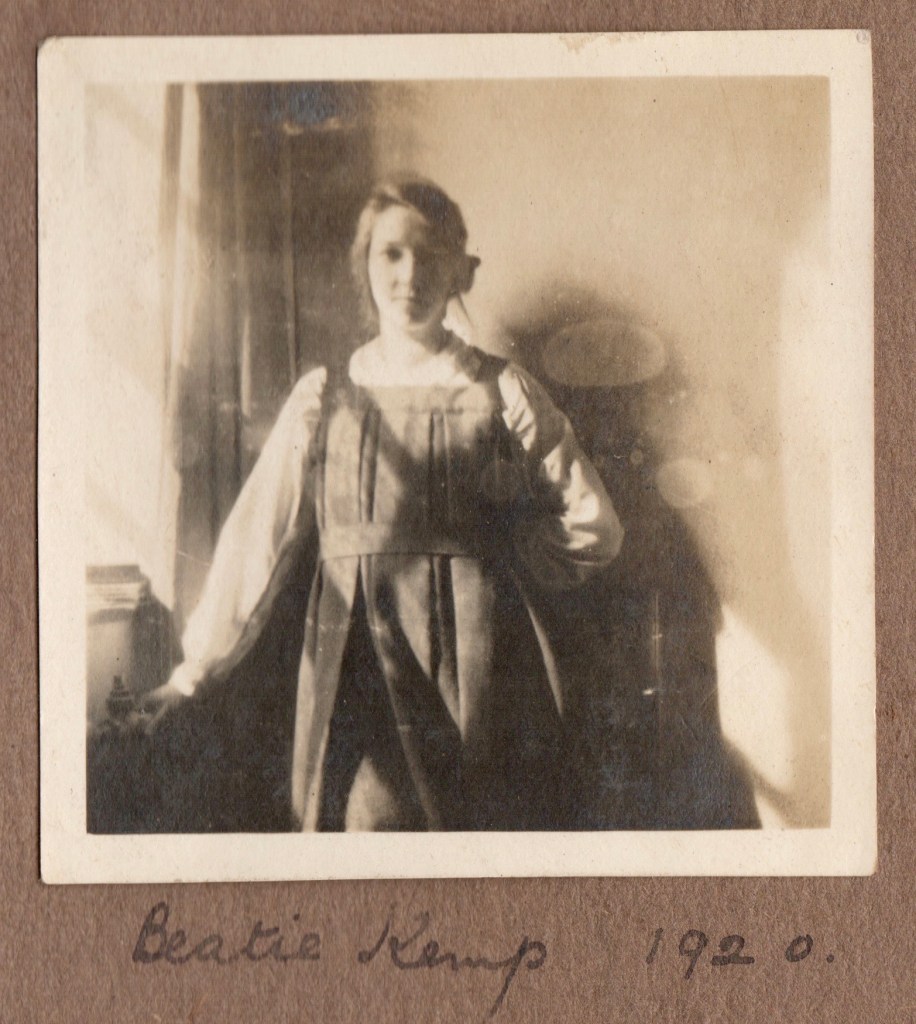
Jayne Shrimpton tells us this ‘gym slip’ originally designed for sports was increasingly used as school uniform. Certainly looks practical, and the layers would make it quite warm with woollen stockings.

I have just such a home made gym slip worn by Rose Ching in 1923 at Exeter University, with a photograph showing her modelling it with the team. Almost 100 years old. Above knee at the time, with the enhanced stature of today it is unlikely to be worn again! Anyone know of a good home for such items?

Do share your own school uniform stories!

*Wikipedia tells us:

In 1790, Dickins and Smith opened a shop at 54, Oxford Street. In 1830, the shop was renamed “Dickins, Sons and Stevens”. In 1835 it moved to the newly built Regent Street, becoming Dickins & Jones in the 1890s

Bought by Harrods in 1914, and in 1959 both were acquired by House of Fraser. By 2007 Dickins & Jones just became an in-house fashion brand of House of Fraser.

https://en.wikipedia.org/wiki/Dickins_%26_Jones