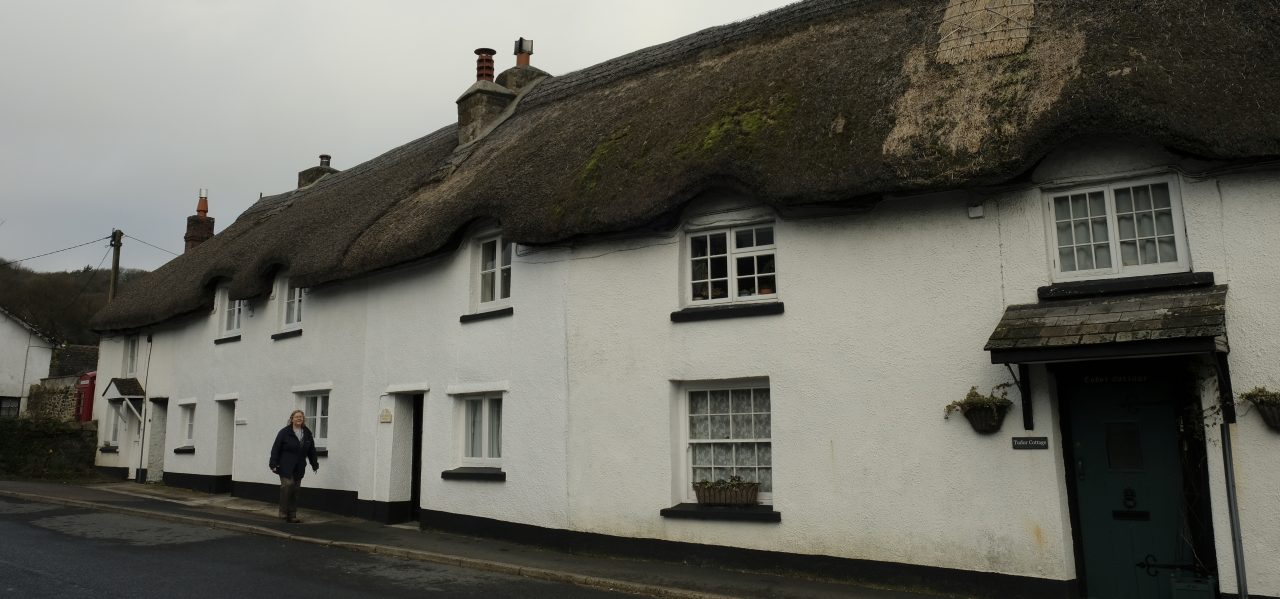
Naomi Finch (1872 – after 1949) A Devon lass in South Africa for #OnePlaceWomen on #OnePlaceWednesday

#Sticklepath #OnePlaceStudies #Genealogy #Finch #SticklepathOne

It is more difficult to investigate women than men in your family tree.  Their occupation is often left blank on census forms, as if they were sat around doing nothing. They are less likely to create records such as those associated with buying property, voting or tax.  Luckily Muriel Ching Bowden (nee Finch) told us about Naomi, Auntie Noni, of whom she had few, but very fond memories.

Rebecca Finch with daughter Naomi

Naomi, the youngest child of George and Rebecca Finch, was born in 1872. We first find her in the census 1881, a scholar aged 8.  She was living in Temperance Cottage (now Primula) in Sticklepath, with her parents, and siblings James (an edge tool maker), Jessie ( a dressmaker) and Thomas aged 15 (‘edge tool maker’s son’). Soon after the census her brother Albany married Mary Trace, they had 6 children of whom only two survived beyond infancy, Alfred and Jessie.

Sadly her father died suddenly when Naomi was 12, so her mother took over running the edge tool business in 1885.  In 1891 we find them still at Primula, with sister Susan and brother Thomas.  Thomas (25) is now an edge tool maker.  Neither Susan (32y) nor Naomi (18y) have an occupation recorded.  Rebecca died in October 1891 and 5 months later Albany’s wife, Mary died.  Muriel thought that Naomi kept house for Albany and cared for the children after Mary died, until his second marriage. This would have been necessary as Albany and his two brothers had taken over the business from his mother, and as he was in charge of sales, he often took business trips.

Naomi centre back with sibling Susan in front of her and sister-in-law Mrs Thomas Finch also seated. Niece and nephew, Jessie and Alfred Finch before he went to Chile, on the back row at either end. Cousin Albert married to Susan standing back towards the left.

On the night of the 1901 census Naomi was in Cleave House Sticklepath with her brother Albany and his 2nd wife Georgina, likely helping to run it as a boarding house, though of course her occupation is left blank.  Georgina went on to have two children. Naomi may have helped with the new babies though she did not stay with the family long term.

Muriel explained that Naomi went to South Africa as a ladies ‘companion’ , and likely travelled a great deal with her.  We are lucky to have this amazing photograph – presumably with the lady she was housekeeper/companion for.  The sign on the cart, as well as the studio set up, reminding us of the apartheid regime then prevailing:

Taken Port Elizabeth

The next record we have of Naomi is travelling in 1931 on the Guildford Castle, (a Union-Castle Steamship Co. Ltd ship no 132611, passenger list accessed via Ancestry.co.uk).  Aged 58y she described herself as a Housekeeper and she is travelling from London to Algoa Bay, (Port Elizabeth, South Africa), stating she is normally resident in an “other part of the British Empire”, not England.

Muriel’s fond memories of Naomi are not from early childhood but of her return to Sticklepath aged 77 after ‘her old lady’ had died.  Jessie, Albany’s eldest daughter, now Jessie Barron, went out to accompany her on the way home.  Jessie had to have several new dresses made especially for the voyages.  (When I have been able to check out Muriel’s facts, as here, she has always been correct.)  Here is the passenger list for the Edinburgh Castle (Union-Castle Steamship Co.Ltd no 182892 accessed via Ancestry.co.uk), from Durban, Port Elizabeth, Cape Town and Las Palmas, arriving in Southampton 23 Dec 1949.

Naomi, aged 77 had had many adventures and told many a good story.  She was very amusing and entertaining.  Muriel was sorry when Naomi announced that Sticklepath was far too cold and wet, and that she was returning to South Africa.  
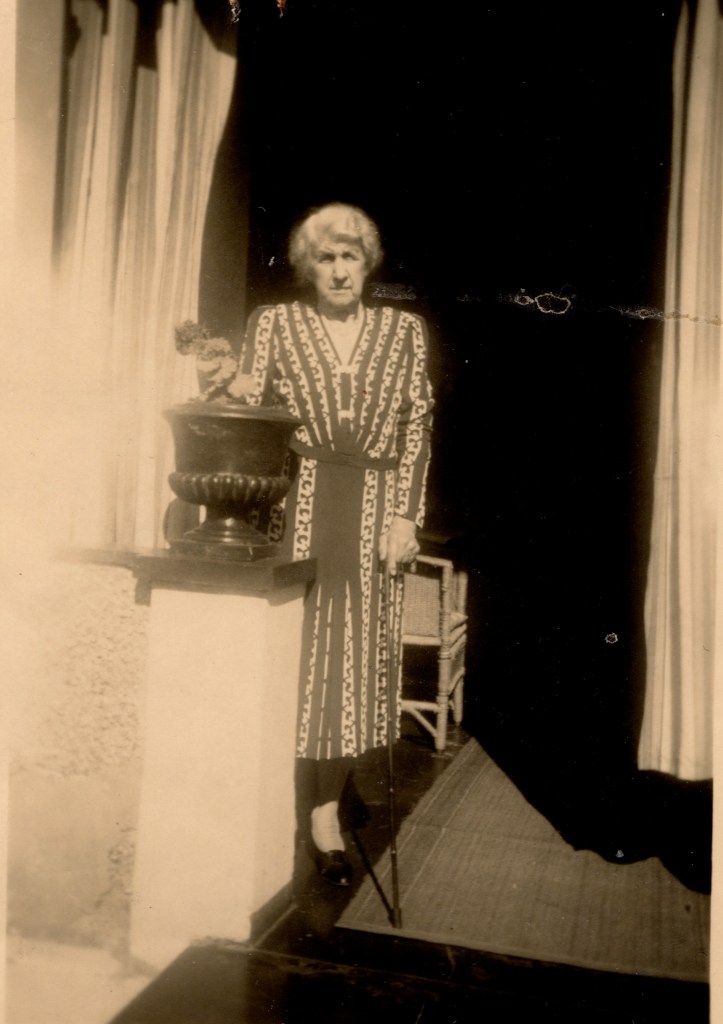
Faint inscription on the back Best Love to Muriel from Auntie Noni. Possible date 1947

Spring is in the Air! Sticklepath is springing to life – Projects galore! Plus a personal visit to Finch Foundry for #52Ancestors:Power

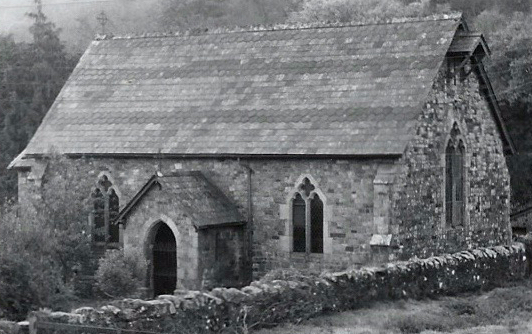
The people of Sticklepath may have been in lockdown but they have not been relaxing, there is an energising mood of excitement and regeneration. The Village Hall has been undergoing a re-furb, making good use of the time out of commission by government decree, and now I hear the wonderful heritage project at St Mary’s, our little church, is moving forward apace! Much work has been done to reach agreement on the plans, and a flurry of well organised activity is underway. We just need to raise a little more money, to ‘match’ funding, fulfil the lottery requirements and release not the lottery balls, but a substantial cash grant. Any small (or large) contributions are welcome for this very worthwhile project. On completion of the project the space will be rejuvenated, more useable, and 6 intriguing historical figures will be on hand to speak to you through the mists of time and explain the story of Sticklepath, St Mary’s, the Quakers and the Wesleyan Methodists.

*** https://www.justgiving.com/crowdfunding/stmaryssticklepath. ***

Meanwhile of course the Foundry will be preparing for the end of lockdown and all those visitors who have been kept away for so long will be dusting off their National Trust tickets keen to get their money’s worth! My #52ancestors prompt this week is Power. Obviously (Finch is my middle name) Water Power and the Mills of Sticklepath especially the Foundry jumps to mind…

As a small girl, Bob Barron himself showed me around. Another Finch descendant, he was key in achieving its conversion to a museum. I remember him demonstrating the grindstone. Climbing on to a wooden board over the top of the rotating stone wheel. Literally nose to the grindstone as it spun down in front of him, with water spraying to cool it.  Very dangerous and tiring.  It would be so easy for an accident to happen and nasty injury to ensue with even a moment’s inattention.  The apprentices had to learn though, and if they were being troublesome or lazy, half a day on the grindstone soon focussed their mind!

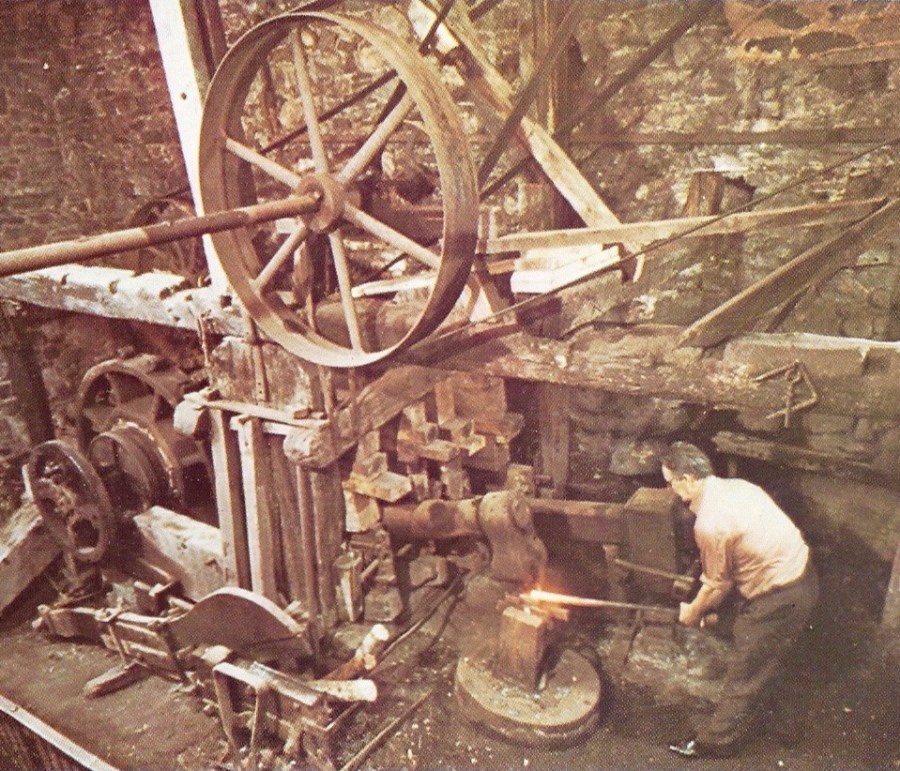
Bob invited me to lift the 50lb drop hammer using a bell rope.  Impossible. That is until the water power was turned on.  We raced up to the top to see the sluice gate opened and water start to pour into the waterwheel from the leat above. Coming back to the main forge, everything was now rotating. Your ears were assaulted by the jangling of pulsating machinery. A thrill to see, hear and feel that power in action, reverberating through your chest. At the drop hammer, the bell rope was suspended from a leather strap which wrapped over a rotating wheel (similar to the photo). That did most of the work. A light tug by me on the bell rope then took the hammer up high momentarily, before crashing back down on the anvil, to shape a shovel in the mould below. Different moulds were used for different tools. Incredible how little strength was needed.

Bob Barron demonstrates Finch Foundry smaller tilt hammer 1970s. Larger one by his right shoulder.

The enormous shears, seen here on the left, cut through red hot iron like a knife through butter. The ‘Foundry’ with the thunderous noise of the tilt hammers, the inevitable smoke and smells and the formidable blackened frontage dominated the roadside in the centre of the village.  Finch tools made were sold from about 1816-1960, not just in Okehampton market but throughout Devon, Cornwall and Somerset.

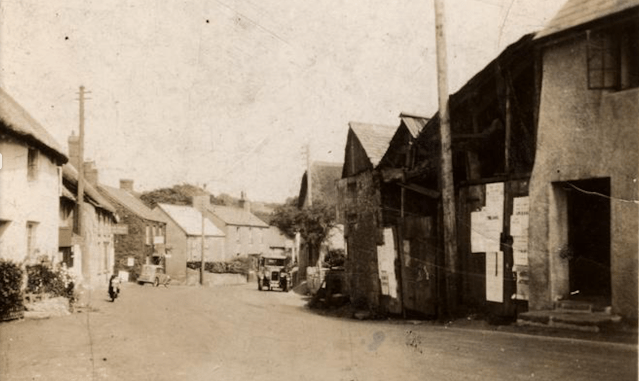
Finch Foundry on the Right. https://dartmoortrust.org/archive/record/103308 Courtesy of Bert Stead

The Finch Foundry will soon be giving demonstrations of the tilt hammer and shears again – if you are passing that way, it is well worth the minor detour and a cream tea.  Make sure to book when demonstrations are happening. (Also fantastic for icicles in a severe winter!)

#SticklepathOne, #FinchFoundry, #StMarysSticklepath #Finch

Mark Jobling – research arising from Miner’s Tale part 3. EXCITING NEWS! #OnePlaceStudies #Sticklepath

Wow I have had a wonderful response to my question asking about the photo of Mr Jobling in women’s clothes… so much about his theatrical and operatic connections! I am happy to hear more. Details to follow in March when we have #OnePlaceWomen…Coming very soon!

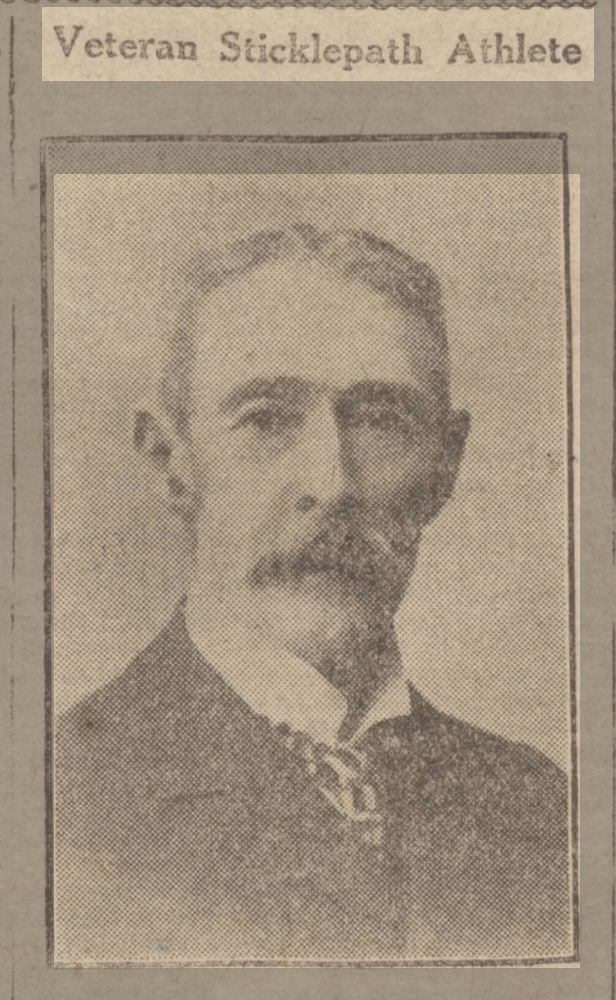
Meanwhile Mark Jobling was really involved in the community events and competitions, and contributed to the local ‘Philanthropic Club’ (benevolent fund) and so much more. He lived in Laurel Cottage, Sticklepath at some point, as there was an auction in 1877 to sell up as he was moving out of the area. Soon came back again though! Here is a photo and transcript of how he was doing aged 70:

From The Western Times Friday 13th June 1913, courtesy of the BritishNewspaperArchive.co.uk

Mr M.E.Jobling of Ramsley Hill, the subject of our illustration, is to be congratulated on his brilliant achievement at the athletic sports at Stamford Bridge, London, on Saturday. Mr. Jobling is an athlete of no mean repute, and on Saturday met that great runner, Mr J Parkhurst, aged 57 years, and who had just won the 120 yards veterans’ handicap in 14 1/5secs. The distance on Saturday was fixed at 100 yards with Parkhurst at scratch and Jobling on the 12-yard mark. The start receiver was in front all the way, and won, easing up, by a yard and 12 4/5secs. Mr Jobling has innumerable trophies, the result of his prowess in former years. In 1865 and1866 he competed with Guy Pym (afterwards M.P. for Bedford) with distinguished success, and won the half mile and mile, and in 1867 he won both the 100 yards and the mile race at Walham Green. Mr Jobling will be 70 years of age on June 21st.

Ramsley folk may feel it is a bit cheeky to call him a Sticklepath veteran!