A rather gruesome concealed pregnancy at #Sticklepath for #OnePlaceTragedies

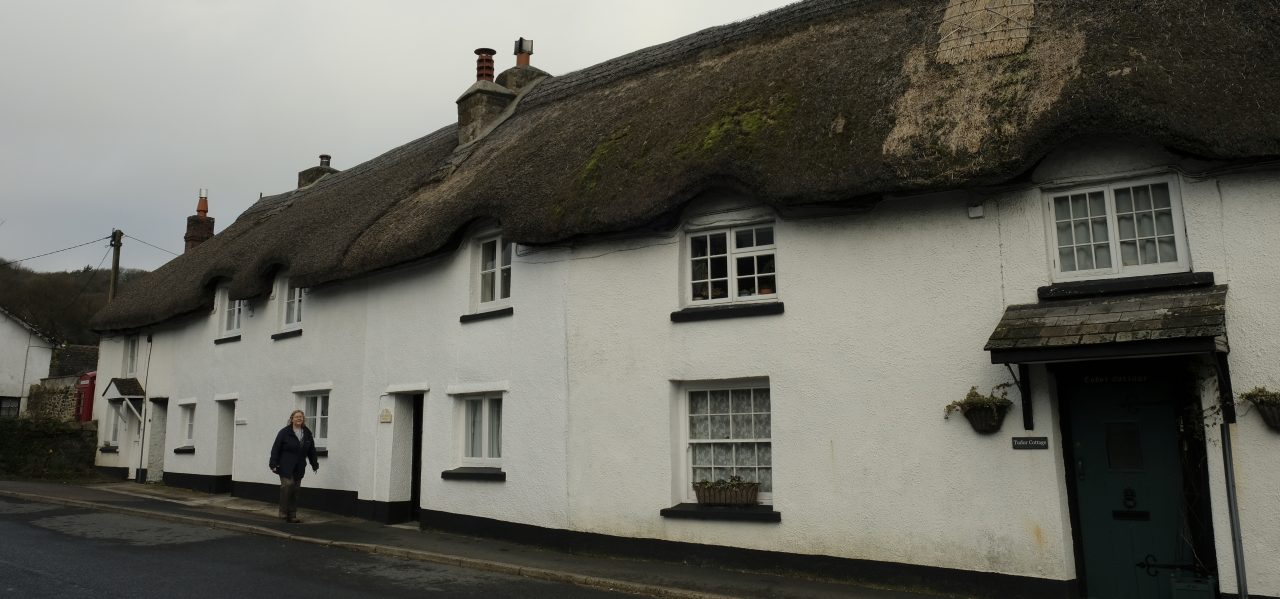
The Western Times – Tuesday 15 November 1904 reported a ‘STICKLEPATH SENSATION’.  (Complete transcript, photo not from the paper).

Supposed Case of Concealment of Birth.

Mr. Prickman (coroner) held an inquest, at Sticklepath, on Saturday, relative to the finding of dead body the day before. Mr. Thomas White, gardener, deposed that on Friday he discovered the body of a female infant, wrapped in a piece of rag, and placed just beneath the grass behind a tombstone, about 16 feet from the entrance gate of the Cemetery. He communicated with P.C. Berry, who removed the remains to the Taw River Hotel.

Coroners court often met at the local public house, as here. Chapman postcard.

Dr. Davies, of Okehampton, said he had made a post-mortem examination of the body, which was in a bad state of decomposition. The child was fully developed, 20 ½ inches length. It was not born alive. There was no external marks of violence about the body, and no bones were broken, but there was evidence of general inattention at birth. The lungs had not been inflated.

The child had evidently been born more than three weeks, and certainly under two months. The Coroner said, under the circumstances, the jury could not return a verdict, but they could make a memorandum to the effect that The body which the jury had viewed that of a female child, born not more than two months, and not less than three weeks since.” Mr. A. G. Finch was the foreman of the jury.

Comments – Pregnancies can be denied or perhaps some women are not aware of their pregnancy (about 1 in 400 women are said to be 5 months pregnant before they realise).  I have certainly seen a young teenager who concealed their pregnancy and presented in A&E with ‘abdominal pains’ shortly before giving birth.  

The pregnancy in 1904 must have been concealed and then when the child was born dead, the birth was concealed. It seems most likely that this would be an unmarried mother, a married woman whose husband had been away or possibly the result of rape or incest. The mother could seek no advice or help. The Offences against the Person Act 1861 meant that every person involved in the endeavour to conceal a birth, regardless of whether the baby was still born or died later, was guilty of  a Misdemeanour and could be given a prison sentence of up to two years with hard labour.  

The contraceptive pill first became available, to married women only, on the NHS in 1961.  

Double #OnePlaceTragedies

Our saga of Thomas Finch and family continues. Last week we heard about the Coroner’s case when Victor Thomas Finch drowned aged 22 months. Happier times followed when Gladys Lena was born in 1897 and then Leslie George in 1900.

Sadly the newspapers tell of further tragic circumstances 10 years later.

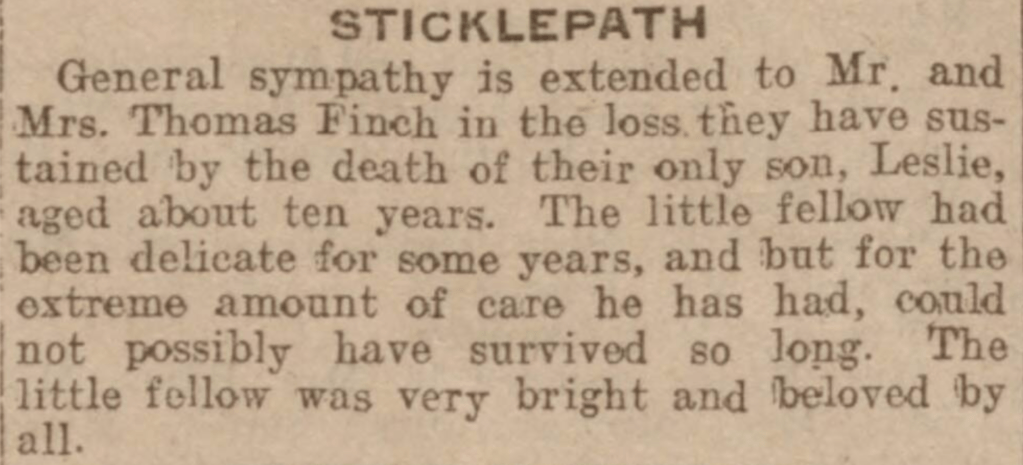
The Western Times on Friday 25 November 1910 reported:

The British Library Board accessed via British Newspapers Archive online February 2021

It paints a touching picture of the relationship with his sister. So many wreaths for a small coffin. I need to investigate further, as, for example, I don’t know who was at Walnut Road, Chester or Friendship but these appear to be important, as they are listed first.

Such reports are ideal for genealogists, with many FANs named. (The FAN Club abbreviation was developed by Elizabeth Shown Mills, a highly respected genealogist and relates to cluster research. When investigating an ancestor, their FANs or Friends, Neighbours and Associates can tell us a great deal about their situation, social status, occupation etc. ).


The brief Western Times report of a week earlier – Friday 18 November 1910, written before the funeral, adds a different slant:

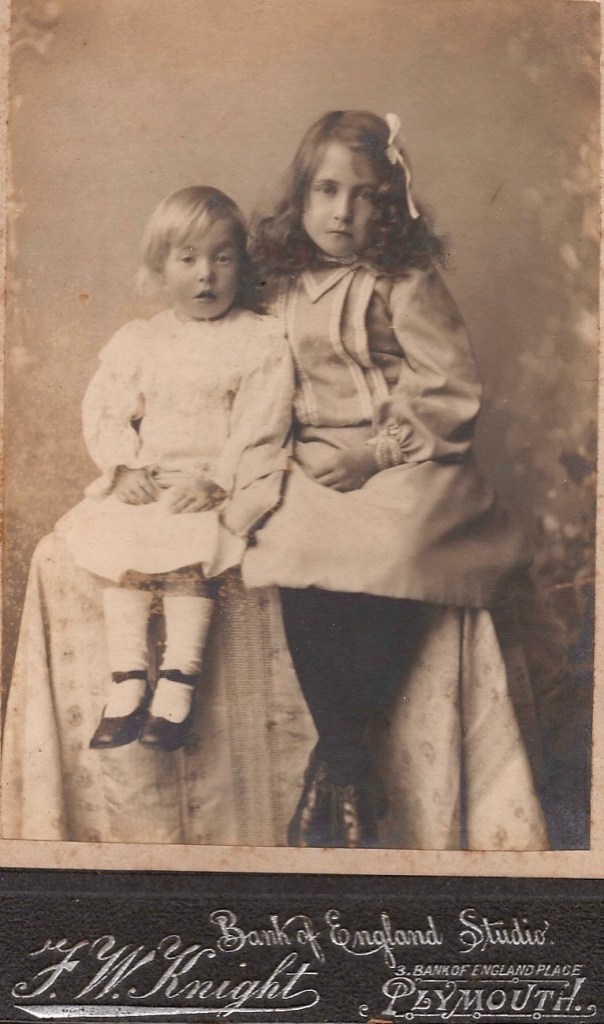
Clearly Thomas and Annie had been very caring parents, but this hints at the ‘delicate’ nature of Leslie. Taken together with the photograph I suggest Leslie had Down’s Syndrome.

Leslie and Lena Finch

In 1866 Dr John Langdon Down first identified a group of patients with certain characteristics. In 1959, it was discovered that it is a genetic condition due to an extra chromosome (Trisomy 21). It wasn’t until 1965 that the World Health Organisation adopted the term Down’s syndrome. I don’t know when the term came into common usage or if the syndrome would have been recognised by a village GP in 1900 – 1910.

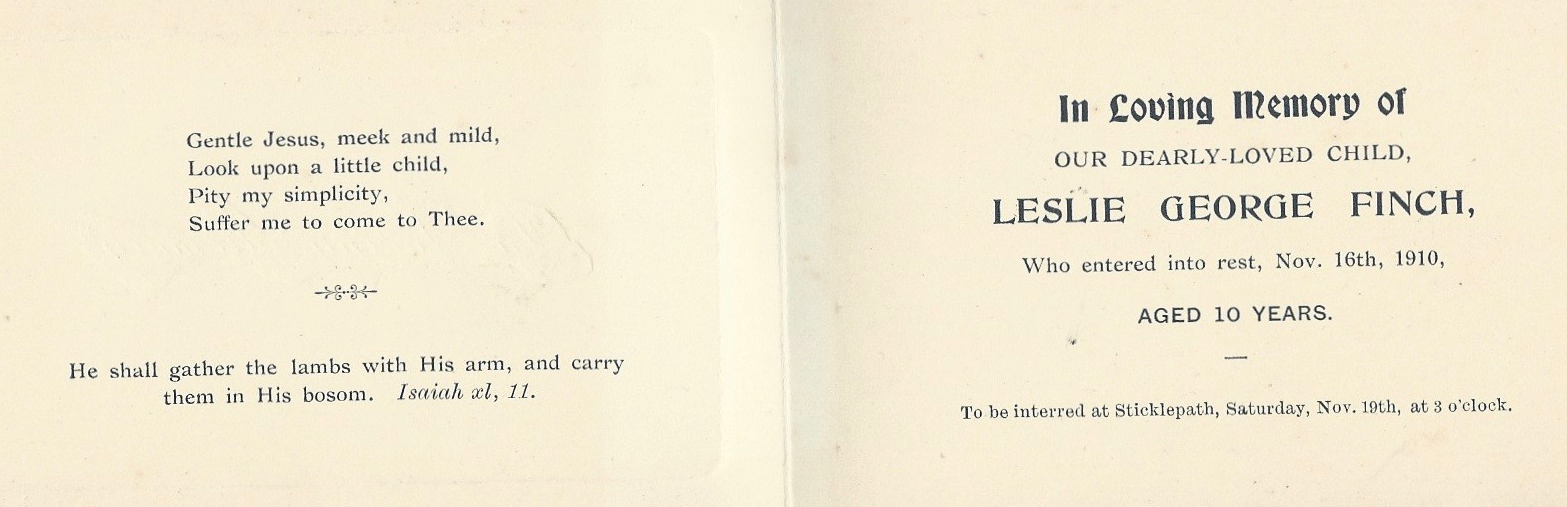
Leslie had been poorly for some time and his death certificate shows he died of consumption, which is TB or tuberculosis. Three generations of the family at least were affected by this disease. This is an image from the memorial card:

The two brothers, Victor Thomas and Leslie George Finch, are buried in the same grave in Sticklepath with their memorials on either side of the short stone.

Move the arrow side to side to see front and back of the gravestone.

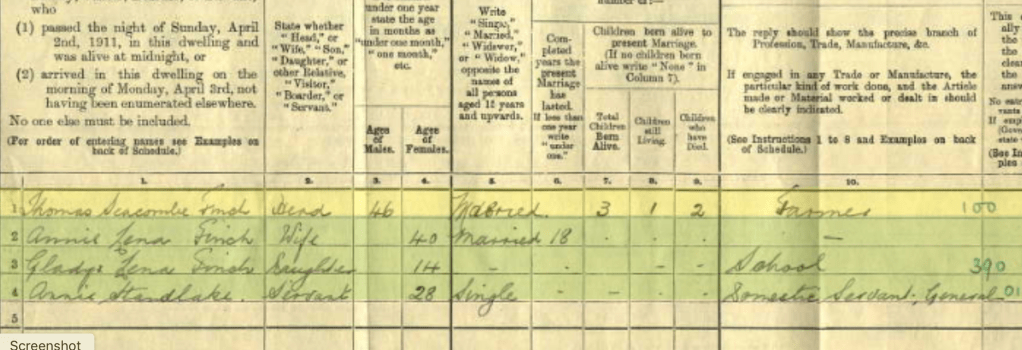
The 1911 census states the facts as cold statistics. Three children born alive, two who have died. One still living. Childhood deaths were still fairly common.  Daughter Gladys aged 14 continues at school.  Annie Standlake domestic servant has been with the family for over 10 years.  

England & Wales Census 1911 accessed through Ancestry
. . . . . . . . . . . . . Gladys Lena Finch

We finish on a happier note –

Gladys survived and later married William Gater Heard and had children.  John Heard, a very tall man in shorts and sandals, came to visit us in Sticklepath when I was young. He brought a family tree he had been working on for us to see.

Western Times – Wednesday 25 May 1921
Marriages

HEARD – FINCH On May 24th at the Parish Church South Tawton, by the vicar (Rev E.F.Ball). William Gater Heard, eldest son of Mrs W.J. Heard, Exmouth to Gladys Lena, only daughter of Mr. and Mrs. T. Finch, Sticklepath, Okehampton.

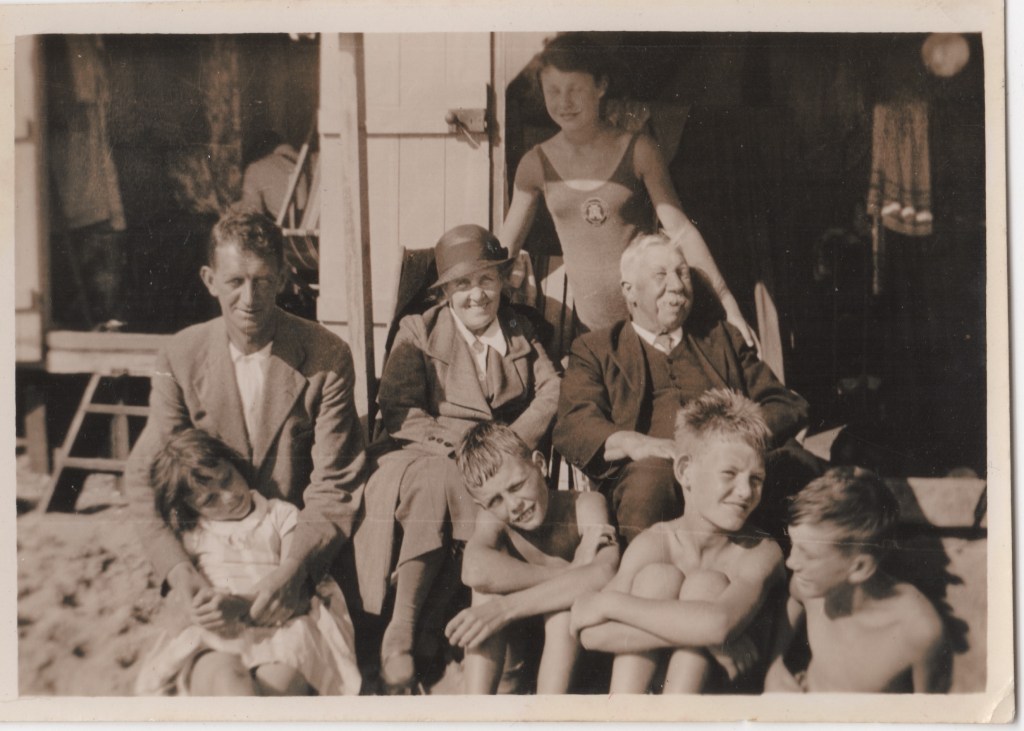
Annie and Thomas Finch on the beach with the Heard Family – Gladys and William, and their grandchildren.

Looking at this photo you can see why Thomas was invited to be Father Christmas for the WI party each year!

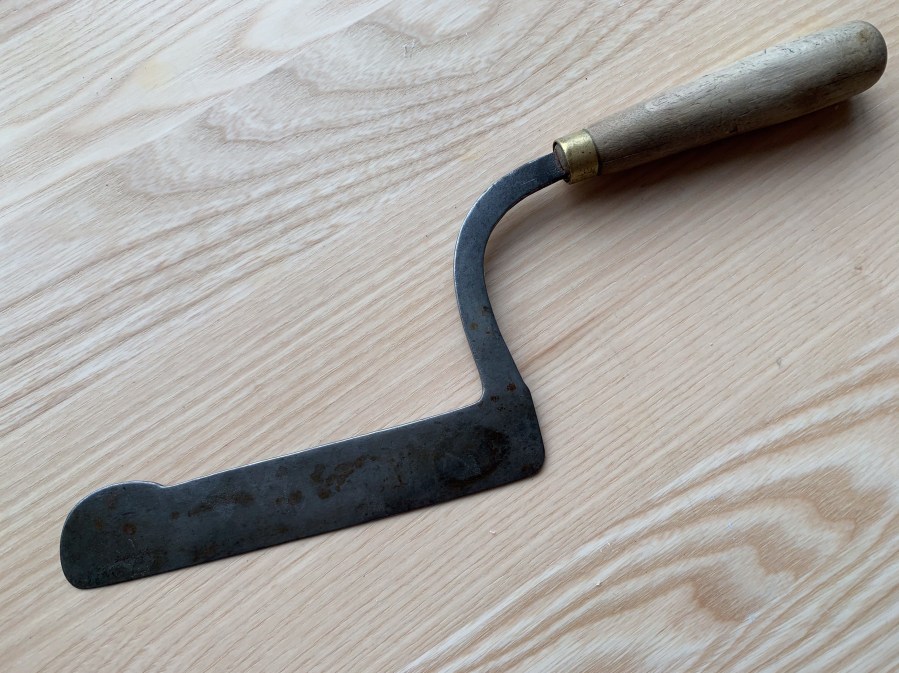
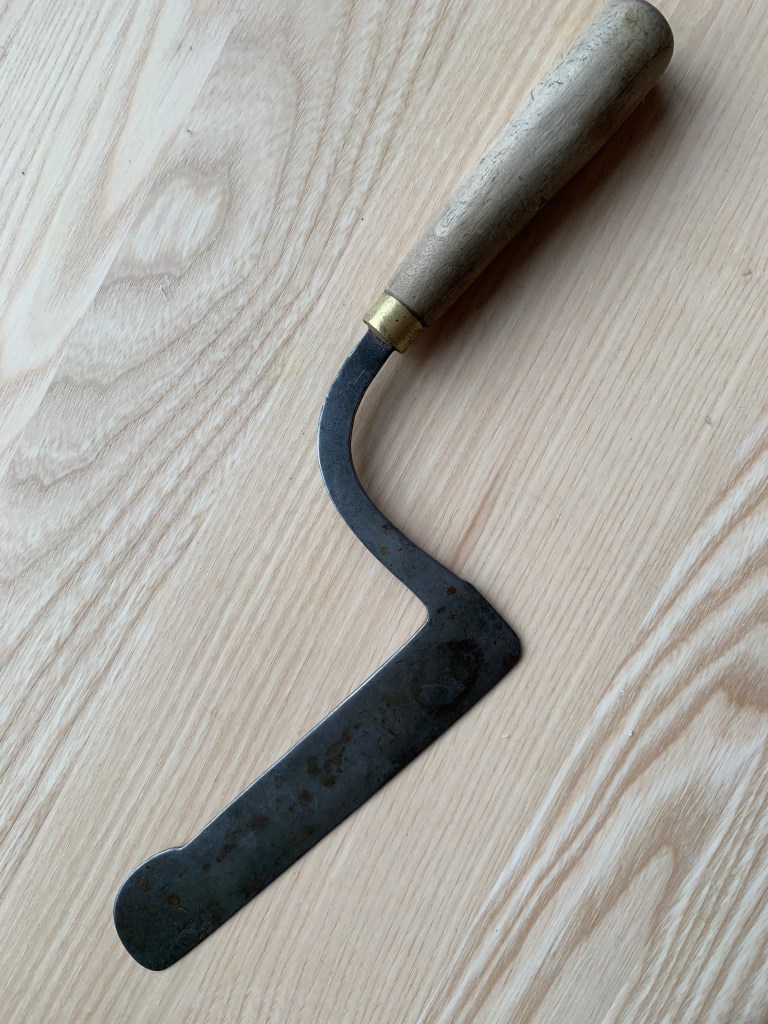
Devon Potato Chopper – for Hash Browns? #52ancestors week 5 The Kitchen #Oneplacejoys #Finchfoundry

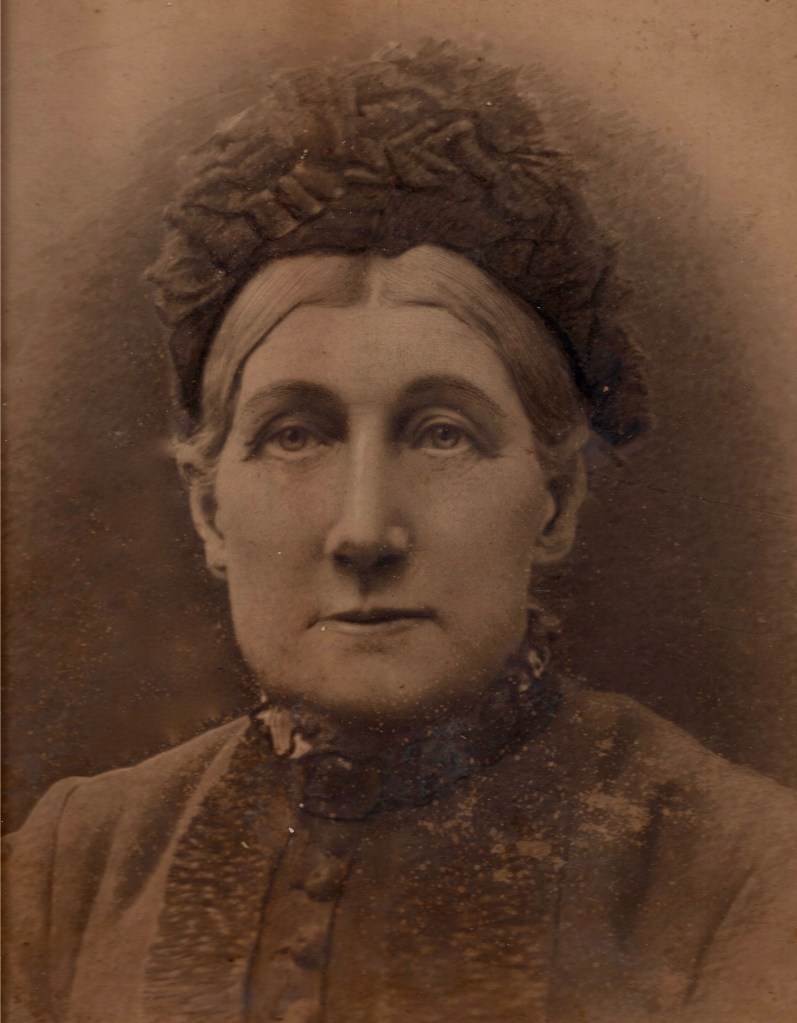
Rebecca Finch 1824-1891

Most of us are familiar with Hash Browns – American fried patties usually served these days with ‘Full English’ ‘Full Welsh’ and probably many other breakfasts. The name and popularity in England probably dates to the 1970s, I don’t think I came across them until the 1980s. However, “hashed brown potatoes” were mentioned by food author Maria Parloa in 1888, which led to popularity in New York hotels during the 1890s. Minnesota Farmers’ Institute Annual of 1835 may be the first time a hash brown recipe was printed. Surely similar recipes were in daily use across the world as soon as potatoes, fat and a heat source were available, even if the name was not used.

My Finch family relatives were tool makers and when my Great Great Grandmother drew the tools for their brochure, a Devon potato chopper was there at number 5. I wonder how long it took to draw them all so accurately?

Rebecca Finch (1824-1891)

This implement is usually used with cold (left over) cooked potatoes. They are chopped in a large cast iron frying pan as they are heated up. Lashings of fat – bacon fat or lard saved from the Sunday roast – gives them flavour and makes them very satisfying. There is something of a ceremony about it. The delicious smells wafting throughout the house and the sound of the metal chopper on the metal frying pan. In my childhood ours had an extra ringing sound as the circle of metal securing the handle onto the tool was loose. At the sound expectations started to rise, the anticipation all part of the process.

Once the potatoes are chopped to the cooks satisfaction, retaining some texture, the resulting ‘mash’ is gathered into the centre of the pan. A cold plate is pressed (upside down) onto the mound. Said plate was carefully selected – it had to fit in the pan and have sufficient depth to accommodate this potato mound more or less exactly. No not the best china! Preferably a Pyrex one. Too small and potato went over the side. Too big and the potato would not fill the plate and go brown.

Timing was critical, aiming for a slightly crisp nicely browned surface. As a rule of thumb, once the plate was too hot to touch in the centre, the feast was usually ready. Now the difficult task of turning the frying pan over whilst holding or catching the burning hot plate full of potato. A certain degree of strength is required to do this with a large cast iron frying pan (suitable for an Aga hotplate). Perhaps that is why, in the 1960s, my Dad was always the one to make this. I wonder who did it in Rebecca’s time?

Finally the treasure was brought to the table and divided out. Joy! Certainly a yummy treat to enjoy.

Note – if anyone has a spare chopper, please do give it to the Finch Foundry (National Trust) Sticklepath for their display.

https://www.nationaltrust.org.uk/finch-foundry