

One of the #Sticklepath Finch foundry workers was Solon Bowden (1857-1933).
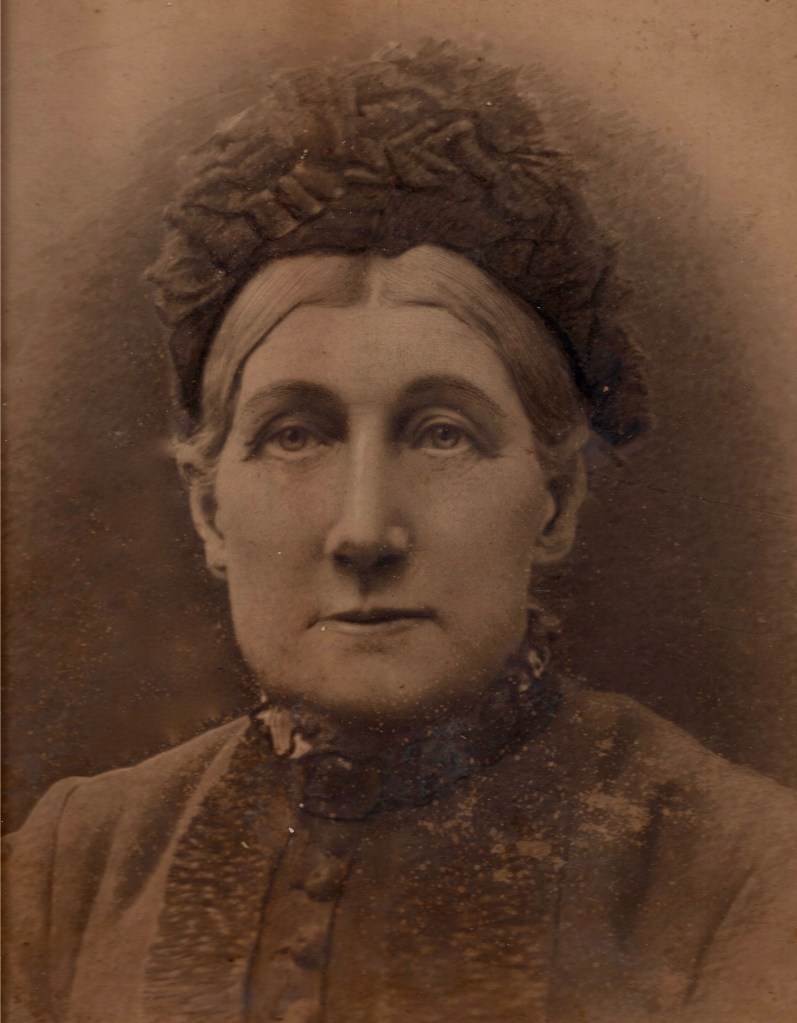
Born in Belstone Parish, like his parents and sisters, we find the little family in the 1861 census living at Tongue End Smithy. Father John Bowden was a blacksmith, then aged 42 and mother Elizabeth (formerly Ellis) was 43. Harriett was 6 years old, Solon 3, and baby Lydia just 10 months.
Aged 3, the family likely thought Solon was a late talker. No mention of any problem is shown in the disability column. However, by 1871, Solon was described as ‘deaf and dumb’. This was not a derogatory term, as it is today, but simply says the child could not speak due to deafness. Access to speech therapists, hearing aids and other help would have been limited, especially in rural areas. For many, access to education would be difficult, and life’s opportunities severely curtailed. Not only getting a job but the pay may have been reduced. An example of an advertisement in the jobs wanted column of The Leicester Journal Friday 06 October 1882:
‘A Blacksmith, a handy man and good shoer. Being deaf, would take low wages.”
Solon however, was lucky. By the age of 13 the 1871 census tells us he was at the West of England Institution for the Deaf and Dumb in St Leonards, Exeter, over 20 miles from home. I wonder when he started there. Might he have been there in 1866 when a cholera epidemic hit Exeter. A very worrying time for his parents if so. They had already lost their eldest child, Harriett, at the age of 8 in 1862. Fortunately none of the children at the Institution caught cholera. (Information from South West Heritage Trust shared by Stuart Windsor in a talk for DevonFHS 2021). More surprising, as we scan the next page of the census, we find that his sister Lydia, was also there. This is strongly suggestive the cause of their deafness was hereditary. It seems highly likely that the Bowden children were funded by the poor law authorities.
The school principal, William R Scott, was 60 y old and he had 3 teachers assisting him (living in) aged 19 – 20. There was also a work mistress, an upper housemaid domestic, an under housemaid, a cook and a laundress all living in. The adjacent lodge housed a gardener and his family. There were 65 pupils, boys and girls, aged 8-16y. Of most interest is the list of causes for deafness – 48 were born deaf and dumb, including Solon and Lydia. 6 were caused by scarlet fever, another 5 by unspecified fever, 2 by measles, 1 by convulsions, 1 by throat disease, 1 from ulcers in the ear, and 1 by a fright in early life. (This paragraph was entirely sourced from the 1871 census accessed via Ancestry. One day I hope to investigate the school records and Belstone Parish records further.)
Childrenshomes.org.uk tells us: “As well as learning communication skills, the pupils were given ‘industrial training’ to enable them to find employment in later life. For the boys, this included instruction in trades such as printing, tailoring, cabinet making, wood engraving and shoemaking, while the girls were taught sewing, dress-making and other domestic skills.
On 21 October 1863, The Institution was authorised to operate as a Certified School, allowing it to receive children boarded out from workhouses by the Poor Law authorities. It maintained this status until 27 September 1909.” (Just in time for Solon to be funded).
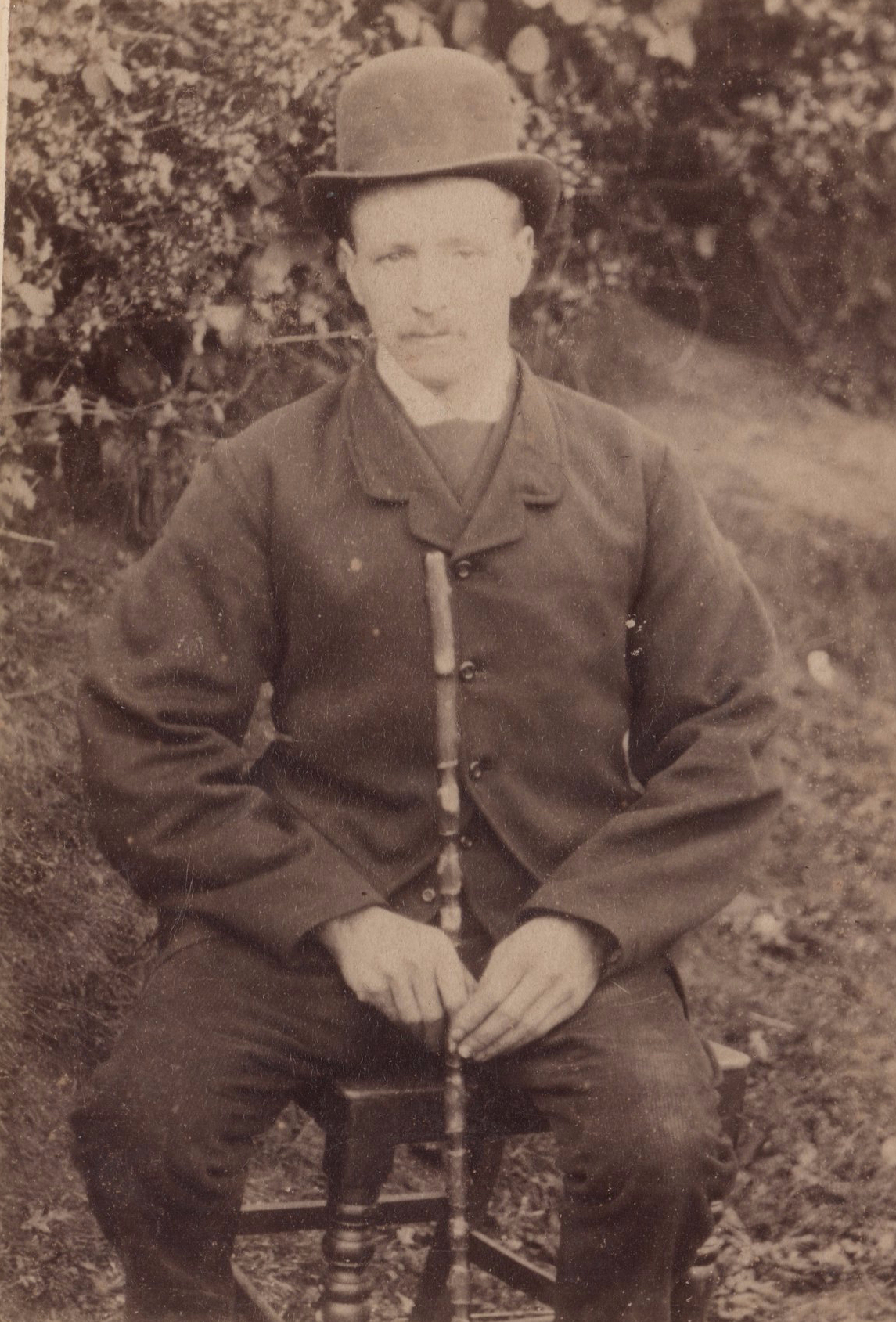
Solon was certainly a hard worker and bright intellectually. This photo shows him, and another foundry worker in about 1914 bringing in the harvest at Coombe Head Farm, and later census information suggests he worked at the Foundry in Sticklepath but also helped his father at home in the smithy at Tongue End in any spare time. He married in 1906, a young lady called Hetty Brock I believe. She was working away in 1911, so I hope to glean more from the 1921 census.

Deafness was very isolating unless family and employers supported you. Potentially dangerous too, if people couldn’t attract your attention to avoid accidents. I have mentioned before the very smoky, smelly, dirty presence of the Foundry, dominating the heart of Sticklepath, right up to the roadside. Perhaps for Solon the very noisy foundry environment actually meant others could hear almost as little as he could and basic hand signals would often be used between the workers. He would have sensed the waterwheels and tilt hammers working. You can still experience demonstrations today and feel the vibrations deep in your chest as the water-powered tilt hammers thud to shape red hot metal at Sticklepath’s National Trust Finch Foundry.
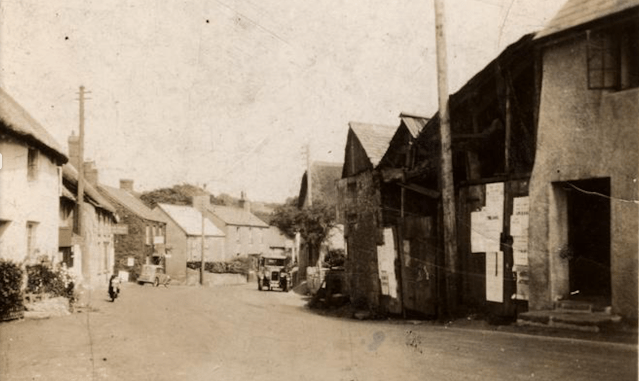
Bob Barron tells the story recounted by a visitor to the Foundry in the 1970s who recalled an event 40-50 years earlier, which must surely be about Solon:
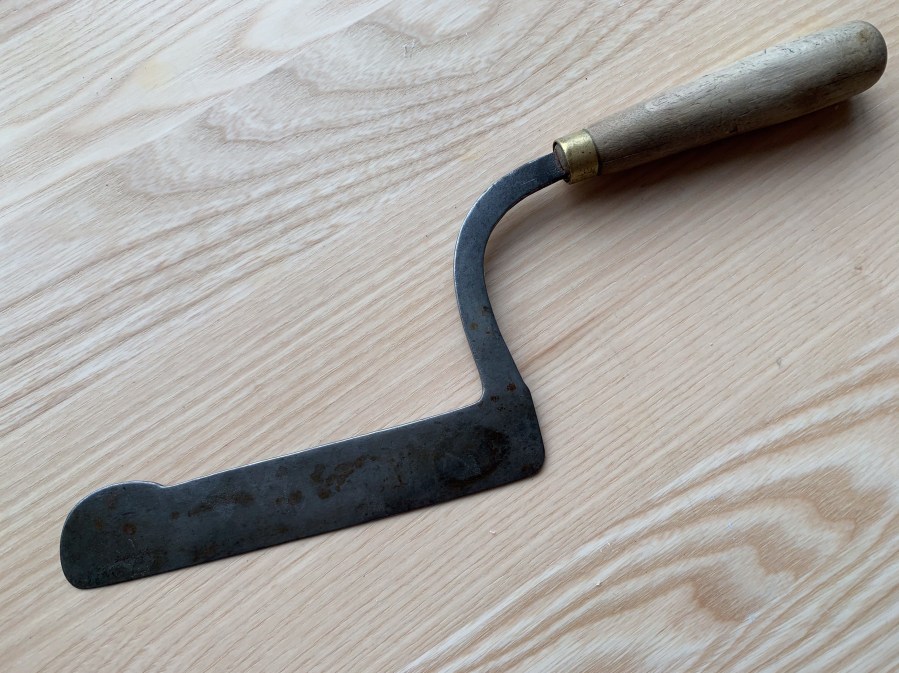
“about 1925 he was on his way to Cornwall on his motorcycle when the drive chain broke. There were few garages in those days and he called at the Foundry hoping to get help. He said that a deaf and dumb blacksmith made a new link for the chain and sent him on his way. This was work that would tax the skill of a watchmaker, let alone a blacksmith.” (The Finch Foundry Trust and Sticklepath Museum of Rural Industry by R.A.Barron). See photo of Bob at work
Disability results from the interaction between individuals with a health condition and their environment. For example a person with deafness, perhaps also mental health issues arising, as well as personal and environmental factors including negative attitudes, lack of accessible education and other opportunities, with limited social and financial support can really struggle with that disability. Short sightedness, for example, without suitable glasses potentially becomes a big disability affecting ability to read, limiting job applications, types of work, and lots of other consequences. Given the right support it is not a disability. In his #OnePlaceEnvironment, Solon it seems was not greatly limited by his potential disability.

 Sticklepath a Village and its People