Most of us are familiar with Hash Browns – American fried patties usually served these days with ‘Full English’ ‘Full Welsh’ and probably many other breakfasts. The name and popularity in England probably dates to the 1970s, I don’t think I came across them until the 1980s. However, “hashed brown potatoes” were mentioned by food author Maria Parloa in 1888, which led to popularity in New York hotels during the 1890s. Minnesota Farmers’ Institute Annual of 1835 may be the first time a hash brown recipe was printed. Surely similar recipes were in daily use across the world as soon as potatoes, fat and a heat source were available, even if the name was not used.
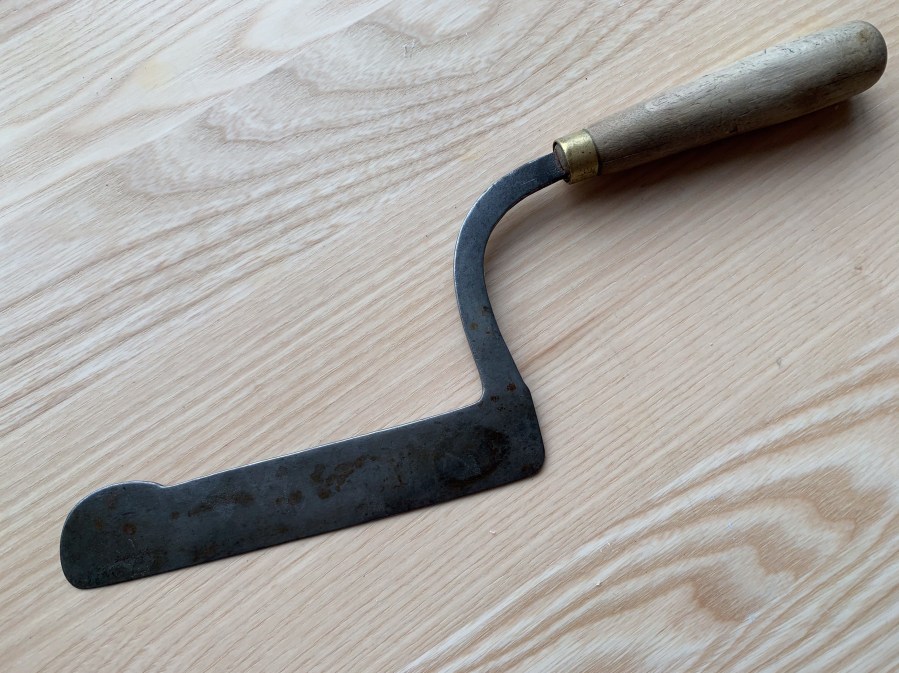
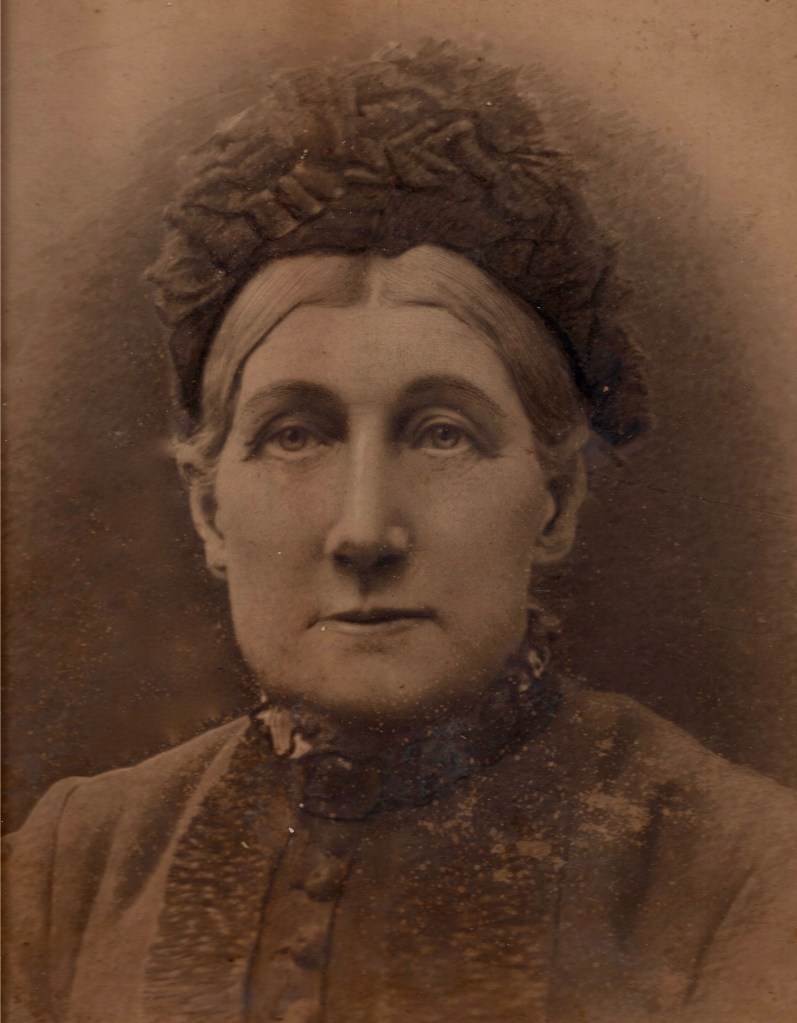
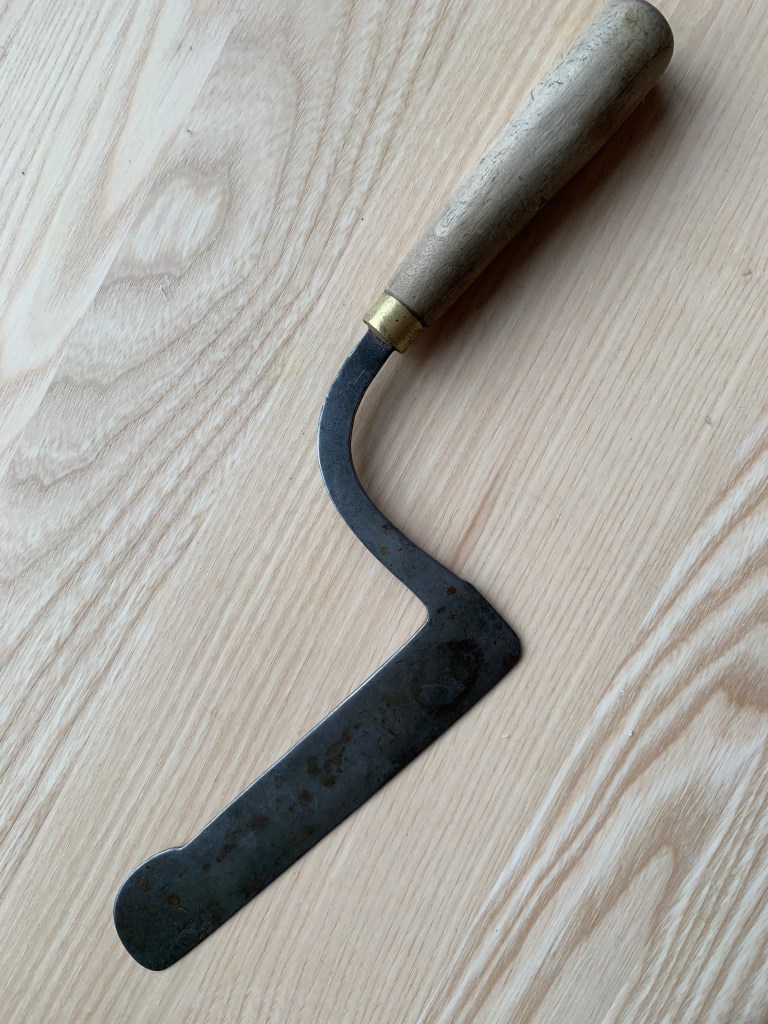
My Finch family relatives were tool makers and when my Great Great Grandmother drew the tools for their brochure, a Devon potato chopper was there at number 5. I wonder how long it took to draw them all so accurately?
Rebecca Finch (1824-1891)
This implement is usually used with cold (left over) cooked potatoes. They are chopped in a large cast iron frying pan as they are heated up. Lashings of fat – bacon fat or lard saved from the Sunday roast – gives them flavour and makes them very satisfying. There is something of a ceremony about it. The delicious smells wafting throughout the house and the sound of the metal chopper on the metal frying pan. In my childhood ours had an extra ringing sound as the circle of metal securing the handle onto the tool was loose. At the sound expectations started to rise, the anticipation all part of the process.
Once the potatoes are chopped to the cooks satisfaction, retaining some texture, the resulting ‘mash’ is gathered into the centre of the pan. A cold plate is pressed (upside down) onto the mound. Said plate was carefully selected – it had to fit in the pan and have sufficient depth to accommodate this potato mound more or less exactly. No not the best china! Preferably a Pyrex one. Too small and potato went over the side. Too big and the potato would not fill the plate and go brown.
Timing was critical, aiming for a slightly crisp nicely browned surface. As a rule of thumb, once the plate was too hot to touch in the centre, the feast was usually ready. Now the difficult task of turning the frying pan over whilst holding or catching the burning hot plate full of potato. A certain degree of strength is required to do this with a large cast iron frying pan (suitable for an Aga hotplate). Perhaps that is why, in the 1960s, my Dad was always the one to make this. I wonder who did it in Rebecca’s time?
Finally the treasure was brought to the table and divided out. Joy! Certainly a yummy treat to enjoy.
Note – if anyone has a spare chopper, please do give it to the Finch Foundry (National Trust) Sticklepath for their display.
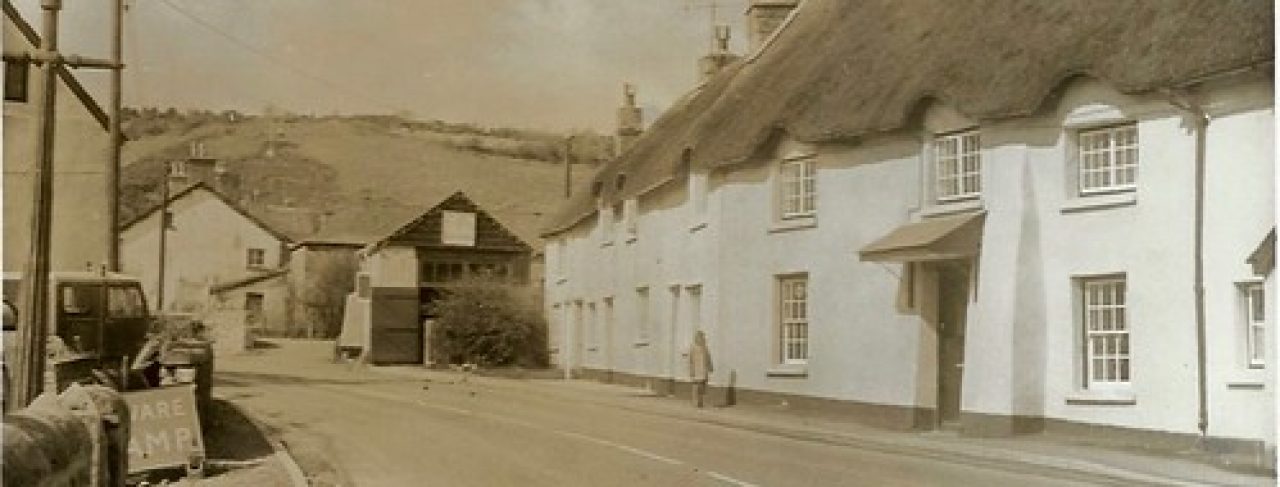
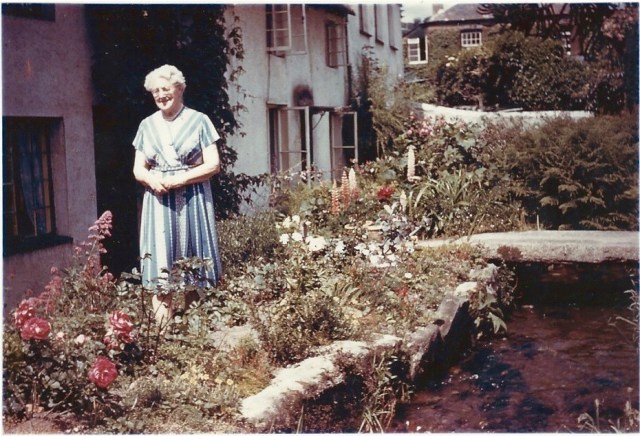
Sticklepath’s leat provided water power to run the mills. Primula House, seen here in the top right corner of the photograph marks the place where the leat moves from behind the houses to the front gardens. Shortly afterwards the water re-joins the Taw River at Sticklepath Bridge. Jessie Barron, nee Finch, is seen here next to the leat in her lovely sunny garden. It looks idyllic. However, several tragedies are associated with this waterway.
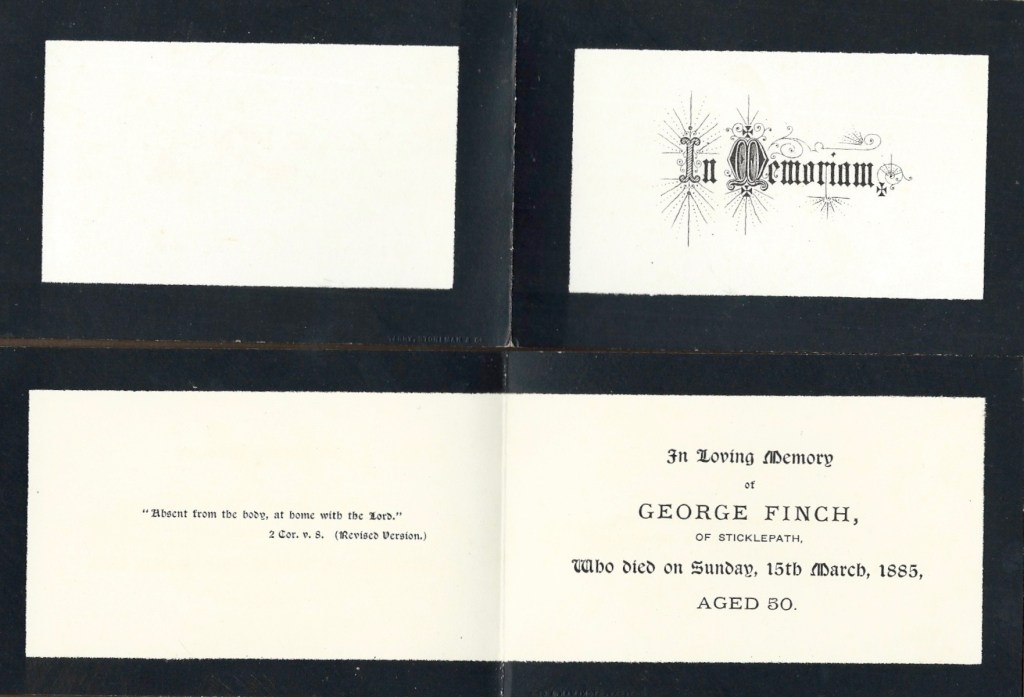
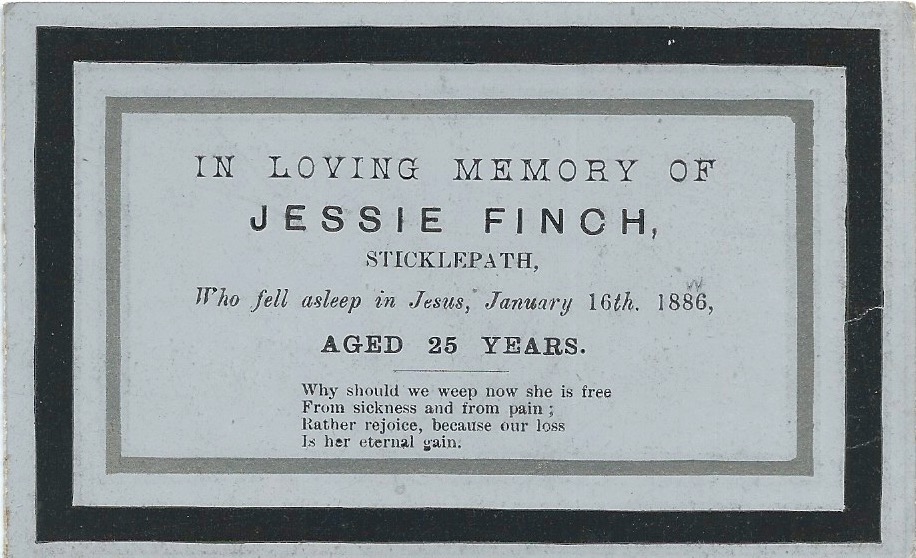
Explore the lives of Jessie’s Uncle, Thomas Finch and his family, to discover their tragic story for yourself, using the census and registry office information (birth marriage and death), a newspaper article and some memorial cards.
Researching family history is exciting as we discover records, imagine celebrations and solve mysteries. However it can be frustrating when we can’t find answers, and surviving records often relate to deaths and tragedies. Then our hearts go out to those involved.
Thomas Seacombe Finch was born in 1866 when his brother James was 10, Susan was 6, Jessie (not the one above) was 5 and Albany was 3. In 1871 we find them with their parents George and Rebecca Finch in Primula House. This timeline follows events in their lives:
1872 sister Naomi was born
1881 Census – Thomas age 15 is living in Primula House with his parents
1885 father George died
1886 sister Jessie died
1891 Census – Thomas is still living in Primula House
George Finch, aged only 50, took ill fairly suddenly and died. The family understood he had toothache, the doctor prescribed opium, and he died seemingly of an overdose. The death certificate tells a different story, which need not concern us here. Even today, with all our scientific advances there are often inconsistencies and unanswered questions surrounding a death. Were people more accepting in the past? I wonder.
Ten months later Jessie died of tuberculosis. TB was a common cause of death in young adults at the time. Often people became pale, weak and lost weight, giving it the name ‘consumption’. Coughing up blood was often a late sign of pulmonary TB. There was no cure.
Happier days followed. I have no idea how Thomas met Essex girl Annie but the timeline continues with a marriage certificate, and the birth of a son:
1893 January Thomas Seacombe Finch married Annie Lena Locking in Essex
1893 December Victor Thomas Finch was born
Victor was healthy, growing well, starting to walk and watch the other children around him with interest. Just when things were going well, totally out of the blue, tragedy struck. 2 months before his 2nd birthday Victor died.
An unexpected death means a coroner’s inquest. These were often held in the local pub. Coroner’s records often do not survive or are not accessible, but the newspaper reports are fairly detailed. The Western Times of Friday 25th October 1895 (accessed from http://britishnewspaperarchive.co.uk January 2021) tells us:
Child Drowned at Sticklepath
Mr Coroner Prickman held an inquest at the Taw River Hotel, Sticklepath, on Wednesday, on the body of Victor Finch, aged one year and ten months, who was drowned in the Taw River on Monday. Mary Ann Cooper, of South Zeal, said she saw the deceased playing with some other children in the garden adjoining the mill leat. The water in the leat is about a foot deep and the bank about five feet high. Thomas Finch, blacksmith, of Stickelpath, said the deceased was his only child. He went into the garden to fetch his child to dinner, and found him lying in the river quite dead. The other children who were playing with the deceased were too young to give evidence. Dr Middlemist, of Okehamptnn, said he considered the child was stunned by the fall. Accidental drowning was the verdict. (Transcription includes spelling errors as printed).
Reflecting on the story, shows how times have changed. A group of young children, of different parents, would not be left completely unsupervised in a garden, especially not with an unguarded 5 foot drop and a stream running through. Even the smallest ponds tend to be covered or filled in. No hint of blame or reprimand was mentioned. I wonder how much shame or guilt would have been felt? On the other hand, perhaps our children lose something by not being allowed to play freely outside, albeit in a safer environment.
“The only and Dearly-loved Child of Thomas and Annie Finch” – their grief is almost palpable.
This newspaper gave a relatively sanitised version of the story. Another paper clarifies that the body was indeed found in the river, not the leat, having presumably been swept along by the water almost to the bridge. We can picture the rising panic, hunting for the toddler, before the dreadful truth is discovered. Very distressing.
A couple of years later, happier times follow:
1897 daughter Gladys Lena Finch born
1900 son Leslie George Finch born
1901 census Thomas, who describes himself as a farmer, is living with family, a domestic servant aged 17 and brother-in-law Stephen Locking is staying.
(You could only put one occupation on the 1901 census. Thomas was one of the three Finch Brothers running the Finch Foundry or smithy at the time, but he took the lead for the farming aspects).
COMING SOON: Tragedy strikes this same family again. Part 2 next week!
#OnePlaceStudies Society provides blog prompts for each month during 2021. You don’t have to be a Society member or have a registered One Place study to join in. Everyone is invited. February’s prompt is #OnePlaceTragedies. Further details at https://www.one-place-studies.org/resources/blogging-prompts/
52 ancestors prompts are designed to help us put something in writing about an ancestor each week (though there is no come back should you miss a week! All voluntary, meant to be fun!). The words help us record more than just dates and facts.
Namesake made me think about my great grandfather, parent of my paternal grandmother. He was called Albany George Finch (28 Nov 1863 – 29 Aug 1945). We all know where a surname comes from, no real choice there. George was his father’s name. But Albany? That is a bit of a mystery. There is an Albany House in the village of Sticklepath, which I guess is named after AGF. (He often refers to himself as AGF just as my grandmother called herself MCB in writing). So why Albany?
My best guess is that there was a local MP called Albany Savile from 9 May 1807 – 30 June 1820. ( https://www.theyworkforyou.com/mp/24255/albany_savile/okehampton ) Whilst I do not think our Albany was in any way named after him, it will have raised the profile of the name in the local area.
As is often the case, delving into the life of this man took me in a new direction (a diversion!) – the complete change in social structure during the 19th century. E.W. Martin reflects on the change from ‘Squire-archy’ to democracy, using Albany Savile and Okehampton, the nearest town to Sticklepath, as an example. He says –
“the squire and his kind manipulated local life with the effortless skill of a puppet-master.” “Very little could be done without their sanction and nothing was achieved without their approval.”
( “The Shearers and the Shorn – A study of Life in a Devon Community” 1965, one of the Dartington Hall Studies in Rural Sociology).
The list of families he mentions as “’embalmed in the musty grandeur of Burke’s Landed Gentry” is headed by the Saviles and includes Luxmoores, Woollcombes, Burdons, Calmady-Hamlyns, Holleys and Wreys.
Albany Savile (1783 – 1831) married into wealth in 1815 when Eleanora, daughter of Sir Bouchier Wrey, squire of Tavistock Court in Tawstock near Barnstaple, became his wife. He purchased the manor and castle of Okehampton in 1820. There were only 180 freeholders of sufficient status to vote in elections for the two MPs Okehampton had at that time. (Population 2,033 in 1821). Albany ‘served’ alongside his father Christopher and later his son also became MP. Albany Savile had major input to the appointees for mayor and vicar and recorder, and the Burgesses came completely under his influence. He could elect as many freemen (voters) as he wanted. Magistrates appointments were influenced by him too. He was essentially the owner and ruler of Okehampton. Even following his death his nominees continued to run the Corporation, and the Municipal Corporations Act of 1835 didn’t really come into effect in Okehampton until 1885.
My interest here is not to vilify Mr Savile but rather to begin to understand how the ruling classes had such power over individuals and the way the society our ancestors lived in was run. Martin mentions that one witness described Mr Savile as



 Sticklepath a Village and its People