Emma Wonnacott

This is one of my first excursions into family trees for Sticklepath folk who are not my direct ancestors.  It is exciting to find Harvey, Stanbury, Counter and Wonnacott all ‘tied together’ in one tree. I do know we each have 4 grandparents who often have different surnames, but linking well known families together is awesome.  Slightly awesome in the sense of how am I going to keep track of 500 inhabitants and their intermarrying too!

Also spotted a skill I need – drawing family pedigree charts – this gives an idea:
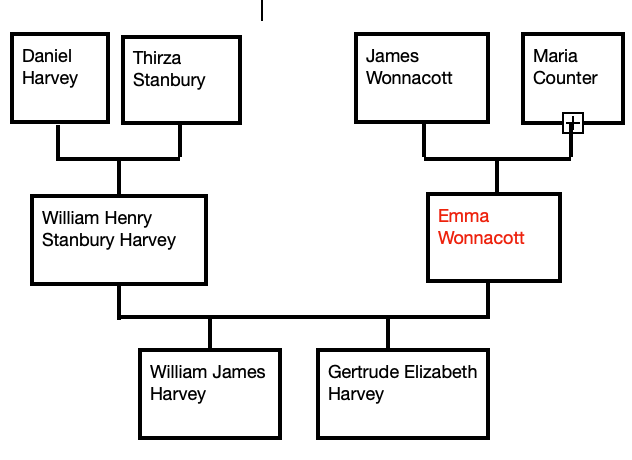
We first met Emma as the mother of Gertie Harvey, now she is the focus. 

When Emma Wonnacott was born on 11 December 1869 in South Tawton, Devon, her father, James, was 38, and her mother, Maria, was 34. In 1871 James was a lime quarry labourer* and he and Maria had 3 other children at home with them in South Zeal – Ellen aged 14y, Joseph 12y, Anna Maria aged 4  as well as 1 year old Emma. 

Emma’s mother Maria died in about 1877, aged 42 after 23 years of marriage. In 1881 Father James is an invalid.  He and the now 11 year old Emma are living in Spreyton village with sister Ellen and her husband James Powlesland an ag.lab aged 23 years.  Ellen is working as a dressmaker to help make ends meet.  Emma is a scholar. 

In 1891 Father James is working again as an ag lab and is now living in the middle of Sticklepath near the chapel.  Emma was a house and parlour maid (sounds a bit posh! Most local census entries just say servant.)  She worked for Francis Budd, retired barrister, at Batworthy, Gidleigh.

Emma married William Henry Stanbury Harvey in April 1894, registered  in Okehampton, Devon (I am not sure where they married). I wonder if they met when she was visiting her father perhaps? The 1901 census shows them living in Sticklepath at No 1 Taw River Cottages.  I wonder if she moved there when she married?  They had two children during their marriage. Gertie was born 1 Jun 1895 and Willie 21 May 1898.

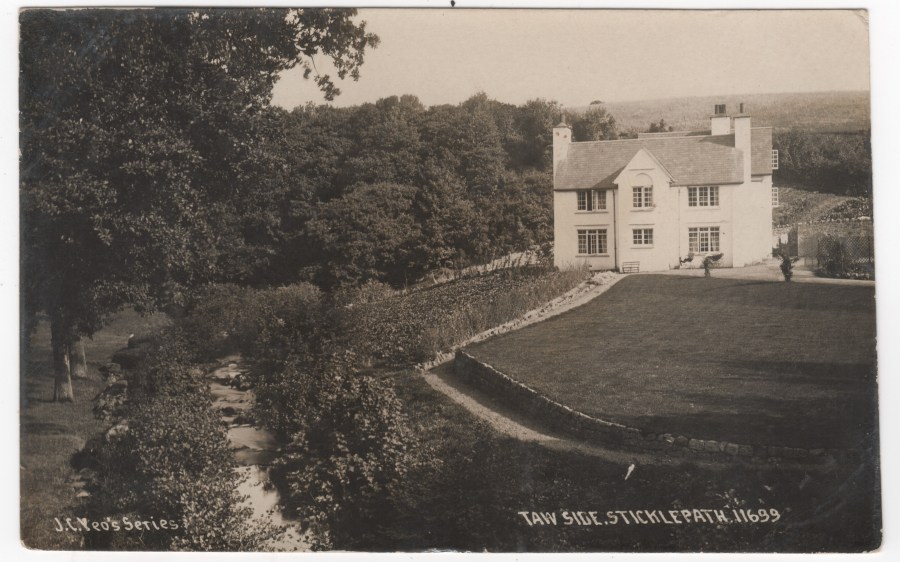
By 1911 the family had moved to Tawside, and now sister Ellen and daughter Ada were living with them or at least staying on the census night. We also learn that Ellen had lost a child.  They took paying guests.

The 1939 register helpfully confirms the dates of birth for the family, who are still living at Tawside. William Henry describes himself as an old age pensioner and his son William James is now the farmer.  Emma died in July 1943 at the age of 73, the death was registered in Okehampton.

*South Tawton Lime Quarrying started in the 16th century, peaking in the early 1800s, and closed 1906.  These were difficult times for labourers locally as Ramsley Mine closed in 1909, farming was in recession and, as we now know, war was just around the corner. 

As always lots of questions arise. Where were No 1 and No 2 Taw River Cottages? How did the family afford to move to Tawside? What happened to Emma’s father James Wonnacott for him to be called an invalid? I wonder why he moved to the middle of Sticklepath? How did the war affect them – I have so far not found a military record for William James Harvey, perhaps he avoided it in a protected profession of farmer?

I would love to hear any more information, or perhaps add a photo?

Did you wear a school uniform?

Jayne Shrimpton has written an interesting article about school uniforms in this month’s ‘Discover Your Ancestors’ periodical. I am sure we all have school uniform stories and memories, please share some.

Sticklepath school (Sampford Courtenay Sticklepath Council School) which took pupils aged 5-14 up to 1931, did not have a uniform, but on 26th September 1921 they obtained football jerseys for the team with vertical blue and white stripes. There was not uniform when I went, by which time it was a ‘junior’ school only.

Later I went to Edgehill College, Bideford, which took international students, so no local uniform shop for me or quick ‘pop in’ to BHS! I had to go to Dickins & Jones in London to get my uniform suit and blazer and beret. We paraded in these every Sunday to chapel and church. Although I was unaware of the shop’s history*, I felt the pressure of its status and was thoroughly intimidated. A little Devon girl, used to inheriting hand-me-down clothes, in the big city after a long journey, being properly measured by austere ladies, fitted and kitted out! On a more day to day basis we had open necked shirts and jumpers (1971). We certainly were not allowed to wear trousers!

Photographs of the brother school Shebbear show an even more formal and uniform uniform in about 1950:

Prize day? About 1950?

with regulation short and tidy slicked back hair, though the loose fitting trousers and most importantly, the ‘see your face in it’ rigorously hand-polished shoes are in danger of being overlooked in the photo above!

Roger Bowden with lifelong friend Matron Blight

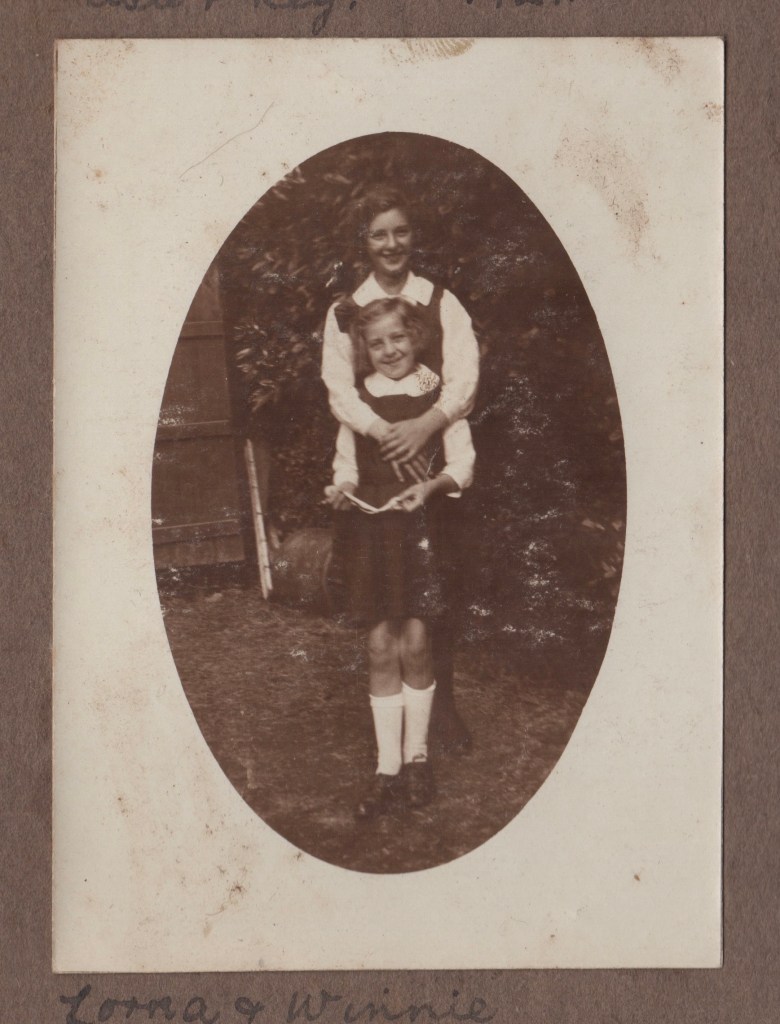
Looking a little further back, to the 1920s I note the younger students wore white socks – we used to joke in the 1970s that we should wear white socks for our music exams as they would make us look younger and the examiner might be more sympathetic! These are from Miss Phyllis Finch’s album. She was a geography teacher, in training, during the early 1920s.

The older girls as above wore thick dark stockings.

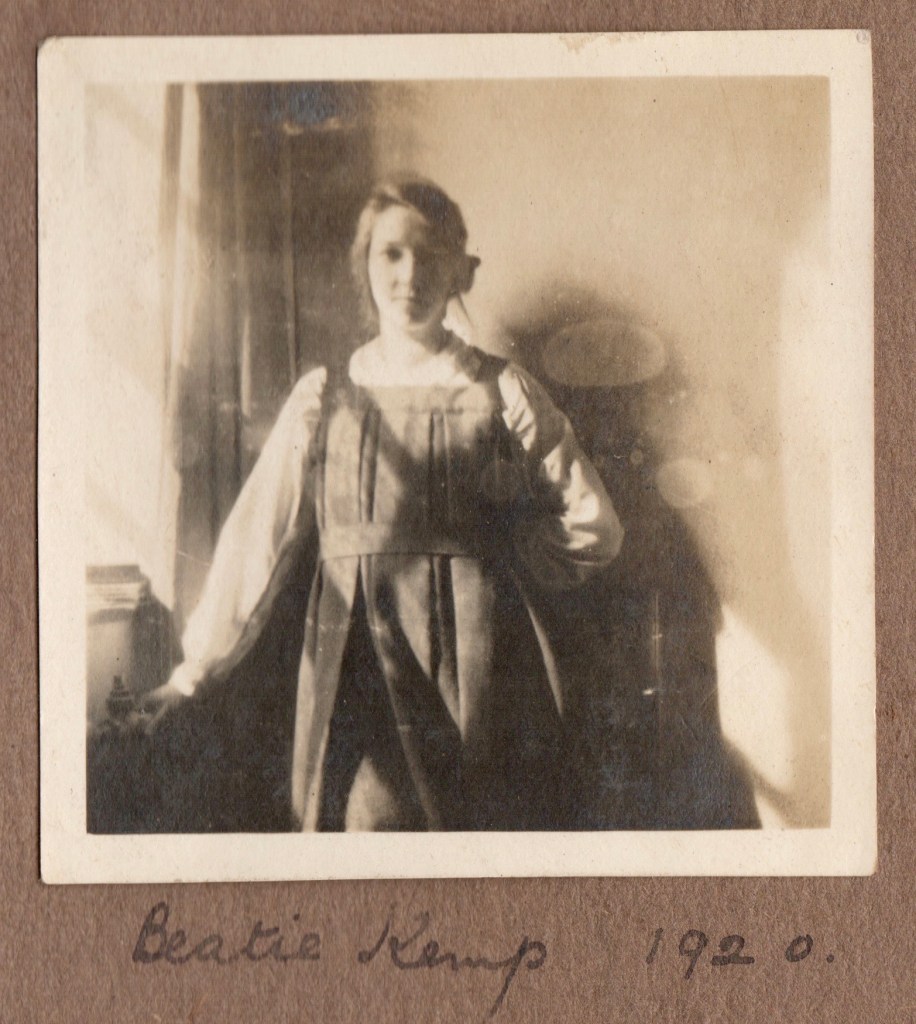
Jayne Shrimpton tells us this ‘gym slip’ originally designed for sports was increasingly used as school uniform. Certainly looks practical, and the layers would make it quite warm with woollen stockings.

I have just such a home made gym slip worn by Rose Ching in 1923 at Exeter University, with a photograph showing her modelling it with the team. Almost 100 years old. Above knee at the time, with the enhanced stature of today it is unlikely to be worn again! Anyone know of a good home for such items?

Do share your own school uniform stories!

*Wikipedia tells us:

In 1790, Dickins and Smith opened a shop at 54, Oxford Street. In 1830, the shop was renamed “Dickins, Sons and Stevens”. In 1835 it moved to the newly built Regent Street, becoming Dickins & Jones in the 1890s

Bought by Harrods in 1914, and in 1959 both were acquired by House of Fraser. By 2007 Dickins & Jones just became an in-house fashion brand of House of Fraser.

https://en.wikipedia.org/wiki/Dickins_%26_Jones

That Pram…

Those who read earlier posts know that I mentioned a pram. Here is a little more about it!

On 30 May 1898 Albany George Finch married his second wife, Georgina Ching of Higher Coombehead Farm, Tongue End. I imagine both families approved as the other was ‘of good Methodist stock’.

She was one year his junior. They were married in Sticklepath Wesleyan Methodist Church by the Rev. Thomas Tretheway. Georgina’s brother Loius and sister Eliza were their witnesses.

They lived in Cleave House and Georgina took lodgers and paying guests. There was no inside toilet or bathroom but 3 reception rooms plus the kitchen, and 4 very good sized double bedrooms (‘apartments’) plus a single bedroom.

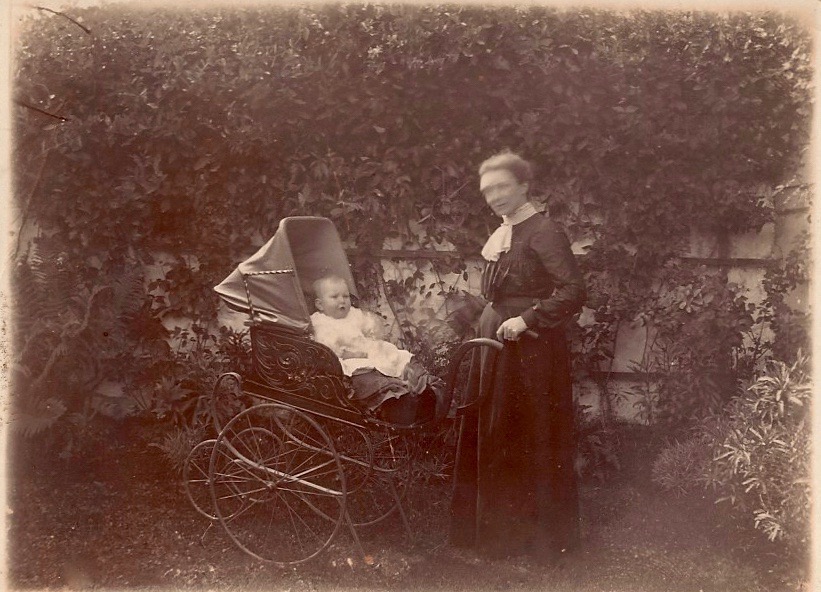
Georgina and Albany had two daughters, Phyllis Irene (1902 born in Higher Coombehead Farm and Muriel Ching (1904 born in Cleave House). I suspect it was a real treat when Albany arrived home with a rather special pram. Quite a status symbol in those days. Perhaps it was bought earlier by a family member and passed on to them? I am sure it would have ‘turned heads’.

Unfortunately Georgina moved during the long exposure needed for this photograph with baby Finch. It is likely to date from 1903-1905.

Mail cart prams of this sort were popular from the 1880s through to the end of the Edwardian era, though they weren’t particularly safe for babies. There are contemporary reports of babies falling out, however the appearance was a primary consideration and some of the most beautifully decorated prams were made in this period. This one has chip carved side panels.

Convertible mail carts could be adapted with the end at the child’s feet being dropped into a foot well – allowing a larger child to sit up in the pram. It was not unusual for prams not to have a maker’s mark.

(Many thanks to Heather Robertson, Curator of Transport and Technology, Riverside Museum, Glasgow who emailed this information about 2018).

The Finch family always shared such items, re-used and re-cycled (it was generally called ‘make do and mend’ back then!) I wonder who had it next?