The year end is a time for reflection, after the main festivities and whilst we are still so full we can hardly move!
So what is a One Place Study?
Family history + Local history + House histories? Yes
People, places, institutions and events in a historical context. Yes
“Researching the people of a community within the context of the place they live”. (OPS website). Yes
Bringing photos, maps, statistics, stories, primary and secondary sources and analyses together with a view to making them accessible to others? Yes
Bringing different types of information together in an exciting new way? Yes
“investigating a small geographical area in minute detail” (Dr Janet Few) Yes
Potentially serious, careful, accurate and detailed high quality research? Yes
Individual project or group collaboration? Yes
“An intensely personal brand of history” (Dr Janet Few) Yes
A brilliant resource for anyone studying ancestors in that place? Yes
True, but it is so much more. Drawing all this information together, one place studies (OPS) combine different aspects to bring new perspectives. Themes emerge like:
Migration -Why did people move to the place? Where did they go when they left. Why?
War – impact on individuals and the community.
Effects of geography / geology / transport/ access / faith / political or economic state on the population.
The population structure and how groups in society behaved or were treated: the rich, poor, women, children.
What was life really like in this place at different points in time? And so on and on.
For me a huge attraction is the range of possibilities, AND that I can choose what I want to do within it, at a level the suits me, gradually building up. Currently I am at the stage of pulling information together, and working out how on earth to organise it all! With lock down primary sources are fairly limited – just those available via the web.
One HUGE advantage of calling your research a One Place Study and even registering it, is the enthusiastic community of One Placers who encourage and support you.
https://www.one-place-studies.org (Check out the blog summarising great genealogical sites each month, and the numerous videos under ‘resources’)
http://www.oneplacestudy.org – Directory with links to the fantastic websites of many One Placers.
Dr Janet Few, our amazing Devon genealogist, has written a couple of books about this form of research, most recently ‘Ten Steps to a One-Place Study’ https://thehistoryinterpreter.wordpress.com/publications/. (Full reference below, within the UK contact the author direct for a copy)
The 10 steps, slightly adapted, (apologies Janet), form a useful framework to review my progress.
Step 1 Choose your place and its boundaries:
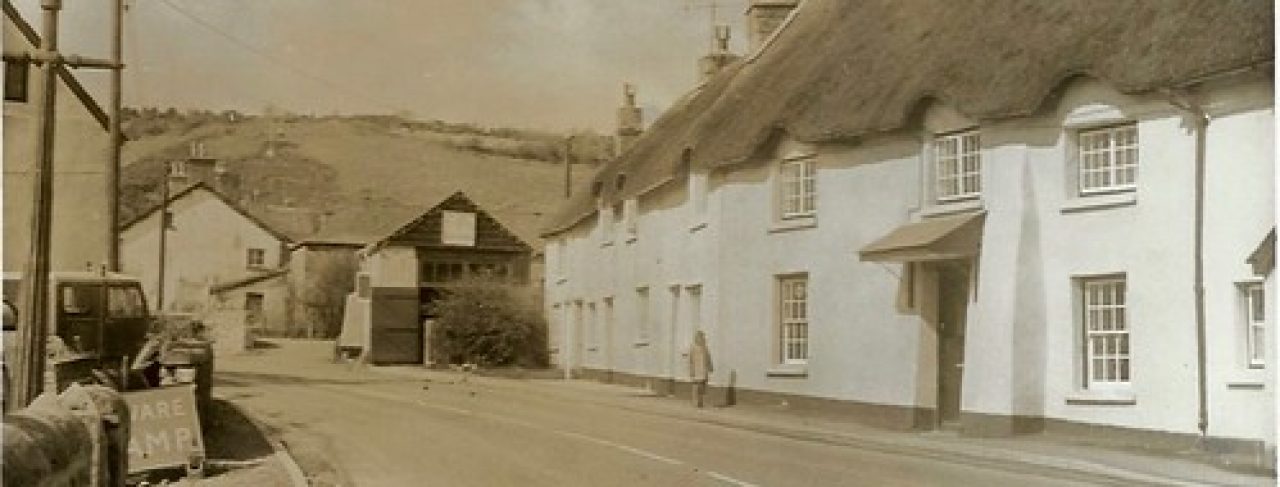
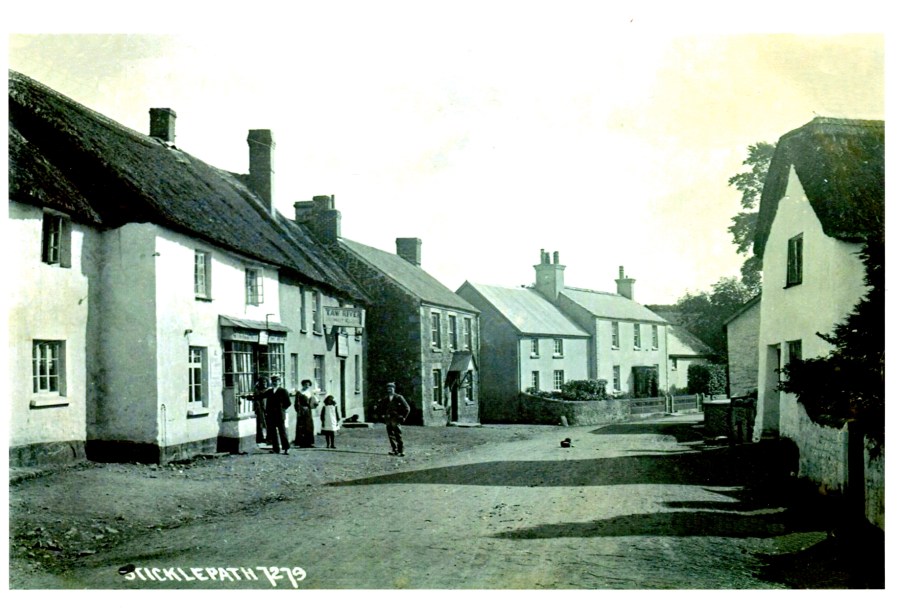
There are One Placers studying a village, a town, a street, a house, a crescent, a war memorial, a cemetery, a school. No rules here, you can chose any ‘place’ that appeals to you across the world, even a moving target such as a boat! It is worth checking the directory (link above) to check if there is already a study. For me my ‘home village’, my families home for 200 years and where I grew up, the village of Sticklepath was the obvious choice. I have done a little work previously (publications referenced below) mainly since my parents died in 2015, but the flexible format of OPS appeals as a framework. I took a Pharos course on the topic tutored by Janet Few in September 2020 and started from there.
Setting physical boundaries is still a challenge. Sticklepath villagers were included in 3 different Parishes and therefore 3 different census enumerator districts. I am not sure that the current Sticklepath Parish boundaries really reflect the agricultural community of our ancestors. My boundaries remain ‘fluid’ at present.
One key piece of advice was to chose a starting point such as a records source, a date span or a theme. Themes include occupations and local industries, population structure and changes, and those listed above.
Janet warns that it is easy to be enthused by the endless possibilities and not quite get organised. That summarises my 3 months neatly! Covid has of course largely prevented archive visits, even for those close at hand. Living in North Yorkshire, and moving house, with much family and village history still disorganised in multiple boxes, has not helped. However, I have also made some progress and can see some ways forward.
I am working through the Sticklepath section of the Sampford Courtenay Census for 1851 and creating family trees for all the residents on Ancestry, with a physical card index. As a rule of thumb any resident is in the database (this will eventually include those buried in Sticklepath Quaker burying ground). The family trees extend, where I can, to first degree relatives of those residents – parents, siblings, spouse(s) and children. (1851 is the first census with both names and relationships, which helps when creating a pedigree chart!). The aim will be, eventually, to add all the individuals from censuses 1841-1911 and the 1939 register plus many other sources such as directories, Parish registers etc. etc. to create one large database.
My main timeframe is 1770 – 1970. Should time allow I am also attracted to a focus on the decade from 1910 to 1920, leading up to the 1921 census which should be released in January 2022. Not started this yet, but I have booked a Pharos course on researching the 20th century to get me started! (Yes you guessed tutored by none other than JF).
Step 2 Reconstruct
This involves finding past research and books on your place, maps and images. Trying to get an overview of changes over time. Some of this is well outside my comfort zone, but I can chip away at it…
My plan is to use the OPS ‘shared endeavour’ blogs topics planned for next year to help build the picture. These include maps, landmarks, pubs, places of worship, and women in your place.
To be honest I find the idea of using maps both exciting and terrifying. I can get lost going to the next street! However, I have posted a colourful topographical map which I found really interesting and have signed up to learn something more about maps, so watch this space. Pubs – could be challenging, if I tell you my ancestors built a house they called Temperance Cottage…. but I am starting somewhere relatively ‘safe’, Sticklepath Bridge.
Step 3 Populate
Work on a database of residents has already given me a new sense of how inter-related the local villages and villagers were. Once the 1851 census database is completed (perhaps by April?) I will be able to look at overall population statistics and profiles. I am also keen to bring in softer evidence, the stories that have been captured in various places which bring character to the people and families. Such things I am sharing on my (free) WordPress blog and Facebook page.
Step 4 Collect a list of sources and bring the data together. A huge range of potential sources: biographical data from the Parish registers and gravestones; information about dwellings, buildings and institutions such as the school; Organisations such as the temperance movement in the village, scouts, political meetings; Details of events including who was present; Seeking out oral testimony, diaries, letters etc.; newspaper reports, directories; road changes; deeds, wills and probate. (Bearing in mind that many Devon Wills were lost in the bombing of Exeter).
Whilst I have made a start on this I need to both find a way to organise the information and to ensure that I include all possible sources. Once this is progressing I can start Step 5, to Connect, not just people in family groups, but people with places, and people with events. Connect them with a view to analysis (Step 6) and synthesising (Step 7) such as focusing on a time period or theme to draw new conclusions. I hope to use ‘NameandPlace’ software to facilitate this. Step 8 is to Contextualise, look at Sticklepath within historical contexts, comparing the locality to regional and national patterns, perhaps comparing and contrasting with other Devon Villages for example.
As you can see there is a huge amount of potential work here. It should come with a warning about how addictive it quickly becomes!
Step 9 is to disseminate or share findings. For me an early step, with a very steep learning curve, had to be creating a website and ‘blog’. This indeed is my 21st blog post – I feel I have come of age! Still lots to learn about making better blogs (and shorter!) with links. High quality research I feel is for the future. Many people wait until they have more material but for me sharing the information is key, and I am hoping it will enable more people to collaborate or contribute. I have made contact with Sticklepath Heritage Group and did a display and talk a couple of years back. I hope this link can be developed further as there are so many aspects to explore and I have a sense that this is a key moment to capture the early photos and documents and local knowledge of the 19th and 20th centuries before it is lost. We have the technology!
I have also published some thoughts on Blacksmiths in ‘Our Place’ using Sticklepath as my main example, my ‘Christmas Present’ arriving on 24th December, in the form of Destinations the Society newsletter. (Available to members).
I have found others conducting one-place studies have been very encouraging and supportive, willing to share ideas, methodology and good practice. Zoom and Twitter have rather taken over in 2020 from socialising at choir and orchestra during lockdown! So many opportunities online now, many free, to improve your knowledge and skills in family history. Many village history groups on social media willing to offer advice. Others like Devon Family History Society have opened their meetings using Zoom to those of us who could not attend in person – just £12 for the whole year – with many records accessible by members online!
Step 10 is about sharing the enthusiasm, encouraging more people to consider one-place studies. I suppose this is a small step in that direction.
Happy New Year
References
Few, Janet Ten Steps to a One-Place Study Blue Poppy Publishing (2020) 210mm x 148mm paperback 52 pages £5.00 ISBN: 978 1 911438 18 2
Pharos https://www.pharostutors.com/coursesmainsd.php
Shields, Helen. Walking Sticklepath through the Centuries: Part 1, Devon Family Historian, vol. 170, (2019) pp.20-25.
Shields, Helen. Walking Sticklepath through the Centuries: Part 2, Devon Family Historian, vol. 171, (2019) pp.19-23.
Shields, Helen. Walking Sticklepath through the Centuries: Part 3, Devon Family Historian, vol. 172, (2019) pp.19-23.
https://www.one-place-studies.org (Check out the blog summarising great genealogical sites each month, and the numerous videos under ‘resources’, Destinations newsletter for members which includes those considering starting a One Place Study at some time in the future).
http://www.oneplacestudy.org – Directory with links to the fantastic websites of many One Placers.
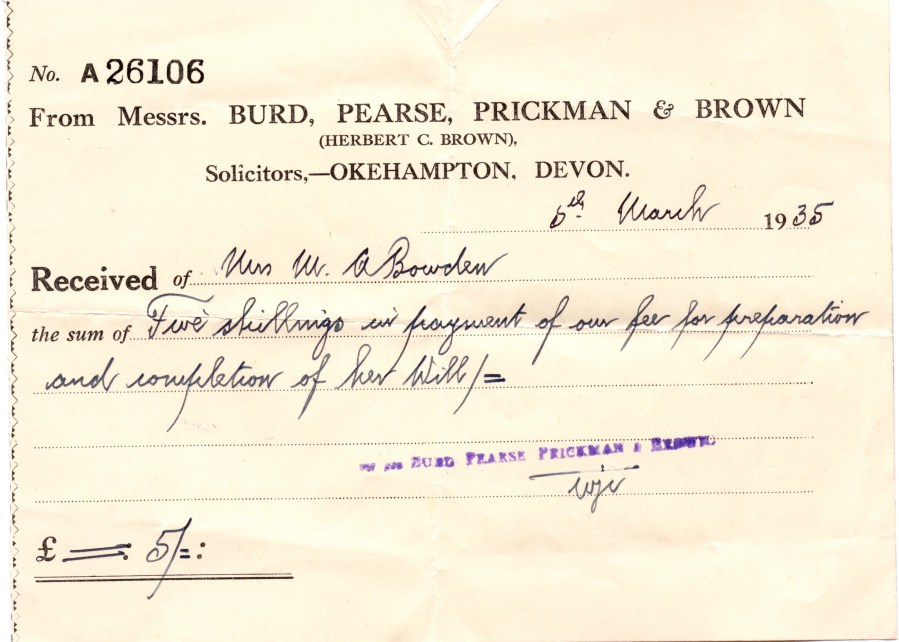
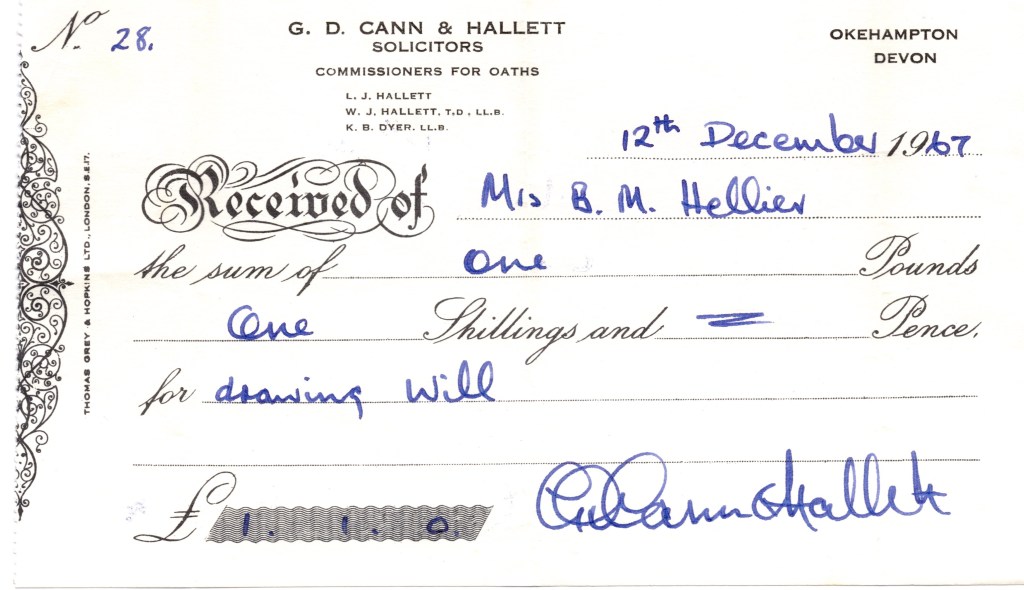
 Sticklepath a Village and its People