#52 ancestors : Fortune

Week 11 and still going strong, though I confess week 10 is still on its way! Over a fifth of the way through the year, so quite an achievement. This week’s post was inspired by a presentation for #OnePlaceWomen at the #OnePlaceStudies Society Webinar, by Janet Barrie, who looked at two philanthropists in her place.

That set me thinking – what philanthropic deeds have my ancestors performed? Indeed what have #Sticklepath people left behind as their ‘legacy’? Philanthropy is the desire to promote the welfare of others, expressed especially by the generous donation of money to good causes. This implies wealth such that you have spare cash ‘lying around’ to donate to worthy causes.

Unfortunately there have been few Sticklepath residents in the ‘has a fortune’ category. (There is also the question of where that money came from. I have not yet established any link between Sticklepath and Slavery other than the chapel sending a petition to parliament to support abolition). Indeed when money was raised by the village to pipe water down the street to stand pipes they held many fund raising events and mention is made that they appealed to philanthropists outside the village, as there was not an extremely wealthy land owner in the village, no Lord of the Manor to turn to.

Thomas Pearse, woollen merchant, generously bought and donated the burying ground to the village. His daughter Ellen gave the land on which the village hall was built. Donations were given to build the chapel and certainly Mr Cook the butcher contributed to the church building. Many chapel and I suspect church members gave generously in their wills as well as regular giving during their lifetime. Others gave similarly to ‘the poor of Sticklepath’, no doubt during life but also in their wills.

How else might we measure not just a desire but action to promote the welfare of others? I would argue that time is at least as valuable commodity and often ‘costs’ the giver more, with little thanks or kudos. My own relatives are among the School Governors, and certainly, whilst head of governors, Mr Cook gave a shilling to each child who had attended school regularly throughout the year and not missed a day – quite an incentive to do well! Others gave apples or milk to the school children, or provided extra lessons. Many folk looked after neighbours who were ill or in need. Others cared for the long-term sick and disabled. Bert Stead visited widely and did what he could for many. Douglas and Ruth St Leger Gordon promoted Dartmoor, including Sticklepath, in their writings, helping those in tourism as well as promoting the great outdoors which we now know is healthy. Dick, Bob and Marjorie Barron made the Finch Foundry Museum into what it is today. It is tempting to think of doctors, the clergy, policemen and magistrates who gave above and beyond the call of duty, but equally each person has the opportunity to give that extra bit for the community, Nellie Harris as school caretaker or Geraldine Marks who kept both school and chapel spotless, or earlier Ann Mallett, who my grandmother recalled would be seen daily walking up to the school with her own broom. I understand Mrs Tucker was awarded an MBE for her work in the war, but do not yet have any details.

All this of course begs another question – what do we as individuals do to benefit others outside our paid roles? Does researching and recording our history provide some sort of lasting legacy? A good question! I hope to finish a #OnePlaceWednesday blog about someone, a resident of #Sticklepath, who volunteered during World War 1 shortly… watch this space. (Also for #OnePlaceWomen).

Please do respond, or nominate others who gave for the benefit of others in whatever way. I am keen to hear of other examples and views.

#OnePlaceWomen: Auntie Kate 1860-1933

#OnePlaceWednesday #OnePlaceStudies #SticklepathOne #Sticklepath #Genealogy #Ching

I think this week will have seen Auntie Kate turning in her grave!  She has been the subject of two contrasting pieces which perhaps demonstrate what I call the genealogy and family history approaches.  The budding genealogist in me was doing an exercise presenting the evidence I have regarding Kezia Ching for a Pharos course with Karen Cumming @CummingsPFH, trying to understand all about reports and evidence based genealogy. (for more about this exercise see https://helenfinchsticklepath.wordpress.com/?page_id=1737)

At the same time I was preparing a scenario to read in my very rusty Devonshire accent, imagining what Auntie Kate’s daily life was like. A full blown genealogy report stating all the facts is very useful for someone trying to find connections going backwards, building up their family tree from the present to the 1800s and beyond. However, for the less academic, a softer approach is perhaps more accessible. We need both. The scenario, like many historical novels, uses some poetic licence but is equally researched, based on a range of resources and evidence. I am sure both of my end results can be improved upon.

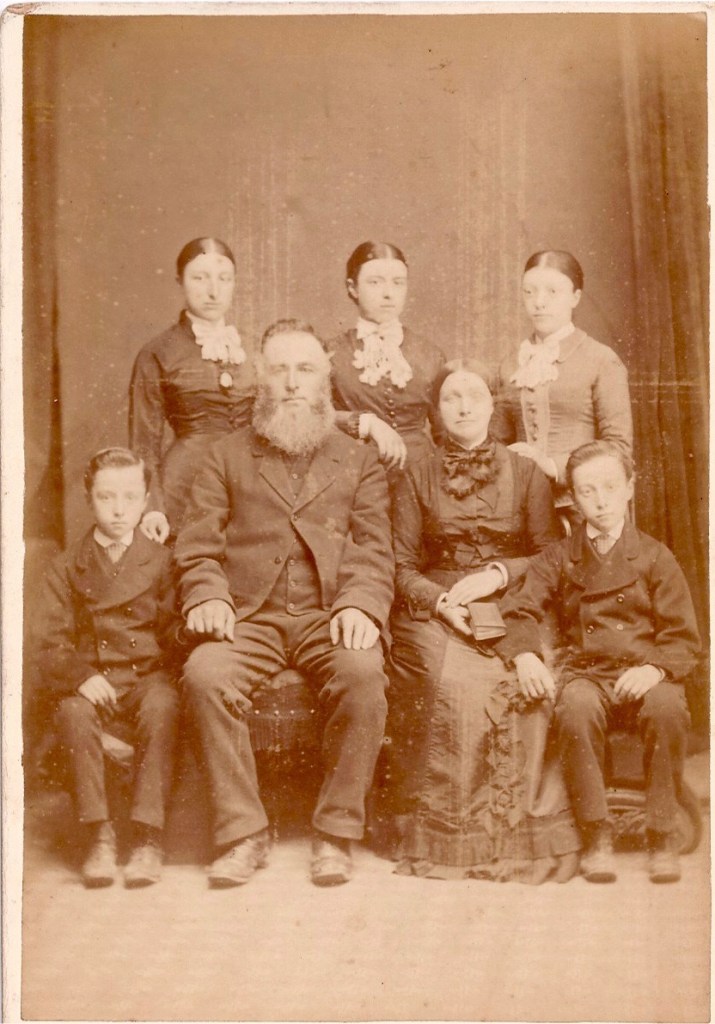
I am very lucky to have a range of photos and documents, largely I believe kept by Kezia Ching herself. Part of what I enjoy about family history is combining the different sources and seeing connections between them. Weaving a web! For example, looking at details of the photographs I have scanned I noticed these were taken on the same day, or at least the girls are wearing the same clothes:

Back Row: Eliza Ellis, Kezia Huxtable and Georgina CHING. Front row: George and Eliza Ching with their twin sons George and Louis
Eliza Ellis, Georgina and Kezia Huxtable CHING

Bringing in a story from the foundry about how women bring their irons to be ground flat and what I have been told about ironing or pressing clothes, the scenario developed (please read with a Devon accent!):

“Now then yer they be, my family.  Goodness tis not far short of 200 years since Eliza and George were born, latter half of the 1820s.  Don’t time fly – of course, come the end of the 1920s and I be the only one of the lot of us still standing!

There we are the 3 sisters at the back Eliza Ellis, then myself Kezia Huxtable (the Huxtable is for my mother you know) and Georgina.  Then  a bit later along came the twins, Georgy and Louis.  I was 7 when they were born and I suppose once Eliza went into service I was often left looking after them. A bit of a handful, but good training for me! Sticklepath School wasn’t built until 1879 so too late for all of us, but Mum and Dad ensured we all did our learning.

Oh I remember the day that photo was taken, the three of us had dressed up, pressed all our frills. It wasn’t quick job ironing those dresses. But the photographer made us stand at the back there, where no one could see our skirts.  So we had to have a second photo to show them off.

I think mother might have taken the old iron down to the Foundry you know, to have the bottom ground flat for us on their grindstone. Of course you had to have a good fire to heat the iron, and we’d have put a piece of damp material between the iron and the frock so as not to damage it or make sooty marks, but it did help get rid of the creases. 

We did like to take some pride in our appearance you know, tried to keep up with fashions but you didn’t have a new dress very often, and look at the yards and yards of material, to say nothing of the underskirts. Sometimes we would alter the decoration or for a bit bigger job, take it to one of the village dressmakers to alter.  Of course all that changed – by the 1920s girls just wore a little thin straight slip and a loose dress in flimsy material to just below their knees!”

There are many decisions for the author along the way – should we enhance the photographs? How far can we imagine scenarios? What words and phrases might belong to the times? The following two photos demonstrate the changes in the road during Kezia’s lifetime, and I quote my grandfather’s words regards the hedges in his childhood, as if said by Kezia. (Don’t forget the accent!):

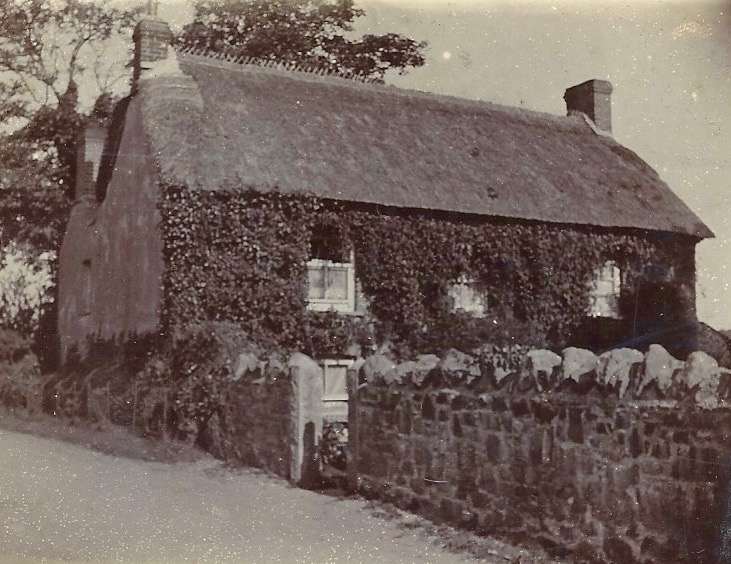
“I was born and raised at Coombehead Farm. There was always something us as children was expected to do to help. Here is the house. Of course my niece Phyllis was born there too about 1902. Girls about to be a new mother nearly always came back to their own Mum for their first birth in them days.

Now that one on the left you can see there are still wild flowers growing alongside the path at the side of the road, proper pretty in spring and summer as you walked the mile and a half down to Sticklepath Wesleyan Chapel.  Proper Chapel Folk we were you know. But I think you can see the wall there looks quite dusty.  In summer the hedges would be white with dust. It may have been a main road from Exeter to Cornwall, but it wasn’t the smoothest of roads neither. 

They widened the road and of course eventually us got proper tarmac.  That wasn’t good for those in the farmhouse look, no space between the house and road now.  Nor did it suit those of us on Shanks’s pony – the walkers I mean!  The wall looks cleaner though.  Less dust, but more fumes later though as motor cars come into fashion.” You might also note the art of dry stone walling was lost when the wall was re-built.

Creating a story brings out different aspects of local history and daily life to a genealogy report focused on personal documentation, and perhaps is more generally applicable to the ancestors of audience members. I take great pleasure from finding a new source or developing a new understanding of sources. Creating a story pulling the facts can be great fun too – I certainly enjoyed it!

#52 ancestors: The Twin’s Photo Album (Week 9 Multiples)

#OnePlaceStudies #Sticklepath #SticklepathOne #Oldphotos #Genealogy #Ching

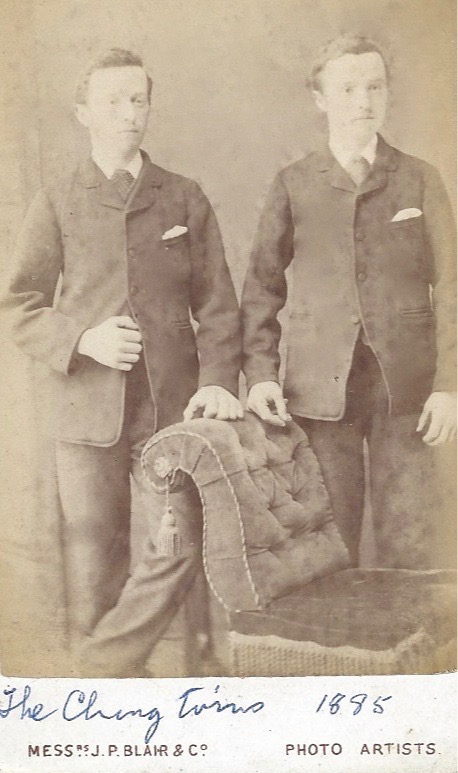
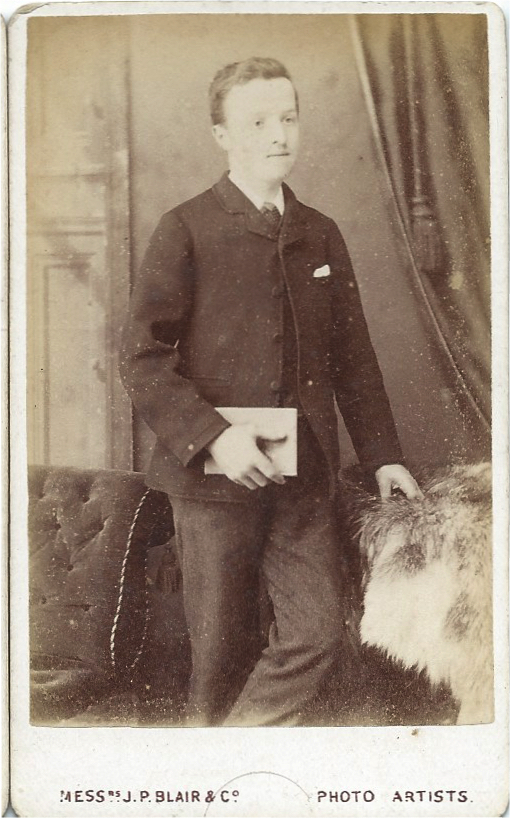
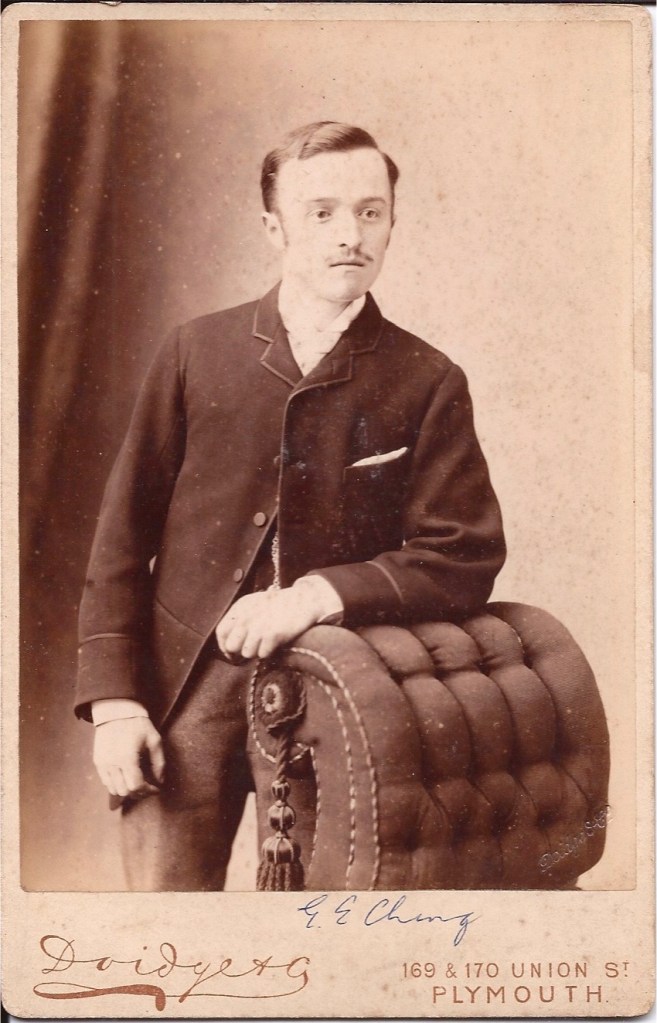
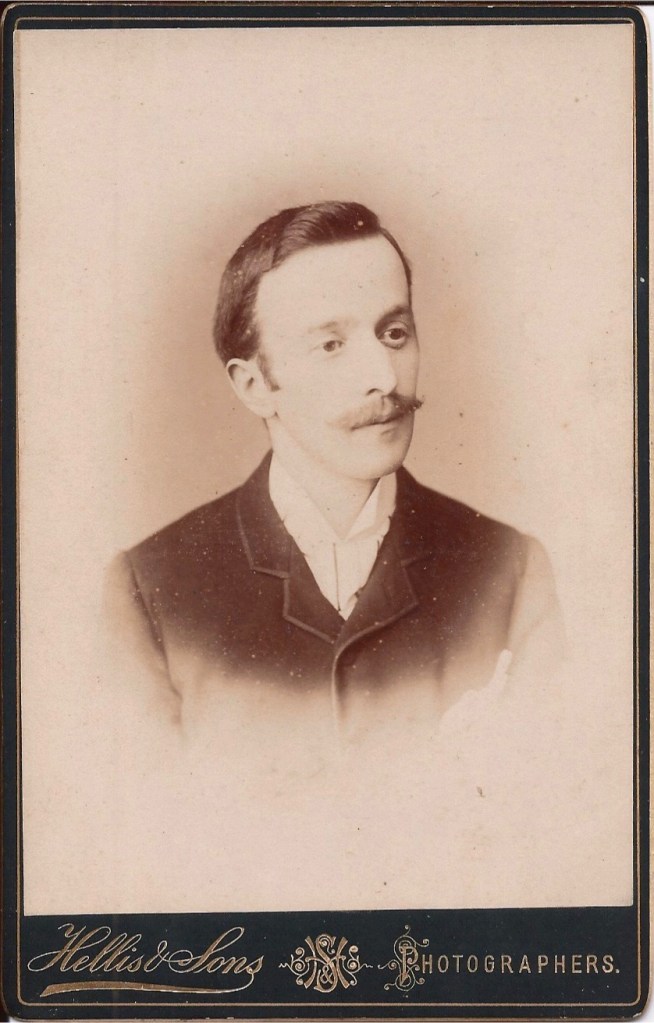
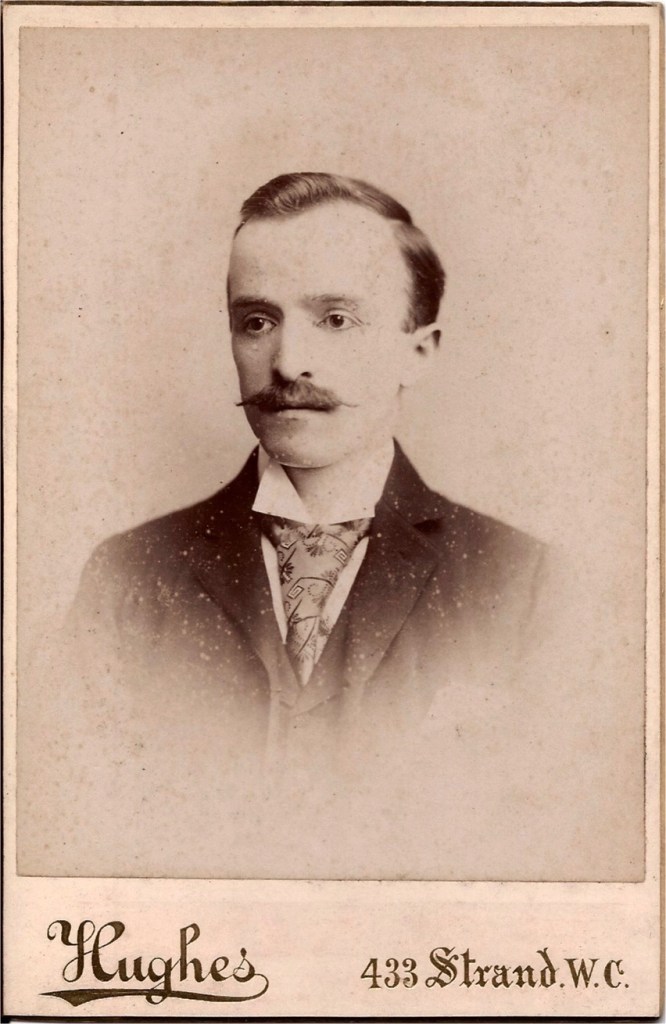
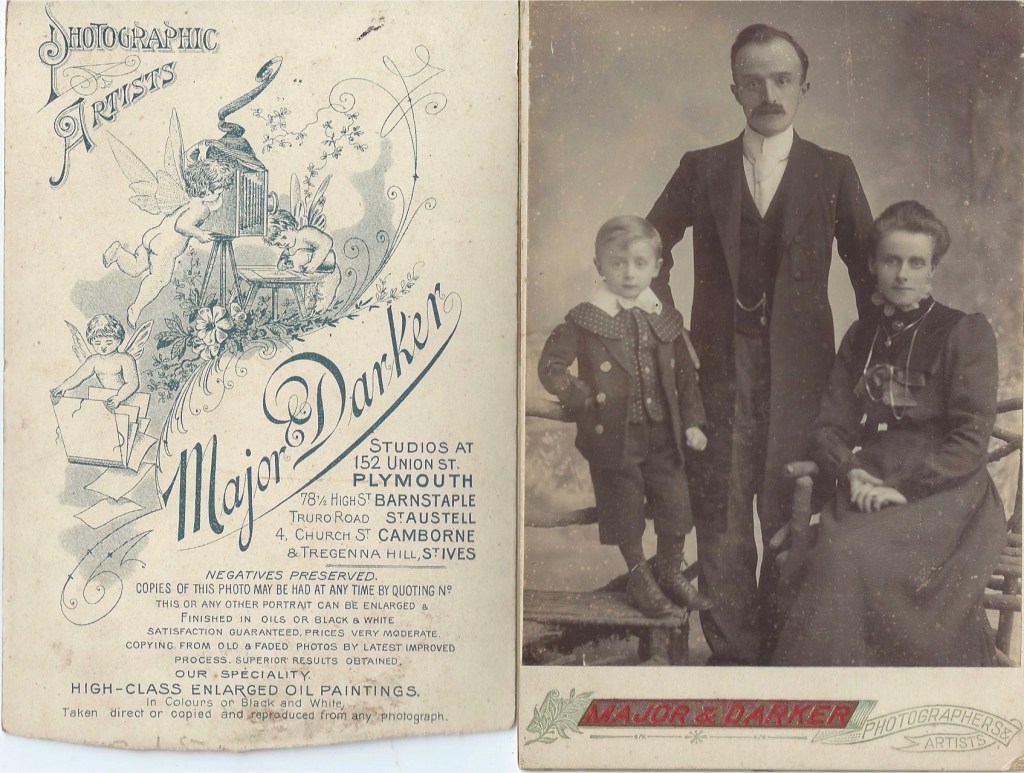
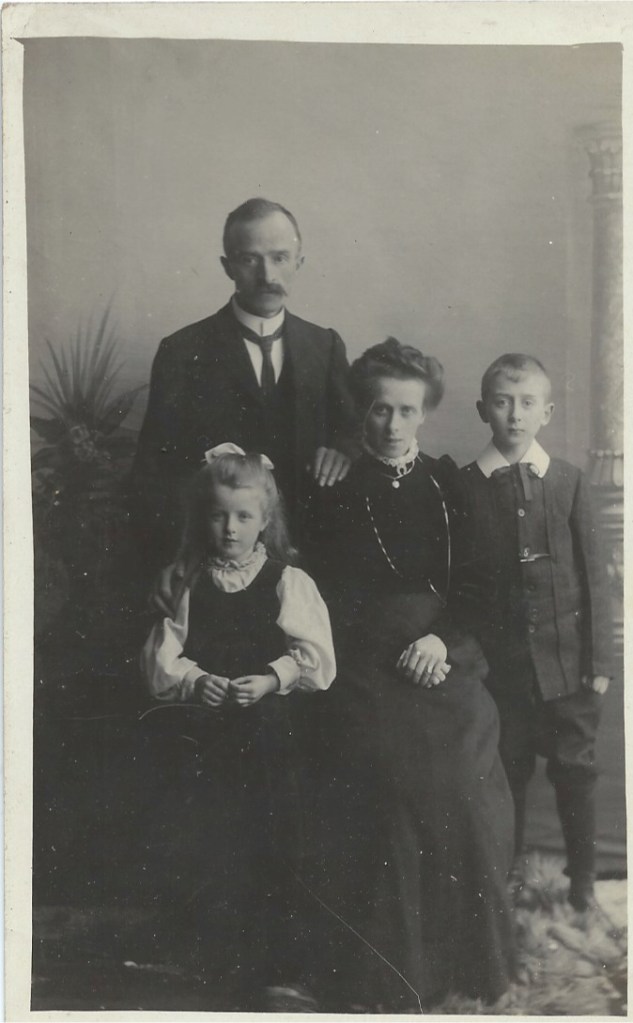
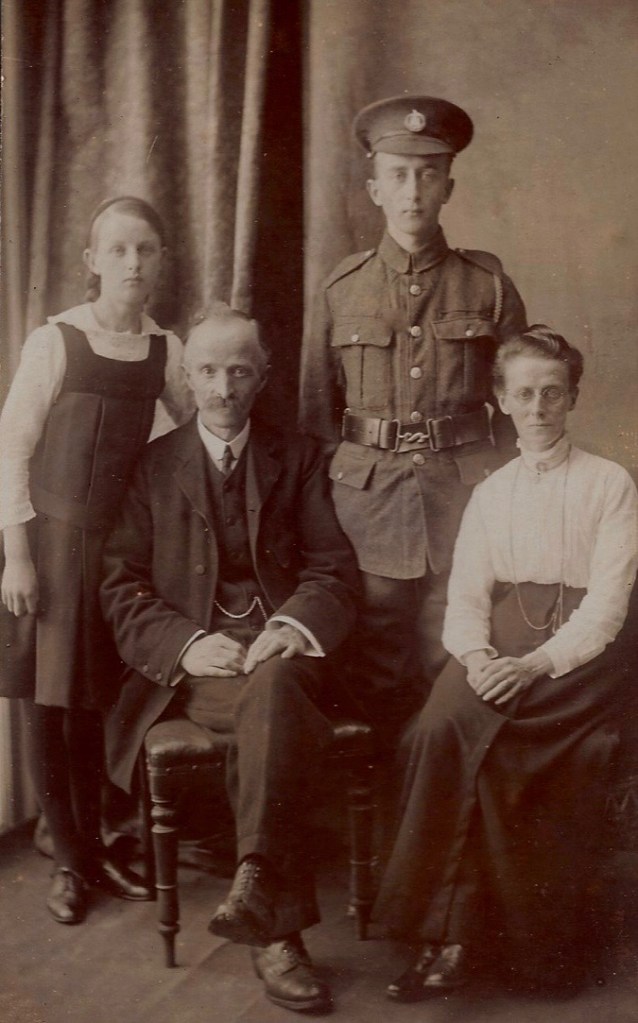
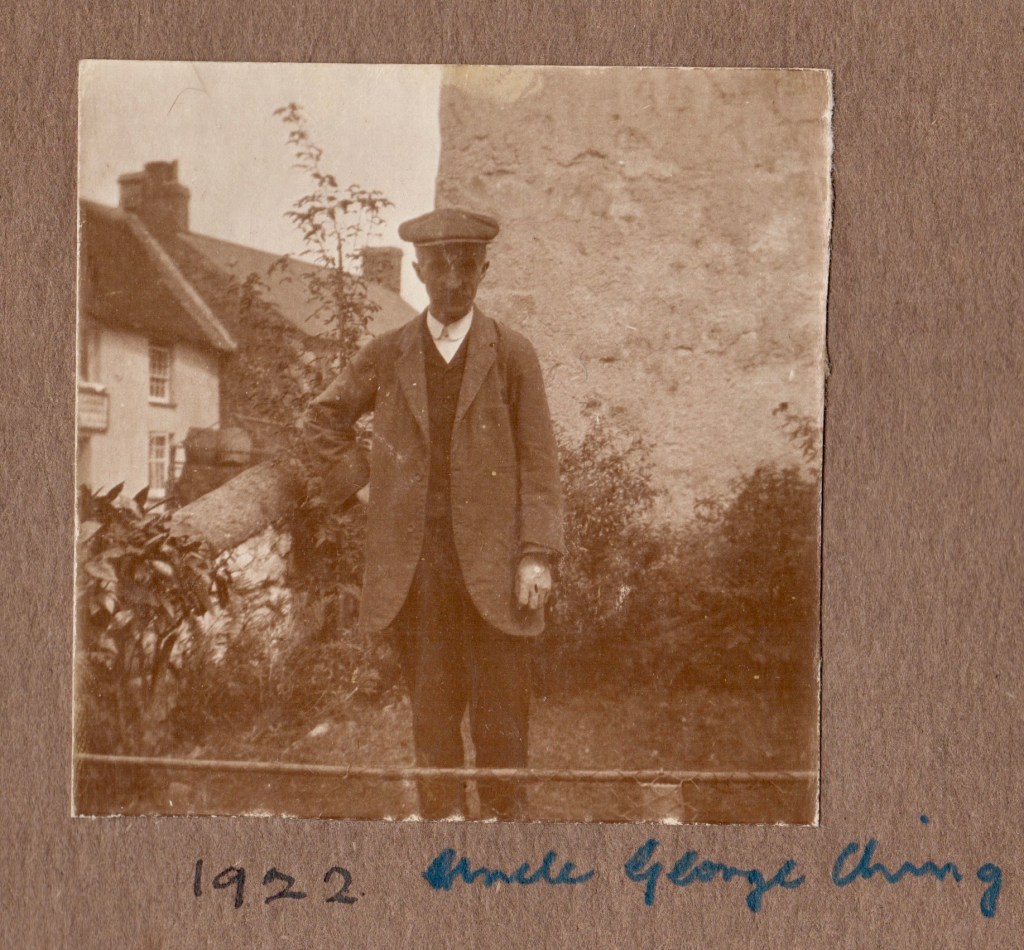
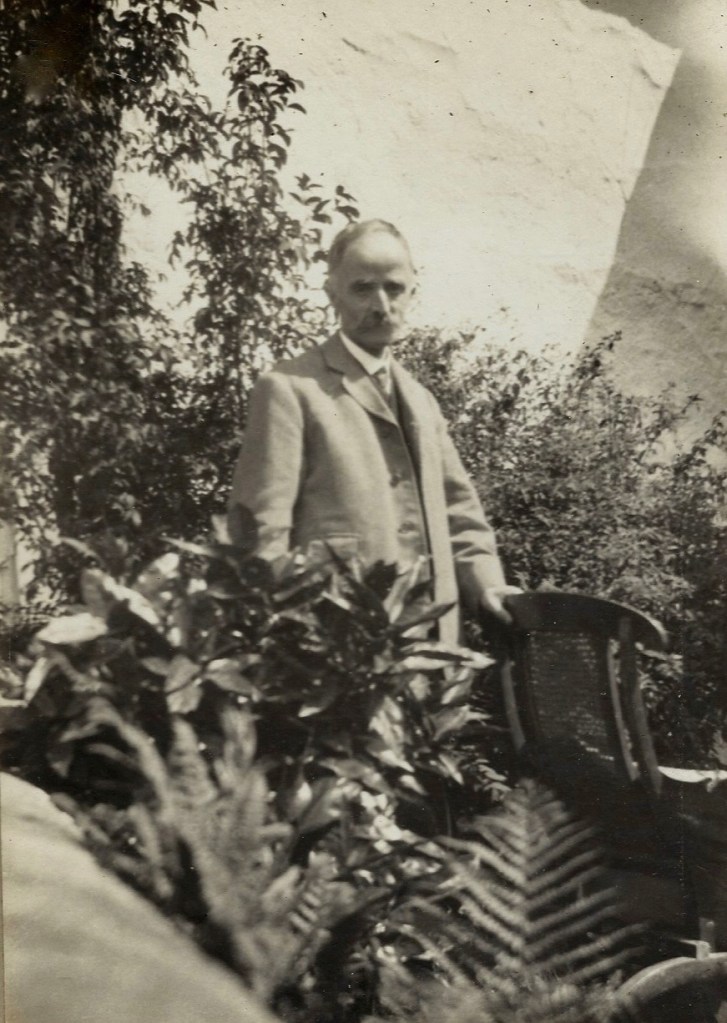
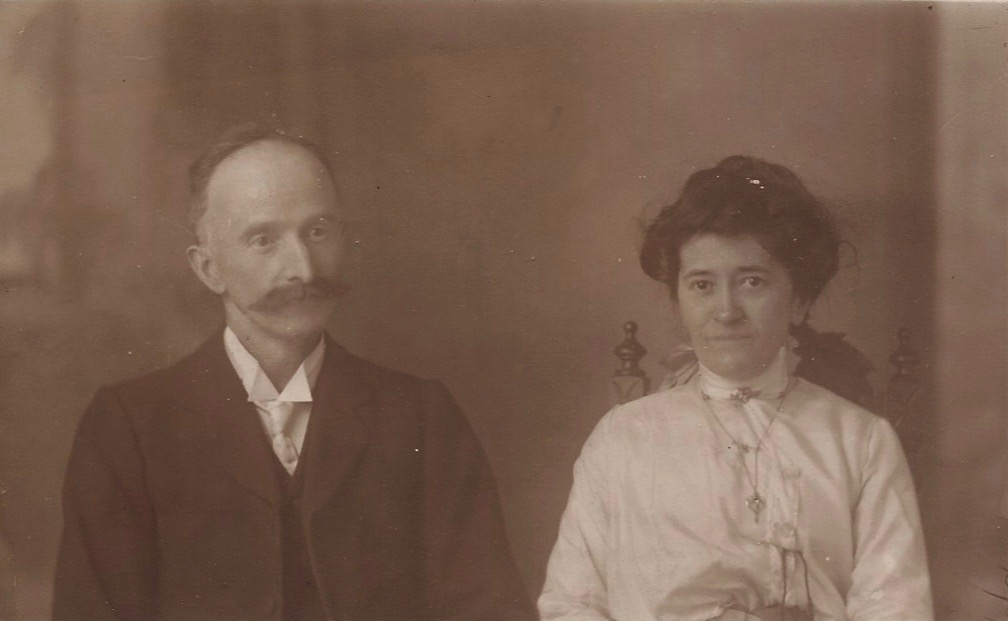
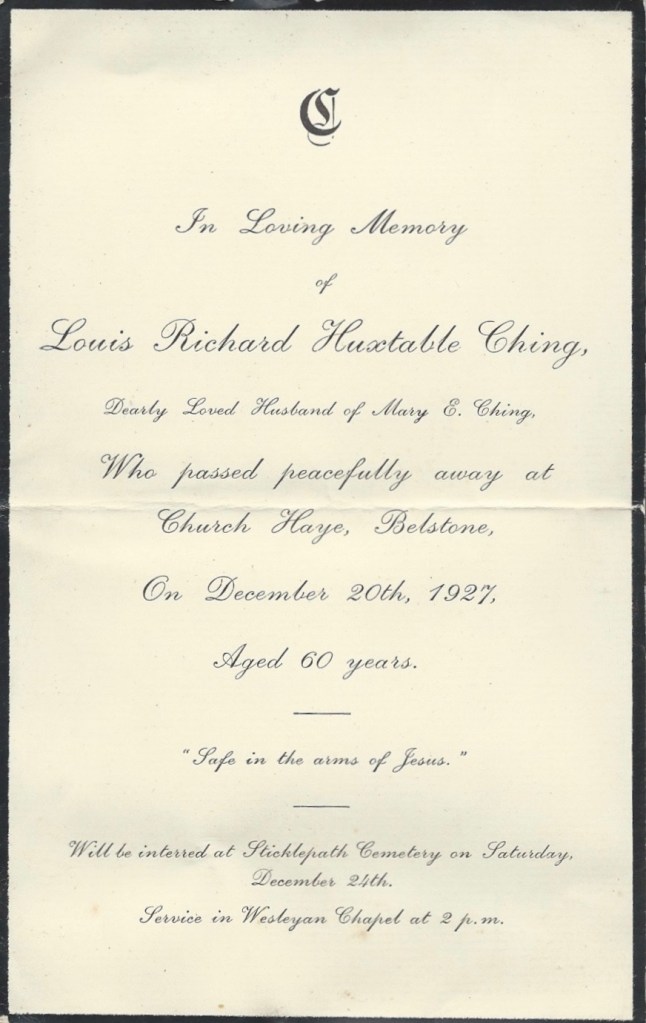
The Ching Family lived at Coombehead Farm at Tongue End near Okehampton, within Sticklepath. Today the focus is on the twins George and Louis Ching who were born in 1867 and died 1926 and 1927. Their parents George and Eliza already had 3 daughters. These are scanned from the family album, no editing has been attempted. Some changes in fashion, ties and moustaches can be seen. It is not always clear which is which!

18th Birthday Photo
The twins help out at father’s farm at harvest time

George with wife and son

1904 George with wife and children
1914
Louis and wife