Hasping! #OnePlaceStudies #Sticklepath

Hasping. Such a strange word hasp. Lovers of DIY and pirate kings know the slotted hinged metal plate that secures a door or chest lid, is called a hasp. Fitted over a metal loop and secured by a pin or padlock, that is a hasp. A picture is much easier to understand – sorry no treasure chest to hand!
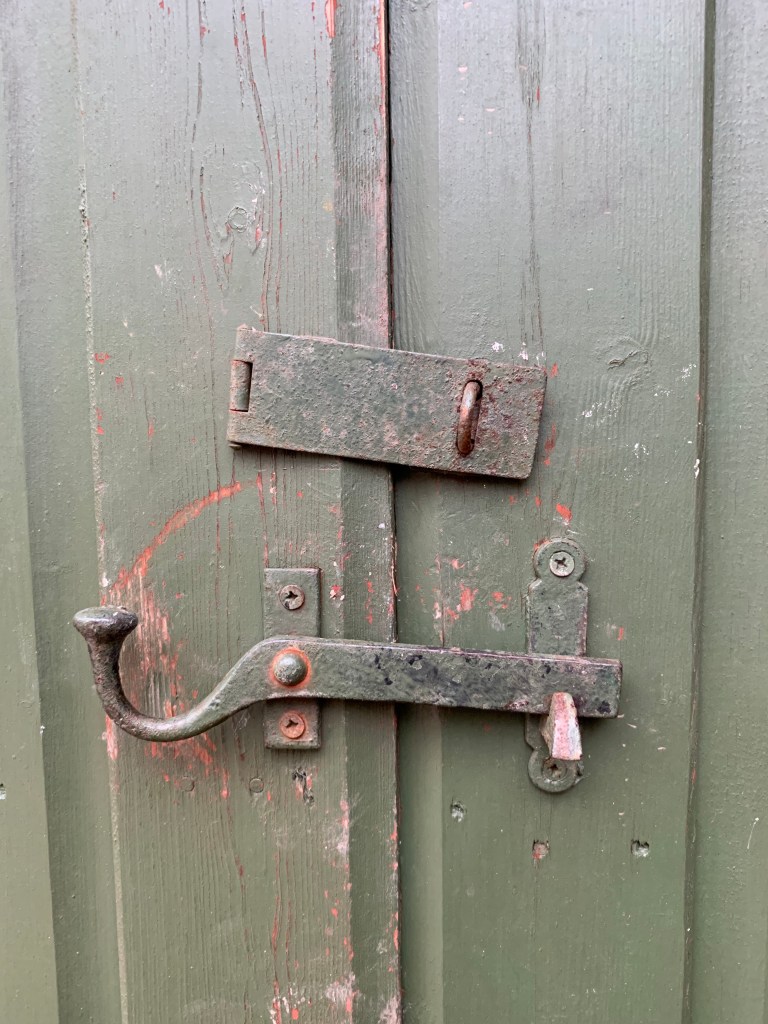
Hasp above the latch, ready for a pin or padlock to secure the shed door

In “Family History Nuts and Bolts” (and hasps!) Andrew Todd describes hasping as a sophisticated family reconstitution tool (chapter 7). Basically it is securing the facts. Ensuring that this Mary Smith is the right one in the right place and time and is actually the mother of this particular John. I find prisoners and court cases particularly difficult to hasp – perhaps appropriate given the metaphor of lock up! Whilst I might get a thrill from having a petty criminal in my family or feel ashamed and not want this to be someone in my family, there are often few details to help us feel secure in the correct identification. Locking the criminal out of your tree, secure in the knowledge this can’t be your Harold Shipman is equally important – as is recording the evidence and negative findings so you don’t repeat the process next time.

Arguably for One-Place studies involving many families it is difficult to provide the many layers of proof we might like. At least two original sources for each fact is just not always possible in a reasonable time frame.

We might start with a memorial, a gravestone which, if we are lucky, names a wife and child. This may lead us to census information and we can often follow a family over decades through the census. The same names ages and relationships help confirm this is the same family. There are always those outliers though – the teenager who goes off to be a domestic servant in another household. Then there are those cousins who have almost exactly the same names and are similar ages, to confuse us. Hasping allows us to confirm the people are correct despite a move for example. There are many techniques and tools described in genealogy text books and family history blogs to ensure your research is valid. Today I am just thinking about one softer tool, that which comes from sharing your findings with others, perhaps enabling another person to check your findings, not in a formal way, but another opinion nevertheless.

Some feedback is positive, but when others have different findings it is initially disappointing – It is always heartening when someone looking into the same family pays a compliment, suggesting they agree with your findings. The occasional knock-back, for example, leaving me red-faced when I bumped off Adelaide Finch in a place she never visited and deprived her family of many happy years was a welcome wake up call to double my efforts to hasp and correct my findings. A very good learning point too. Do not assume the only death for the name coming up on a search is necessarily the person you are looking at, even if the age is about right. Sharing your research is also a motivator for getting it right!

So how do you share findings? Many advise only sharing some of your findings to draw relatives in – cousin bait. Certainly something to think about, as we might learn something useful from each other. Websites to share your findings might include the Findagrave website, Family search, Wikitree (free genealogy website with an emphasis on sources), Lost Cousins, the common commercial sites – how many might you add information to? How can you find other opportunities to share your findings? The answer is within our grasp….

The One-Place Studies conference on 20th November 2021. This year we will learn about the first steps to studying a place; sources to consider from family and local history and social history perspectives: not only researching a bunch of individuals, families and landmarks, but making connections to form a bigger picture. Our fourth and final talk is all about publishing and publicising your research – easy if you know how! This talk promises those answers – ways to promote and share your research with the world, both online and offline. Plus plenty of friendly discussion.

There is still time to join in time to ‘come’ to the online conference if you are interested in learning ways to investigate the place your ancestors lived, are a seasoned One-Placer or are considering starting a One-Place study. Membership of the Society is just £10 and some people (eg #GenZ) are entitled to free membership! Membership entitles you to attend the conference for free, tap into the support of this friendly group and a range of stimulating monthly webinars and discussions. See you there!

Ref: Todd, Andrew The Nuts and Bolts Series:1. Family History Nuts and Bolts Problem Solving through family reconstitution techniques. 3rd edition August 2015 First published by Allen & Todd 1998

________________________________________________________

My #OnePlaceStudy (OPS) research this week has involved an outlier, someone buried in Sticklepath but who I suspect never lived here, though her mother did, and her mother’s family were one of the key Sticklepath families during the 19th century. She is also an outlier in terms of her death being barely 50 years ago, generally a boundary I have set myself for the OPS (focus on 1770-1970).
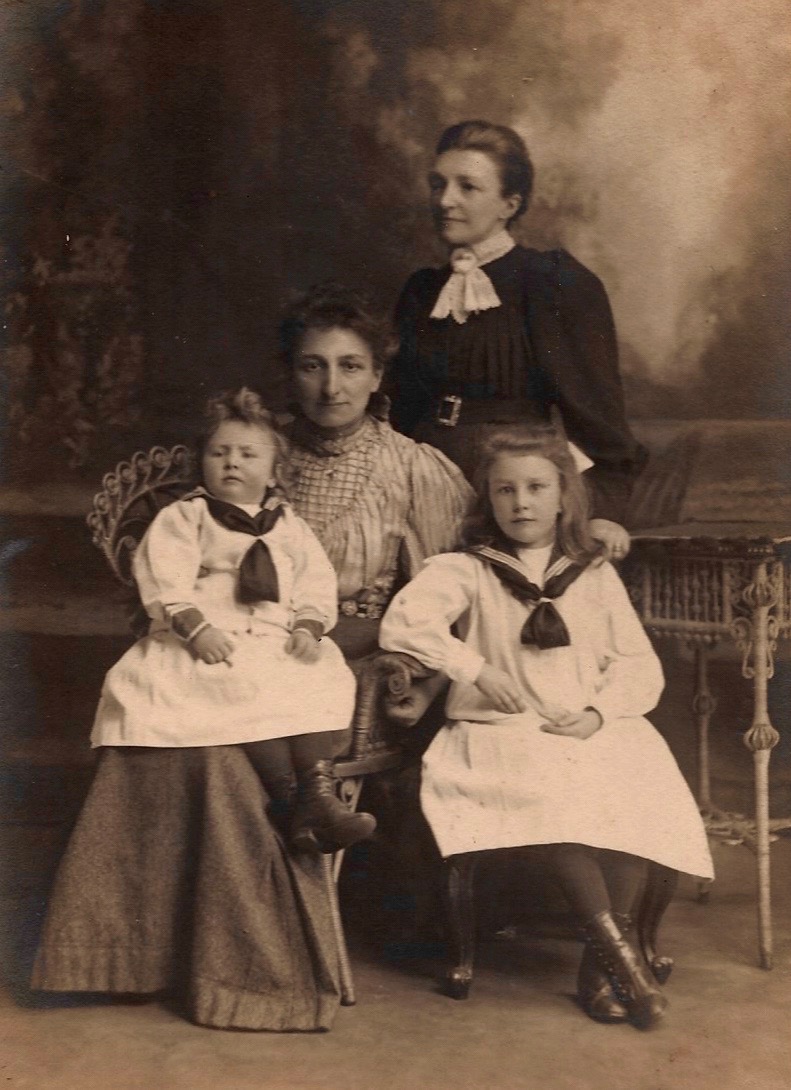
Artist Katharine Jowett

Childhood

I am starting to think about Childhood in my place #OnePlacestudy #Sticklepath. I would welcome any thoughts and contributions. Why now?  We have just celebrated bonfire night and my husband made treacle toffee, an annual tradition from his childhood.  For me 5th November was one of the few days in the year when we had baked potatoes, with lashing of butter!  The style of celebrations with a small bonfire in the back yard, a home-made ‘Guy’ to raise a few pennies to buy a few small domestic fireworks of my childhood had changed completely pre-covid to dramatic public displays for huge crowds, at enormous cost, raising vast sums for charities.  Incidentally did you make ‘genies’ as a child – definitely not to be recommended now – collecting the remaining powder from spent fireworks the next day and creating your own bangers and ‘genies’ of smoke?  Do not try this!

I recently acquired some school records from my visit to the Devon archive and some more through an extremely generous genie who scanned some at The National Archive for me. Such an amazing gift of her time and the recent scanning abilities we now all take for granted.  I am just starting the new Pharos online course with Linda Newey all about childhood, and have had the benefit of discussions in a small group run by Janet Few based on her book “Remember then” which is a great guide and activator for thinking about the changes that have occurred over the decades of our own and our grandparents lives. 

Many schools were formed in the 1870s and luckily centenary guides were often produced in the 1970s – Sticklepath included. In fact the 150th anniversary of your local school may well be approaching fast. (Note I have not yet seen the all important school log book, but many interesting snippets are included in that Jubilee guide).  Then of course I bring my own experiences of childhood, bringing up my own children, my experiences as a GP, of living in Malawi and now seeing my grandson develop.  Couple that with our ever increasing ability to access detailed records and newspaper articles and to seek free advice from fellow genies on all aspects online. 

Doubts often weigh heavy on my mind and it is hard to see what purpose there is in creating yet another snapshot of history, a further dusting off and re-telling of stories from the past.  This reflection illustrates my answer.  Our individual experiences, knowledge and abilities mean we can not only ‘update’ the presentation but we also bring a potentially unique and valid perspective too. Watch this space for aspects of childhood- coming soon!   

#OnePlaceGovernance: #Sticklepath Parish Council

There are many layers and aspects of Governance for any one place. Members of Parliaments and National laws, district council, local (civil) Parish Councils and for some ‘lucky ones’ being a conservation area increases the legal requirements, as does the ‘listing’ of buildings. This post is largely concerning the Parish but briefly considers the meaning of being in a conservation area first.

The Civic Amenities Act 1967 (Section 69 (1)a ) defines a Conservation Area as:

‘an area of special architectural or historic interest, the character or appearance of which it is desirable to preserve or enhance’

There are 25 Conservation Areas within Dartmoor National Park, and such designation puts additional requirements on local planning, not to prevent change but to enhance rather than lose the specific characteristics of that area. A map of Sticklepath conservation area is available here.

Historically the majority of Sticklepath village was in the Parish of Sampford Courtenay whose Parish church and named village is 5 ½ miles away. Some SticklepathVillage residents however lived over the border in Belstone Parish or in South Tawton Parish. It was not until 1987 the Sticklepath became a Parish in its own right. Local Parish Councils and Town Councils work towards improving community well-being and providing better services at local level.  They are the tier of local government below the level of district, borough or city council, the tier closest to the people.

The Women’s Institute was involved in campaigning for Sticklepath to become a Civil Parish and it was a WI member Ann Bowden who became the first chair of the Parish Council, maintaining that position for 13 years. She handed over the role to Councillor Paul Gray. Robin Brindley was the first Clerk. Early achievements included the provision of a children’s playground.

Considerable efforts were made to involve local people including exhibitions, debates on controversial topics and other special events. About 10% of the population attended annual general meetings of the Parish Council in the early days.

Sticklepath Parish is 1.662 square kilometres with a population of 405 in 2001 census, and 414 in 2011, dropping back to 402 as estimated by the Office for National Statistics in 2020. The very long standing Devon tradition of ‘beating the bounds’ was instituted along the new boundaries. However, this was unable to take place in 2020 and in 2021 some landowners refused to allow walkers to pass along the boundary. A blow to having a real community sense of place and belonging.

Sticklepath Parish Council continues to be proactive and a key part of community life today.

Sticklepath Village Appraisal, part of the requirements for a conservation area, is available online. It includes a number of useful maps.