A Little Light Relief – The PERFECT CURE

Great article with sources. The Royal Magazine. see also J.H.Stead on Wikipedia.

The Man who Never Stood Still! James Hurst Stead (c.1828-1886) made his money performing in music halls. His act consisted of a song and punk or pogo-style jumping! Standing tall and straight with his arms firmly by his sides he repeatedly leapt high in the air, and was famous for it. He was best known for a particular song routine – “The Perfect Cure”.

The son of a blacksmith, he toured Britain, performing in Manchester, Leeds, Birmingham, and many other venues, before settling in London. It seems he lived in relative squalor despite leaving over £3000 in his will. (Equivalent today more than 100x that)

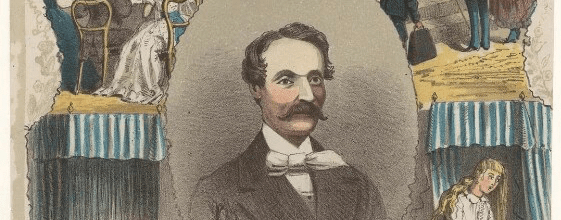
James Henry Stead
by W. Kelly, published by B. Williams
chromolithograph, late 1860s-early 1870s
NPG D42786
© National Portrait Gallery, London, used under Creative Commons licence

Cure does not refer to relieving symptoms or eliminating a disease. The phrase ‘perfect cure’ was slang, current from the mid nineteenth century, for an eccentric and amusing person. Here the cure was the curio or curiosity that was this pogo-ing music hall performer, as well as the title and chorus of his song. Someone is said to have counted almost 500 jumps in one performance. There were even puppets made mimicking his appearance and outfit. He started performing it dressed as a French curé (priest, another play on words) in sombre attire, but it is the red and white striped French clown’s outfit and tall conical ‘dunces’ cap in which he was remembered. 

Find-a-Grave has a transcription of the family memorial and photo of the stone. It commemorates two children who died young as well as “Jimmy The Cure” and his wife Sophia.

How is this connected to #Sticklepath OPS? Although I have no evidence that James had any connection with Sticklepath the next three generations did.

James Hurst Stead had at least 11 children with his wife, Sophia Elizabeth Rushbrook. Albert Rushbrook Stead, their 8th child, was born 15 June 1879 in St Pancras, London, but died at Rockside View, Sticklepath aged 77y. He was buried on 26 November 1956 in Sticklepath Quaker Burying Ground. A coachman he had worked for undertakers (1911 census). He or his son are the link to Sticklepath, though quite how this came to happen is still to be discovered.

White Rock Cottage, Back Lane, Sticklepath 1983

Albert Rushbrook’s son Albert Thomas Stead (1903-2000) married a local girl Ellen Louisa Hellier (1900-1968), and was our local postman. The family lived in White Rock Cottage, Back Lane, Sticklepath. To understand more of the Hellier family see an earlier post.
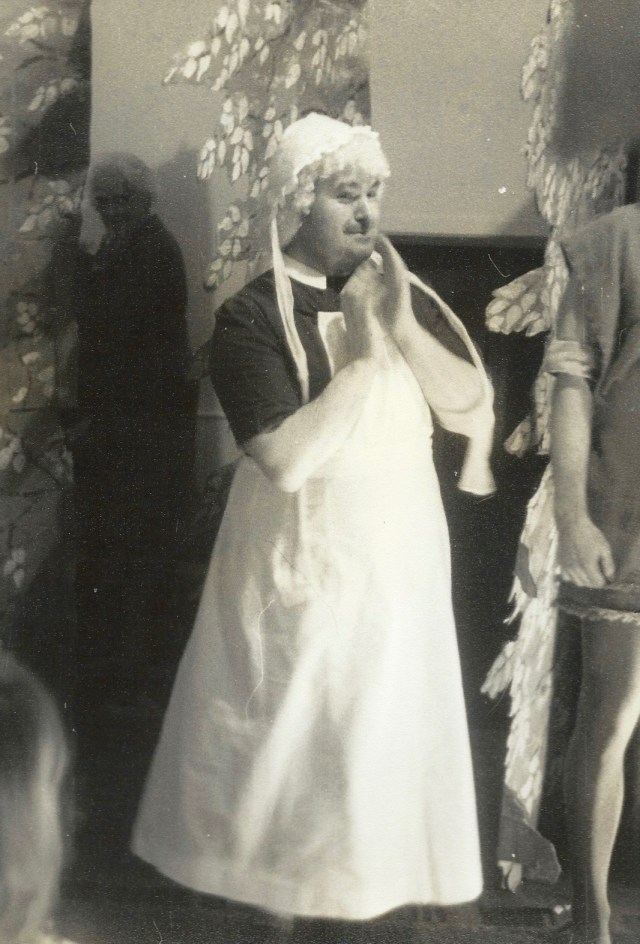
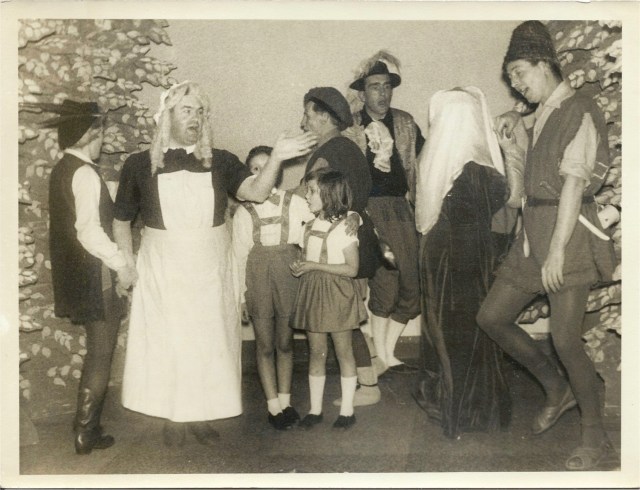
Albert Francis Stead as pantomime dame in Sticklepath, probably Babes in the Wood early to mid-1960s.

Albert Thomas Stead’s son, another Bert Stead, (Albert Francis Stead, 1929-2012) was the Sticklepath Sunday School Teacher of my youth. Bert, a Methodist local preacher, was a local and family historian in the days well before the internet was a twinkle in anyone’s eye. He also enjoyed putting his hand to a bit of amateur dramatics (and made prize winning jam). Bert was very proud of his Great Grandfather “The Cure” and perhaps had inherited the entertainment trait!
To learn more of the Hellier family see this earlier post.
Follow up from Auntie Kate’s Talk #AllAboutThatPlace 2023

Auntie Kate’s talk goes live at 12 midday today and will be available for at least 2 weeks. I hope people enjoy the talk.

There are three lines of follow up you may be interested in if you have not been a regular reader of this blog, plus news of a follow up talk. Click on the link(s) you want to follow:

First a series of short blogs “Who was the real Auntie Kate?

Second (in two parts so far) Sources to investigate the school in Your Place

Third an on-going series about Sticklepath School, its teachers, pupils and stories, which you can sign up to follow either here on WordPress or on Facebook on https://www.facebook.com/SticklepathOne

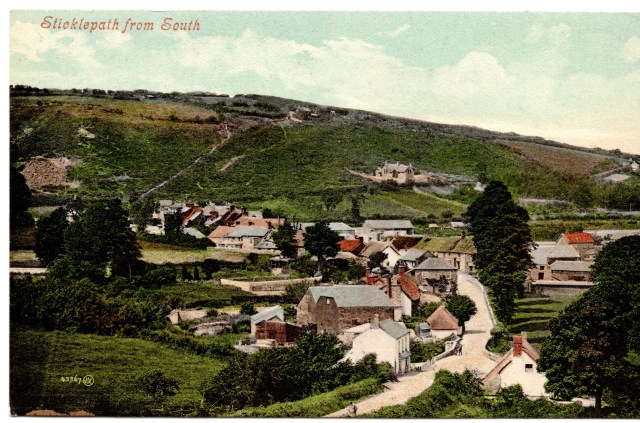
Chapman Postcard showing Sticklepath and the school part way up The Mount

There is a follow up talk, thinking about how Auntie Kate came to be and different ways people might share their own family history. It airs on Sunday at 4pm and will be available for at least 2 weeks.

#AllAboutThatPlace Sunday 1st October 16.00 BST

#AllAboutThatPlace is a great event for both family historians and local historians, whether beginners or experienced. I have enjoyed many of the talks so far – just struggling to keep up with so many fantastic 10 minute talks each day!

I hope you are enjoying it too 🙂

Clues to the Wealth or Poverty of your Ancestors

Watching talks in #AllAboutThatPlace and especially one by Hayley Wright of the Historic Towns Trust prompted me to think about the wealth or, more often, poverty of our ancestors and how we might investigate that.

Kelly’s Trade Directory 1893 for the village of Thornton le Clay and the adjacent village of Foston gives a distinct impression of the relative social class structure:

Kelly’s trade directory 1893 N&E Riding of Yorkshire accessed via
Leicester University Special Collections online 23 Sept 2023

Foston Hall and Foston Lodge are large detached houses with extensive grounds. Foston (91 residents) had the Parish Church. However, there were far more residents (274) in Thornton le Clay, and I have evidence that they needed help. On 7 March 1840 The York Herald reports: the Malton Poor Law Union directed that the “Medical officers for the districts of Welburn and Rillington should attend the wives of J. Potter, of Thornton le Clay and James Wade, of East Heslerton, on their confinement.”

I am pleased to report that little Enos Potter was safely delivered in Thornton le Clay.

So as you can see general records can give an overview of wealth or social structure. Specific records, even if not for your direct relatives can start to paint a picture of the relative wealth of the inhabitants of that place.

Maps, preferably at the time period you are looking at, and investigating changes over time can again hint at what life was like for the residents. Look at what was recorded on the maps (and why they were made). People record what was thought to be important or significant. Street names can in themselves indicate the status or occupations of the area. There is often an indications of housing – tightly packed terraces, back-to-back houses (another great talk there by Jude Rhodes!) or palatial mansions with vast grounds..

In London the ‘Bills of Mortality’ have maps linking ill health with the areas. Of course the Charles Booth Poverty maps for London are well worth viewing, and indicate the relative wealth of households divided into 7 levels of affluence (and associate poverty with criminality). Rowntree’s Reports of Poverty in York are also enlightening.

Maps help us identify the Parish which is important when searching for Parish Registers and records like pauper records and the work of the Poor Law Union, Board of Guardians or Overseers of the Poor. Settlement examinations for local residents can give an idea of a life of poverty at that time in that place. Finding a settlement examination for your own ancestor (often in the Archives rather than online) gives so much thrilling detail, whilst we cringe at what they endured.

Baptism registers indicate unmarried mothers – often associated with financial difficulties. Marriage registers and the census records indicate occupation and suggest likely family income. Census might state the number of employees, ‘living on own means’ or ‘Annuitant’ as well as ‘pauper’, an indication of disability or being in the workhouse. Look at the overseers accounts, how many paupers do they name and what were they given to support them eg coal, funeral expenses etc. Were there many pauper apprentices from your place?

Causes of death within a population may be related to wealth. Medical officers of health reports for the district often point to bad sanitation and housing accompanying poverty as causes of disease. Church accounts may indicate if there was a muffled peel of bells – only the better off (or bell-ringers themselves) would likely merit that.

There are indications of literacy in many records. Signing with an X might not always mean the person never learned to read and write, and signing your signature doesn’t mean you could read Shakespeare, or had great wealth, but it is a clue along the way. A studio photograph or portrait holding a book is not an indication of literacy.

Newspaper reports also indicate when harvests were bad, at a time when poor families relied on the local harvest for their winter’s food. Sales of farms when times were hard, or bankruptcy (See The London Gazette for example gazettes bankruptcy). See the story of George Ching falling on bad times for an example of a farmer selling up and becoming an Ag Lab for a while.

What sources to indicate wealth or poverty have you used?