Auntie Kate in Service #OnePlaceServants #AllAboutThatPlace


Talk of servants still brings to mind Mr Hudson (played by Gordon Jackson) and Mrs Bridges (Angela Baddeley) in Upstairs Downstairs, an ITV drama which ran 1971-1975. For younger genealogists Downton Abbey similarly.

Having servants seems so decadent, but servants in the past weren’t so much a luxury as a necessity. There was no running water, definitely no hot water unless it was painstakingly heated. The day’s water had to be fetched from the well or river. Food needed far more preparation and some was often grown by a household, requiring digging, watering, storage and regular checking. At times of plenty drying, bottling, salting etc was needed. No fridge, so milk was fetched daily. Clothes were made by hand, materials far less forgiving, necessitating washing, drying, mending, starching and ironing. There were no vacuum cleaners but unmetalled roads created far more dirt and dust everywhere. Carpets and mats needed regular beating, houses sweeping and mopping daily. In many places the front doorstep was scrubbed daily too. No cookers let alone central heating or electric heaters, so fires needed to be laid, lit, tended and cleared. Wood and coal needed fetching. The smoke of course adding to the daily grime.

Housework was never finished and was very, very time consuming. At the same time a man’s employment often involved long hours, 6 or more days a week, so he needed a wife or a servant. As the family grew, more servants were needed, or the children joined in with the chores.

For many Sticklepath folk of the lower and middling sort, being ‘in service’ during teenage years was almost a rite of passage. Some boys as well as girls. For a poor family having even one child boarded out in service meant one less mouth to feed, a little more space in the house, and perhaps a small supplement to the household income. Later in life unmarried women often continued in service, and widows commonly sought a housekeeper position with board and lodging provided. From 1871 to 1911 about 4 in every 10 women were in service. Even in 1931 a quarter of working women were still servants(1). The majority would be working in modest households probably as the ‘maid of all work’.

During the 1800s the main alternatives for Sticklepath women were farm work, domestic service, or working in the local woolen mill. It is hard to know how many women worked on farms from the census as most family workers were not documented. About equal numbers of women were in service or working in the wool mill or ‘factory’ in 1851. Taking in laundry, dress-making or other handicraft work in the home, such as glove-making, was another possibility. Some women, especially married women or older spinsters, ran a little sweet shop or grocery from their house.

Although there were hiring fairs many domestic servants would have answered an advert in the local paper, or taken a job through ‘word of mouth’.

“Wanted – an experienced PARLOURMAID, good needlewoman”. Adverts commonly used words like steady, respectable, thorough, or trustworthy. For cooks the request might be ‘a good cook’ or a ‘plain cook for a gentleman’. Sometimes the wage offered was stated but often it was “apply stating wages and full particulars”. References were usually needed.

As Methodists there was a likelihood that the Chings would have heard through Methodist contacts of a post, and similarly been recommended through the Methodist network, with a reference from the minister. Live in servants were often expected to join the family for church and the many church related events, so it was helpful if they were of the same religious persuasion.

Equally a local acquaintance may have put them in touch. William White’s Directory 1878-9 tells us that Miss Margaret James, one of 9 children of Mr John Haddy James who had been a renowned surgeon in Exeter, lived in Belstone. (See his portrait and obituary). It is likely Miss James recruited Eliza Ching as a respectable and hard working teenager. Two of Miss James’s sisters were living at a house called Southerleigh in Lympstone, Devon. It is in that household that we find Eliza Ching working as a housemaid in 1881 at the age of 24. Sister Georgina aged 17 is also working for Miss Lucy and Miss Mary James in Lympstone as a cook. It would seem only natural if a post became vacant to suggest her own sister. As well as the two ladies there is a boarder to look after. You may recall that the Ching family were in financial difficulties in 1878 and this was perhaps when at least one the Ching sisters were sent into service.

Working for higher social classes could be a very different experience. Servants in the Victorian period became increasingly specialised. Some would travel with their master or mistress or perhaps be moved from one grand house to another or perhaps to a relative’s employment. From the 1850s it had became fashionable for servants in these wealthy households to wear a uniform. Often the servant had to purchase this themselves.

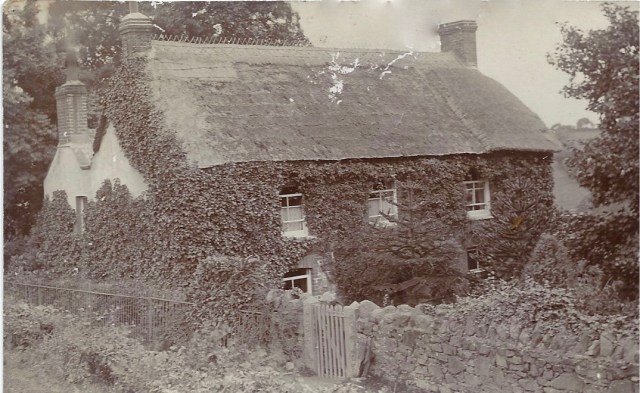
We don’t know how Auntie Kate started out in service but in 1881 she was in a much grander house than her sisters. Right on the seafront at No 8 Powderham Terrace in Teignmouth. Kate was parlour maid to Major Henry Bourchier Toke Wrey J.P., Major in the 1st Devon Militia.  On census night there were 13 further family members and 7 live-in servants in the house. The. servants were a cook and kitchen maid, the nurse and nurse maid, Kate the parlour maid, the housemaid and a page. A big house for Kate and one housemaid to keep clean with a basement and 3 full floors. Image

Whilst a parlourmaid and housemaid’s duties were somewhat interchangeable, as parlourmaid Kate would have answered the door, served tea, and done the lighter cleaning. She perhaps had some authority over the housemaid too. The housemaid would generally be the one to rise at dawn and light the kitchen fire, beat the rugs and black the grates, laying and lighting fires and heating water. Later in the day they would move upstairs, emptying bedpans and sorting the bedrooms. The Wrey family had properties around Okehampton, within a few miles of the Ching family home. It is likely Kate started as a housemaid with the family there and was moved to Teignmouth, perhaps with a promotion. She would have needed to scrape her hair back tidily and no doubt wear a white cap. It would be interesting to find some photographs of the Wrey family households to see how their servants dressed. This picture of Kezia in her Sunday best gives some idea of how she would have looked answering the door at No 8.
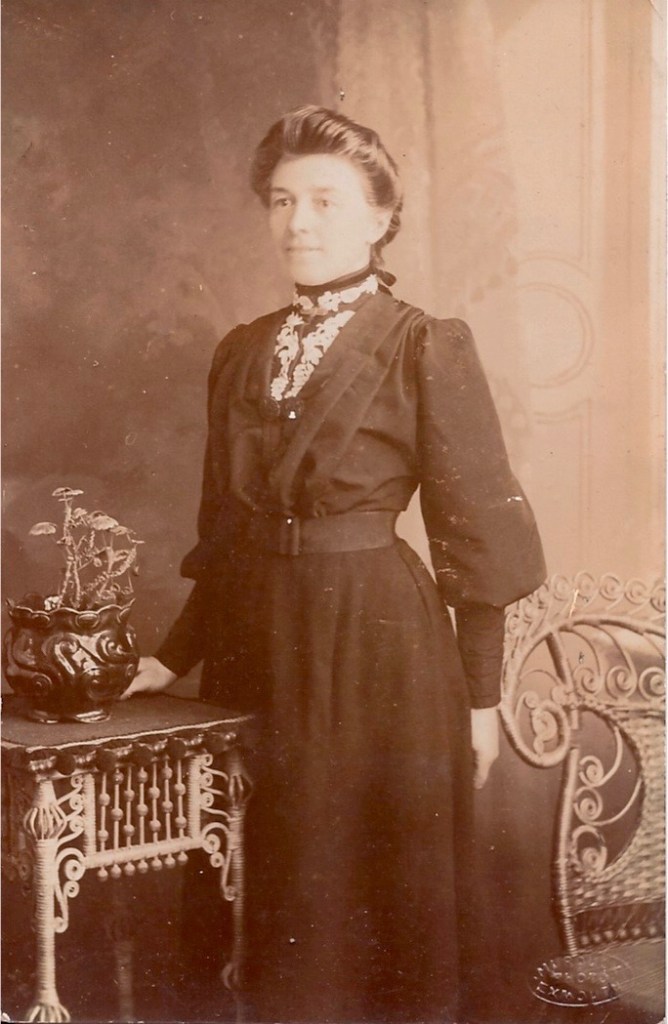
Many women stayed in service until they were married… the next step for Auntie Kate.

Today’s challenge is to think about servants in your ancestry or place of interest. What exactly would their role have been? How would they have been recruited? Would it have been an annual contract? What were the wages like? Did they get accommodation or clothes provided?

In the past the Society for One-Place Studies used #OnePlaceServants and some articles can still be found to show what can be done to gain a different perspective on servants in your place, for example “Keeping up with the Ashworths“. For a summary of the blog prompt, more examples and a possible reading list see here

FACHRS have also looked at different roles eg Governesses, and more details of the Parlourmaid’s duties can be seen here.

Auntie Kate’s story continues

Bibliography

(1) Women’s Lives – Researching Women’s Social History 1800-1939 by Jennifer Newby Pen&Sword 2011

Census materials accessed mainly through Ancestry.co.uk

William White’s trade directories through University of Leicester Special Collections online

Who was Auntie Kate? The Birth of Kezia Ching

Auntie Kate, my alter ego, is telling Tales of Sticklepath School at the #AllAboutThatPlace event. So who was Auntie Kate? Born Kezia Ching, she lived from 1860 to 1933. My Grandmother’s Aunt and then Stepmother, but always known as Auntie Kate. Surprisingly her first husband was known by his surname – Uncle Middle. Perhaps a sign of respect. But let’s start at the beginning.

Hugh Pyke, registrar of births and deaths kindly registered Kate’s birth as described by her mother, with his clear handwriting and an accurate transcription is found at The General Register Office, now available almost instantaneously in digital format.

https://www.gro.gov.uk/ accessed 7 Sept 2023 under new digital format (£2.50) GRO Reference: 1860  S Quarter in OKEHAMPTON  Volume 05B  Page 369

It shows that Kezia Huxtable Ching was born to George Ching, driver of an omnibus, and his wife Eliza who was previously a Huxtable. This strongly suggests George and Eliza were married. Kezia was born on Sixth of September 1860 at Coombe Head (a farm) Sticklepath, Sampford Courtenay Parish. Mum went to register the birth on 15th September, which suggests she was in good health. Kezia already had an older sister Eliza.

The Ching Family lived at Coombe Head Farm Sticklepath, Devon with Eliza’s parents. 

In all George and Eliza Ching had three daughters and twin sons. They are well spaced. I wonder if George travelled a lot with his work?

NameBornDiedMarried name
George Ching18261897
Eliza Huxtable18271911Mrs George Ching
Eliza Ellis Ching18561918
Kezia Huxtable Ching18601933Mrs Albany Finch 3rd
Mrs William Middle
Georgina Ching18631917Mrs Albany Finch 2nd
George Edwin Ching18671926
Louis Richard Huxtable Ching18671927

In the 1861 census we find that Kezia’s grandparents were John Huxtable, agricultural labourer (75 years old) and his wife Kezia Huxtable a dress-maker (67 years old). Her father George is now a ‘Higgler’.

A higgler was  an itinerant trader, buying and selling items such as butter, cheese, poultry and eggs. Perhaps he would travel to the coast to sell his wares and return with fish. Higglers like peddlers and badgers (who sold corn and grain), needed a licence. Unfortunately I have not yet found any evidence of this.

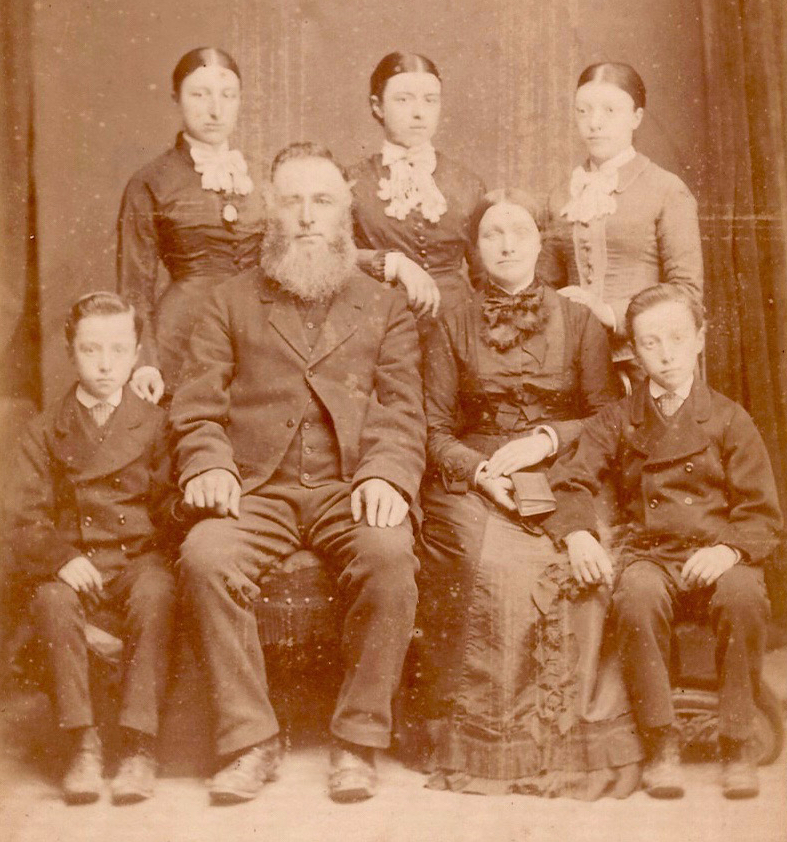
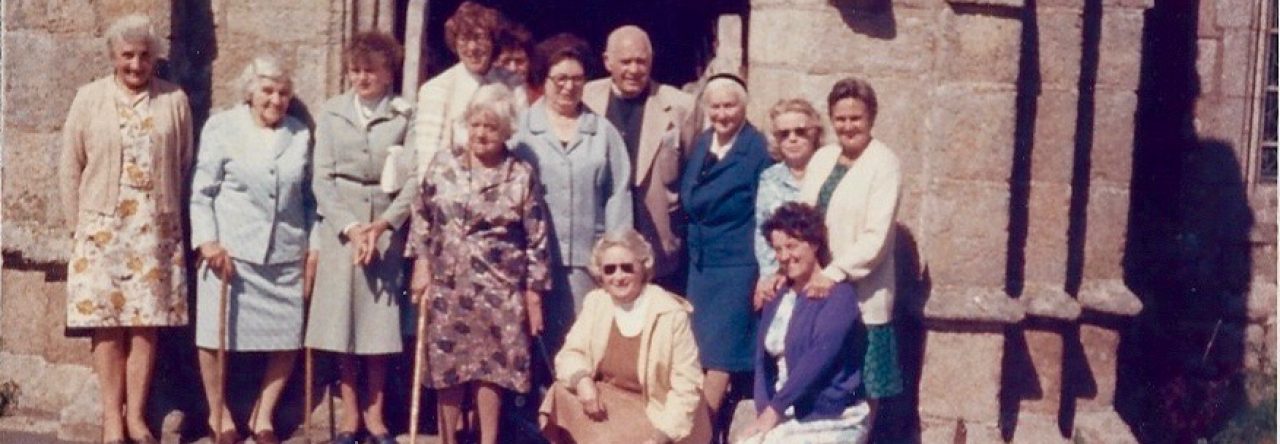
Kezia is in the centre of the back row:

The Ching Family c.1880

In 1871 George, now a Carrier, is head of household with Eliza his wife. Daughter Kezia is aged 10 years. William White’s History, Gazetteer & Directory of Devon 1878-9 (accessed through the Leicester University special collections online) shows George Ching as Farmer and Bus Proprietor. This type of directory took several years to prepare, so information was often out of date. Unfortunately in 1878, when George would be 54 years old, the newspaper suggests the family hit hard times, selling the omnibus and market trap and ‘declining business’:

Western Times – Friday 05 July 1878 accessed via BritishNewspaperArchive.co.uk Sept 7 2023.

HIGHER COOMBEHEAD, near STICKLEPATH. MR. W. FEWINS will SELL by Auction WEDNESDAY, the 10th of July, at 3 p.m., 17 Acres of Corn and Grass, 1 very useful Farm Horse, 1 Heifer Yearling, Omnibus, Market Trap, Farm Implements, and a portion of the Household Furniture, the property Mr. George Ching, declining business.

In 1881 George and Eliza have sister-in-law Kezia Huxtable staying with them at Higher Coombe Head. Kezia really was a family name, both grandmother and Aunt! In 1881 George is described as an Ag Lab, but by 1891 George is described as a ‘small farmer’ again, still living at Higher Coombehead farm.

Now did you see what I did – started talking about Kate and went off on a tangent to her father’s occupation. This sort of diversion is a constant risk for all family historians! Important to setting the scene here perhaps.

More about Kate …

References not included above:

England & Wales Census 1861 Okehampton District Class: RG 9; Piece: 1469; Folio: 98; Page: 13; GSU roll: 542818 Image accessed via ancestry.co.uk 

England & Wales Census 1871 Okehampton District Class: RG10; Piece: 2156; Folio: 24; Page: 6; GSU roll: 832040. Image accessed via ancestry.co.uk

England & Wales Census 1881 Okehampton District Class: RG11; Piece: 2226; Folio: 89; Page: 4; GSU roll: 1341536 Image accessed via ancestry.co.uk

England & Wales Census 1891 Okehampton District Class: RG12; Piece: 1757; Folio: 79; Page: 3; GSU roll: 6096867 Image accessed via ancestry.co.uk

Splendid Societies!

When finding out #AllAboutThatPlace a great place to learn are local history and family history societies. Every one is different and it depends entirely on how proactive the members are. I can only speak for the ones I know about.

Ryedale Family History Group is a small but very active Society. We welcome members with ancestors in our parts of North Yorkshire and members, like myself, who just live here but want to learn how to research or to share our discoveries and frustrations. All others are welcome too. Many join after a research question has been posed and help given or reassurance that everything possible has been covered.

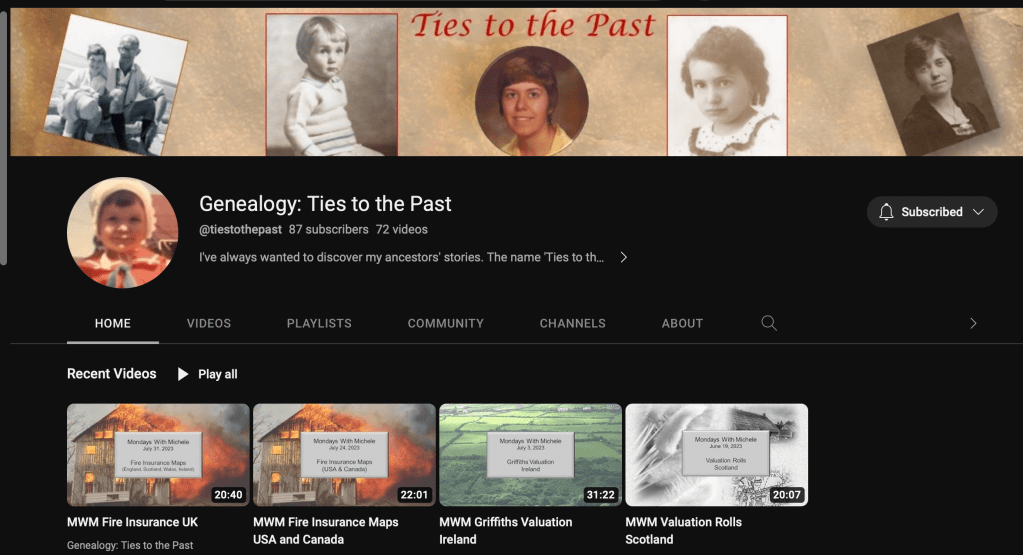
I sometimes wonder how the group find time to actually do any of their own family history – On Mondays we have a Zoom meeting led by member Michele in Canada who always talks for about 20 minutes on a topic of interest, followed by chat. These “Mondays with Michele” are available to all on YouTube as Genealogy:TiesToThePast. e.g. I found the one on Children’s homes opened my eyes to how much I was missing on Peter Higginbotham’s great website, another I showed me how to create an index in word documents (for writing up family history and other applications!) and several help you explore different archives or sources.

Do subscribe for latest talks (free).

Wednesdays once a month is the lecture, usually on Zoom at present, sometimes in person at Hovingham or around the area. A good mix of local and national or internationally renowned speakers. The other Wednesdays there is a DNA discussion (On Zoom) with plenty of help available. Thursday mornings are the time to bring general questions and chat, both at the research room in Hovingham and online. Discussions are wide ranging but nearly always involves some genealogy, sharing of relevant books and perhaps a random topic such as – which end you peel a banana! The group has a huge breadth and depth of knowledge, including those with one-name studies, and go to great lengths to help each other. Meanwhile others are painstakingly photographing and recording memorial inscriptions locally and so on.

Devon Family History Society is a large Society with a very active program of talks, several every month, many on Zoom. Friendly informal chats after the meetings online often continue into the night! Devon has a large number of Parishes and those with expertise or questions about those places are encouraged to meet online – All areas, divided into groups of adjacent parishes, meet at least once in the year, for a general chat and question session. Regular ‘brick wall’ sessions are included in the program too, where anyone is able to submit a case for expert advice and discussion. With extensive use of Zoom, members attend from all over the world. Tree House is very active with research and scanning records.

Membership fees and benefits vary. Increasingly societies will make special arrangements for under 21s. Societies usually offer their electronic journal in basic membership. Many have members-only access to local records online. See your local society website for details. Basic membership for Ryedale FHG or Devon FHS is just £12 for the year.

Finally the British Association for Local History The national charity which promotes local history. In addition to regular talks (reduced rate for members) there are a good selection of 10 minute talks on the website covering many aspects of local history. They have a wide range of their activities, but I am not going to tell you because…

Your Challenge for today – check out BALH and a group local to you!