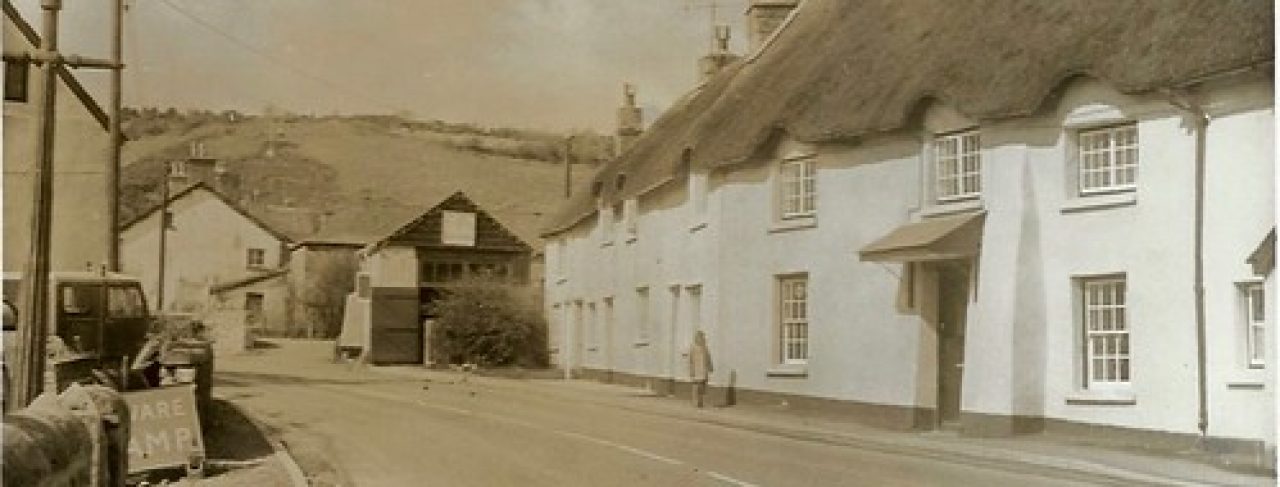
One of the first burials in #SticklepathQuakerBuryingGround after the introduction of death certificates in 1837 is that of William Battershill, aged 11 months, son of William Battershill and his wife Mary. The burial register shows he was burial no. 31, and the ceremony was performed by Reverend James Stott.
He died on 26 Nov 1837 and his address on the death certificate was Sticklepath, South Tawton. His father William was the informant, “who hereunto sets his mark X”. The death was registered in Okehampton by James Wilkin Thorne, registrar, on 27 November. Unfortunately the burial register shows William as age 31, likely a transcription error as the burial is this number. Several columns are not completed perhaps suggesting it was completed some time later when all the details were not available.

Baby William died of fits. No doctor certified the death, this was not a requirement until 1874.
Fits are also known as convulsions or seizures. Epilepsy is diagnosed only if a person has repeated fits not just one. Given the wrong circumstances anyone can have a fit. Alcohol lowers the ‘fit threshold’ the level at which a fit may occur, and if, for example, someone then has a head injury, a single fit might occur. About one in every 100 people now has epilepsy. The vast majority are well controlled.
Hippocrates recognised epilepsy as a brain disorder but this was not commonly believed until the mid-1800s. Fits were often blamed on spiritual problems or bad spirits. In the mid-1800s bromides began to be used to treat fits but they were themselves very toxic leading to many side effects. Phenobarbital became available 1912 and was the next medication widely used. Even paracetamol to control fever wasn’t available in UK until 1959, a little earlier by prescription.
Having worked in Malawi 2010-12 I have seen many patients with uncontrolled seizures. We had to just walk past the bed, or mattress on the floor, as no medication or oxygen was available. Positioning the patient to avoid further harm or injury is important.
So in 1837 there would be no effective medication to control a babies convulsions. Herbal remedies or other treatments might have been tried. Tepid sponging would be another home remedy that might help if fever was the cause (full body not just a flannel on the forehead).
Why might an 11 month old baby have fits? We don’t know if this was something new or had been occurring since birth. Fits can be caused by oxygen deprivation during birth or other causes of brain damage. Prolonged labour, pre-term or early delivery, and low birthweight all make fits more likely. They may be associated with cerebral palsy or developmental problems.
Infections would be a leading cause – TB meningitis, other causes of meningitis or encephalitis, and the common childhood illnesses of the time. Viral illnesses, especially Viral Haemorrhagic Fevers similar to Ebola, would be another cause. Imbalance of salts in the blood could also cause fits, including sugar levels, calcium, magnesium, and potassium. There are also some rare inherited causes. Some types of fits only occur in childhood or become less common with age. New fits can occur at any age. A stroke for example can cause fits in older people.
Some people may have had occasional short seizures and otherwise led a normal life. Untreated, as they would be in 1837, fits may lead to further brain damage, affect intellectual development, cause mental health problems and sudden death. These are particularly likely after prolonged seizures or ‘status epilepticus’ (fits lasting more than 30 minutes or repeated fits without regaining consciousness between).
This must have been very distressing for poor Mary and William the parents leading up to William’s death. There will have been many others with similar experiences in the village to support and try to comfort them. Teething may well have been mentioned as the cause at the time – this was held to blame for many childhood ailments.
The Battershills are a new family to me, which means new research avenues to add to my growing list! I have not yet confirmed the family connections but there is a William Battishill also buried in Sticklepath, aged 48 in 1845, likely to be the father. He is noted in the burial register to be Labourer, of Sticklepath (Bridge) We also find a widow, Mary Battershill, in the 1951 Census, with her family living near Sticklepath Bridge (in South Tawton Parish):
Mary BATTERSHILL Head Widow aged 51y born Southtawton Hand Loom Weaver (Serge)
Susan BATTERSHILL Daur 12y born Samford Courtney Scholar
William BATTERSHILL Son 10y born Southtawton Scholar
Elizabeth Ann BATTERSHILL 2y born Okehampton
(HO/107/1885-Fo.416-Pg.11)
If anyone has already researched this family and is willing to share some information I would love to hear from you. shields_h_f@hotmail.com
NEXT TIME: Another Quaker Burial Register death – William John Labdon (part 1)

 Sticklepath a Village and its People