The Society for One-Place Studies is celebrating its 10th birthday. We have joined with a number of erudite family and local history organisations and those interested in how you can share research too.
The result is an AMAZING TEN DAY EVENT with over a hundred TEN MINUTE TALKS from around the world (just right for listening over breakfast, at your coffee break, and bed time, even if your diary is full).
It starts on 23rd September, and is FREE. ‘Subscribe’ to the event YouTube Channel to see the brief trailer and hear readings about places in well-known literature, to inspire you.
Do sign up to receive notification of how to join the talks too. (They will all be available for 2 weeks or more after their release).
We do not expect everyone to start a One-Place study, but you may find out how to explore ‘That Place’ you are interested in, perhaps so you can broaden your family history and develop a real depth of understanding of your ancestor’s life. Of course, not everyone has ancestors in their place of interest. You may be interested in your local area and its inhabitants, or a place that is special to you.
“Every place has a story…
… it’s up to us to discover them”.
You may find you are already doing a One-Place Study without realising it! If so, you now know there is a community of like-minded researchers! Do join us. (I am a committee member).
The Society for One-Place Studies welcomes not only those with oodles of research but also those just considering whether this is for them and wanting to know more.
If you don’t know what a One-Place Study (OPS) is, do have a look at some of these:
Dr Janet Few’s book is highly recommended for anyone starting a study. It is available through her website or contact. Available on Amazon from outside the UK.
(Few, Janet Ten Steps to a One-Place Study Blue Poppy Publishing (2020) 210mm x 148mm paperback 52 pages £5.00 ISBN: 978 1 911438 18 2)
Do let the group know. Join the event Facebook group to become part of the discussions. Excitement is mounting. Your study can explore whatever aspects you like. One of the key messages is
“Your Study – Your Rules”.
Some people come from a family history background, others from local history. It is also a good place to start history research! Maps and the built history, transport, migration into and out of that place, trades, occupations, religion and social structure are just a few of the themes. Some want to include the weather and natural events, flora and fauna, statistics, or memorials and epidemics. Others start with a house history or focus on a specific organisation. Many gradually create a forest of family trees and look for the interconnections. One-Place Studies usually cross some of those boundaries to create a more rounded picture over time. It is good to start small and expand, small both geographically and within a time period. Otherwise a study quickly becomes overwhelming as there is so much to find out!
Celebration of 25 years of marriage with silver and 50 years of marriage with gold symbolises prosperity, and of course to an extent luck with both parties still living. Commercialisation means more and more anniversaries are celebrated (Father’s Day, even Black Friday) and each year has its own ‘traditions’. Ten years of marriage is apparently tin, or diamond if you ask a jeweller!
The Society for One-Place Studies is celebrating ten years since it started. With members all around the world and widespread studies too, a party is not ideal. Perhaps diamond cut tin badges? However, the committee (of which I confess I am a member) thought long and hard, and invites members to celebrate with any items to do with 10. Number 10 on a street or ten exciting stories and so forth. Blogs, journal articles, and of course the annual conference (free to members). Try using #OnePlaceStudies especially on #OnePlaceWednesdays to find some of them.
Even more exciting we have joined forces with several other organisations to celebrate for ten days with ten or more ten minute talks each day on relevant topics.
More information is coming very soon! #SticklepathOne Place Study has roped in Auntie Kate to tell some Tales of Sticklepath School. Plus a second talk about Creating Auntie Kate (she will not be attending that one in person).
Details all over the internet and will be in a blog tomorrow… watch this space
What a fantastic webinar with the Society for One-Place studies last night. 4 eloquent speakers and respected researchers presented different aspects with thought provoking case studies. All to an audience of only 30, it merited far more. Here are my very brief notes which do not do it justice, with apologies for any errors.
Dr Sadie McMullon started with the brick works in Fletton Parish OPS near Peterborough. Much it seems is owed to the then Bishop of Peterborough who refused to have railways on his land. East station therefore had to be sited on the outskirts at Fletton, which meant the brick industry there could thrive. Another factor was the local clay. This clay powders when dry so the Fletton brick-making process involves compressing that powder 4 times. Saving valuable time drying bricks prior to firing. Having seen piles of mud bricks drying by the Nile or in Malawi I was aware the impact this industry could have on the environment, but in Fletton it was perhaps more industrial buildings and firing the bricks that impacted the locality. With a booming industry and plenty of employment there were likely few complaints!
M.Diane Rogers talked about the establishment of Newdale, Manitoba, Canada, her One-Place study. On the flat prairies with no trees or stone they too needed a brick industry. The main drivers for settlement were Government initiatives for settlers, and the Railways. Small railway companies were given incentives (money and land) to take the railway to small places, essentially colonisation railway lines. In fact Newdale moved in 1885, leaving “Olddale” and establishing a new Newdale close by. As well as incentives to move there were reasons why 40,000 or so folk moved from Ontario to Manitoba. Ontario had little land left to buy or for families to inherit. Often successful settlers moved with families , and good contacts were essential. A local who would share with you how to survive the harsh winters, which were many in the first decades. Of course services such as retail shops, pharmacies etc were needed and Newdale supplied almost 200 small settlements close by, again ensuring success. For individuals such as a blacksmith harsh weather necessitating more frequent changes of horseshoes was beneficial. So some elements of success, drivers of industry, were down to luck too.
Jude Rhodes talked about a West Yorkshire coal miner Joseph Hemingway who somehow, though time spent in America perhaps in a ‘Land Grant College’ was able to return home as a Flock Manufacturer and Mill Owner. This mill was renowned for belching horrendous smoke, and sadly he became bankrupt 1881 when a fire left it uneconomic. However, by 1890 he had bounced back and was a Professor and Mine Superintendent of a coal mine, and highly regarded as a mining engineer. His personal drive seems to have been insurmountable!
Jane Barton talked about agricultural workers in the Boltons of Cumberland. I always talk about farm work as being by far the most common work in 1851 in Sticklepath when you include farmers, their families and the farm servants and agricultural labourers. Jane pointed out, quite rightly, that by 1911 getting farm work was very difficult. With increasing mechanisation it was not the farmers or their families that missed out initially, but the employees. The Great War compounded this and on returning from military service many soldiers found it impossible to regain work as Ag. Labs. It was therefore important to diversify, and what people did depended on the generation, timing, and opportunities that presented themselves. This was well illustrated by a family case study.
So lots of challenges and thoughts arise:
Don’t assume all clay or all bricks are the same. My own family had connections with the Cornish China Clay industry so this should not have been a surprise! (For more examples See UKnamedBricks). Whatever the industry, ask lots and lots of questions to understand why this was a success or failure at this time and place.
Always consider the surroundings, the landscape (opportunities and impact of the industry) Transport links too, bringing workers, as well as transporting supplies and manufactured goods. Does a change in transport mirror the success or failure of an industry? Perhaps it is mechanisation or other new development? Mechanisation saw the downfall of handmade edge tools as in Sticklepath.
Sources include business records, advertisements, sales and bankruptcies, directories, retirements and celebrations as well as accidents, health problems arising, and court cases (often disputes over land or lack of employee well-being).
The Influence of landowners – I will come back to this – or the prospect of owning land.
Don’t assume low class villagers won’t make something of themselves! Many failed when settling in a foreign land but others thrived. Similarly those changing their life situation in whatever way, or when disaster struck. Some are in a position to flourish.
So what of Sticklepath, my own One-Place study? In the middle of Devon, a largely agricultural area on the geological ‘Sticklepath Fault’, most villagers found employment either on farms or in the mines and quarries. (Of course there were also more than our fair share of millers and blacksmiths as discussed previously). Sticklepath is surrounded by mines and quarries which have come and gone over time. Mines at both Greenhill (Belstone Parish) and Ramsley (South Zeal, South Tawton Parish) employed Sticklepath men and produced high grade copper ore from at least the mid 19th century into the early 20th century.
Industry could influence development of transport links:
“A railway is projected from this station to Okehampton, which, if carried out will be of vast benefit to the locality. A few good mines opening will undoubtedly be a great stimulus towards its being made, as the carriage of their ores and materials must necessarily form a considerable item in their returns.” (Source unclear, c1860)
Census records our for local villages, 1851—81, show various miners. Sadly they don’t tell us where they worked. Others may have been working away on census night, Sticklepath workers are known to have walked across Dartmoor to Princeton, on a Sunday, perhaps to quarry granite or mine tin at Whiteworks, returning home the following Saturday.
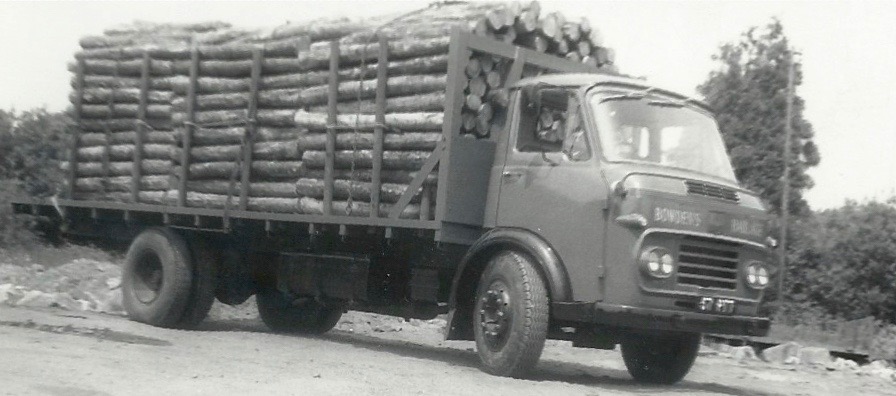
This seriously under-estimates the impact of the mines and quarries on employment. Many other tradesmen worked at the mine, masons, smiths and carpenters. I am not sure how the copper mines were constructed but certainly the Forestry Commission, which had a big impact on the environment with quicker growing conifers, produced pit props for constructing coal mines. (The coroner’s case below also refers to timber supports at Ramsley.)
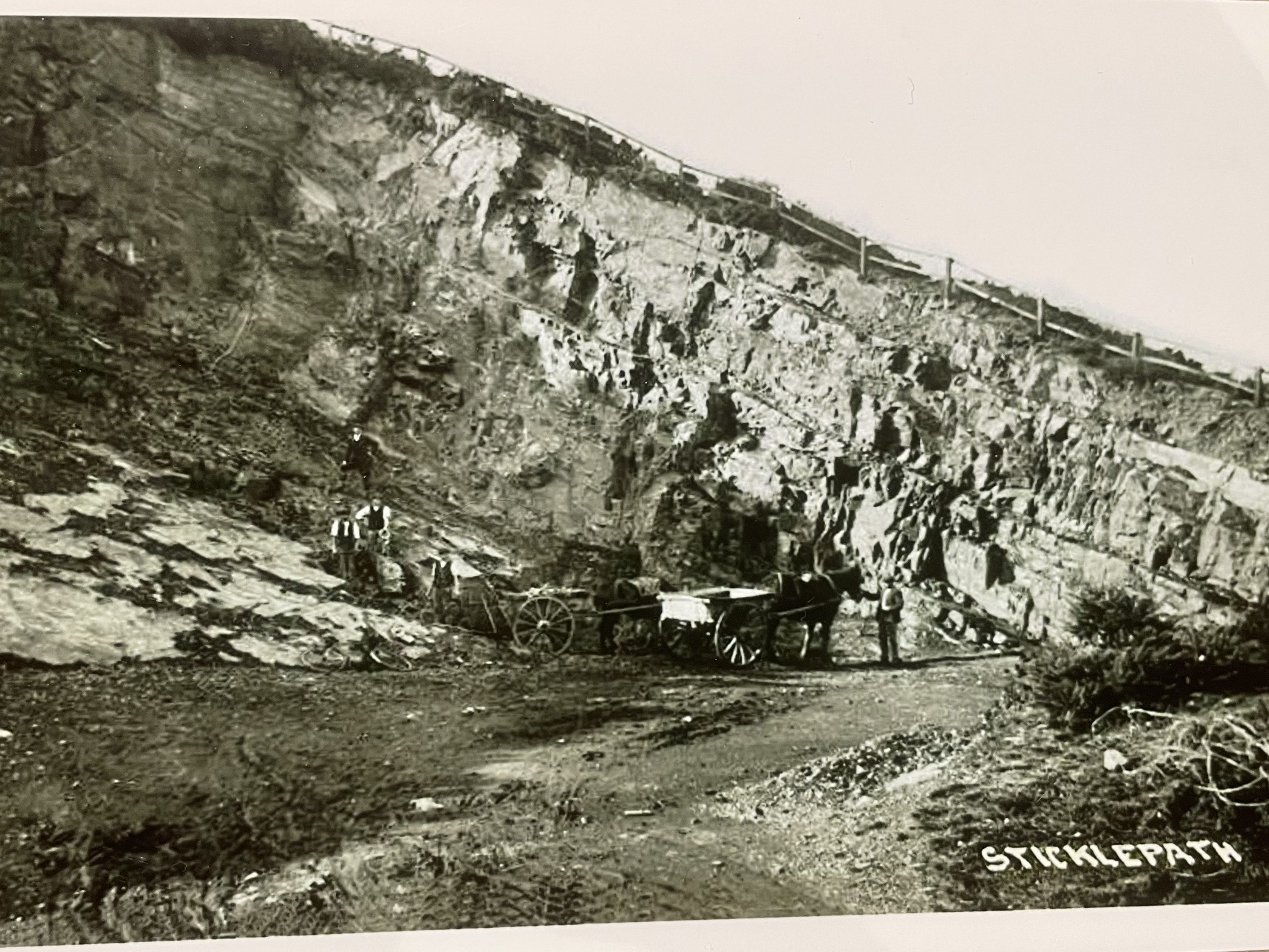
Mines and quarries of course leave scars in the landscape, spoil heaps and the noise of machinery mining, crushing and processing stone or ores. Many remain unsuitable for housing and are developed as wildlife areas.
Ramsley Hill Copper Mine changed hands and therefore name frequently. In 1825 there is possible evidence of mining activities, and it is said rich ores were found when constructing the new road 1829.
Name changes:
1850 Fursdon Mine. Adit opened 1850.
1851 Exploratory adit. Local syndicate
1851-1856 Fursdon Mine, listed as Manor Mine 1854 (Lead)
1852-1853 Lease sold to London Co. in another part of sett.
1856-1857 Devon Copper and Silver Lead Mine.
1857-1859 Ramsley Hill Mining Company Ltd. Formed to take over Manor Mine, liquidated 1858.
1859 Fursdon Mining Company Ltd.
1860 George Fursdon – Lord of the Manor. Celebration of new 50’x4′ wheel for shaft “Ellen”
1862 – 45 employed.
1870-1883. Fursdon Great Consolidated Mining Company Ltd. M. E. Jobling Manager 1876 title changed to Wheal Emily.
1881 Sett taken over by Emily Copper Mines aka Wheal Emily.
M.E. Jobling and friends spent considerable money on the mine.
1882-1888 Emily Copper Mines Ltd. Jobling was manager and vendor.
1888 became South Tawton Copper Mines Ltd. (Emily Copper Mines Ltd. adjoined Ramsley Hill Mines.)
1900-1912. Ramsley Exploration Company.
You may think it strange I only mention Mr Jobling by name, but I have met him before and he perhaps demonstrates how individual factors can influence the industry chosen.
Mark Ernest Jobling was born on 21 July 1844 in Newcastle Upon Tyne, Northumberland. He married Emily Cross on 7 April 1868. They had four children during their marriage. He lived at Cleave House Sticklepath June 1901, as he gives this address when signing a lease for a Manganese Mine in Milton Abbot (Held in Plymouth Archive). He died on 12 September 1921 at the age of 77, his residence at the time was Ramsley House, South Tawton.
Digging a little deeper into his background, his brother James A Jobling took over a failing glassworks in Sunderland. When his nephew, Ernest Purser, became the manager in 1902 the company started to make major investments, moving towards a profit. They soon become very well known as manufacturers of Pyrex in Great Britain and the Empire (excluding Canada). The workforce increased from about 100 in 1900 to over 1000 in 1930. Glass manufacture requires minerals such as manganese. So I surmise there was a family link that meant Mark Jobling was encouraged to pursue a mining career.
There were other mining activities in the area of Sticklepath:
1844 Ford Farm Arsenic and Copper Works. Shaft in wood 150 yds SW of farm. 1900 and 1910 local company ran out of money.
1869 Cawsand Vale Mining Company Ltd.
1853 South Tawton Consols.
1856 Zeal Manor Mine.
1859 Zeal Manor Mining Company Ltd.
1862-1873 West Fursdon aka Owlsfoot.1873
Greenhill too. The Quarry seen on The Mount in Sticklepath produced Blue Elvin stone, highly regarded for road building. However, ours was too tough, too hard to crush to a suitable size so was soon abandoned.
There were many accidents (See this report from a coroner’s case in Sticklepath, quite graphic) and various mining and quarrying industries had an impact on health.
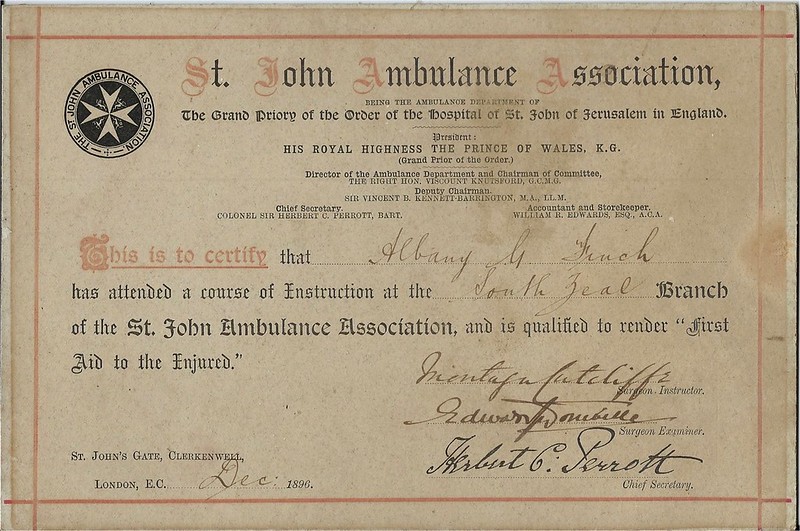
St John’s ambulance started their famous First Aid Courses with mining companies. As Sticklepath had several mines and quarries which would have taken part, so Albany Finch would likely have joined their workers, doing a first aid course to keep his Finch Foundry workers safe. They did, of course, supply specialist tools and other supplies to various mining and quarrying concerns. This is his certificate 1896:
Sticklepath’s mining and quarrying industries deserve far more research – when time allows! But I finish with this quote hinting at the thrill of prospecting (gambling!) and some of the barriers presented by, often powerful, landlords.
“A strong prejudice against mining operations is entertained by certain landlords who have properties here, induced in some degree by the gross mis-management hitherto practised. This will, however, be soon dispelled if a good mine or two be opened; nothing has a greater tendency to do so. The desire for increase of riches from beneath the soil is very infectious; it not only enriches the proprietor, but confers a benefit on the entire population. it is money found.” (Source not clear, perhaps c1860, <a href="http://<!– wp:paragraph –> <p><a href="http://southtawtonhistory.org.uk/drupal/?q=node/17">http://southtawtonhistory.org.uk/drupal/?q=node/17</a></p> South Tawton and District Local History Group, work by Gerald Bastable “Ramsey Mine”)







 Sticklepath a Village and its People