3 Coronations and a Christmas card   #OnePlaceCelebrations in #Sticklepath 

#OnePlaceStudies Society has monthly blogging prompts. #OnePlaceCelebrations is the prompt for December 2021

In 1953 the Coronation of Queen Elizabeth II was celebrated throughout the Commonwealth. Sticklepath had a television in the village hall so all the villagers had the opportunity to watch the innovative broadcast.  
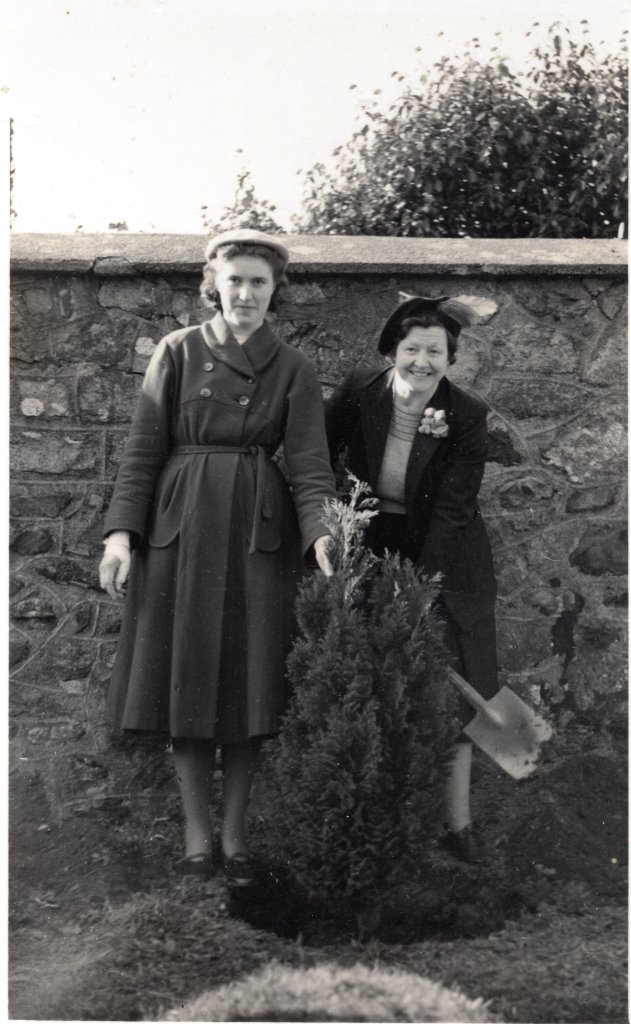
Gracie Fildew and Muriel Bowden Commemorative Tree Planting 1953

I believe there were two trees planted to commemorate the coronation.  One in front of St Mary’s Church, which was lost when the road was widened, plus this one in the burying ground. Muriel Bowden, president of the Women’s Institute (WI) is holding the spade and the youngest member of the WI, Gracie Fildew, is helping.  Unfortunately this tree was also lost, destroyed by fire.  

Church bells would have been rung in the villages all around and the sound carried to Sticklepath on the wind. For certain something would have been done for the children as well as everyone else to celebrate, perhaps a lunch or tea.  I remember my Grandmother and Great Aunt making huge muslin tea bags to go in the extra large teapots used for such events.  All the extra sugar bowls would have been washed and polished in advance, alongside crockery and cutlery.  Elaborate plans would have been in place for sandwiches, cakes, and scones with clotted cream and jam, mainly by the ladies of the Women’s institute. 

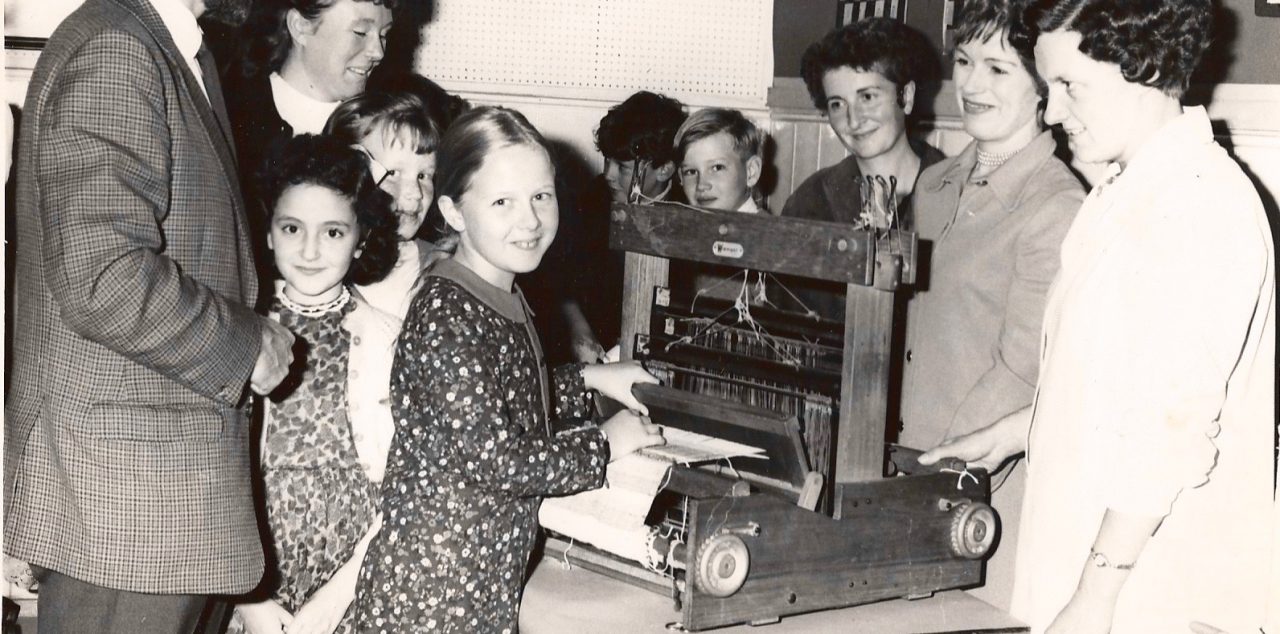
Sticklepath WI tableau of Queens – Can you name them?

This tableau would have been part of an afternoon or evening entertainment, with readings and poetry, singing and other musical interludes as well as the National Anthem whilst everyone stood to attention. I can recognise some but not all of the queens and the actors!

It would have been a happy and exciting but long and tiring day.  You can imagine all the washing up, clearing and cleaning and moving of chairs and tressle tables afterwards.  

Tressle tables set up for a Christmas party in the Village Hall, perhaps late 1950s

The flag on the hill looking down over Sticklepath, next to White Rock where Wesley preached, would have been flying high.
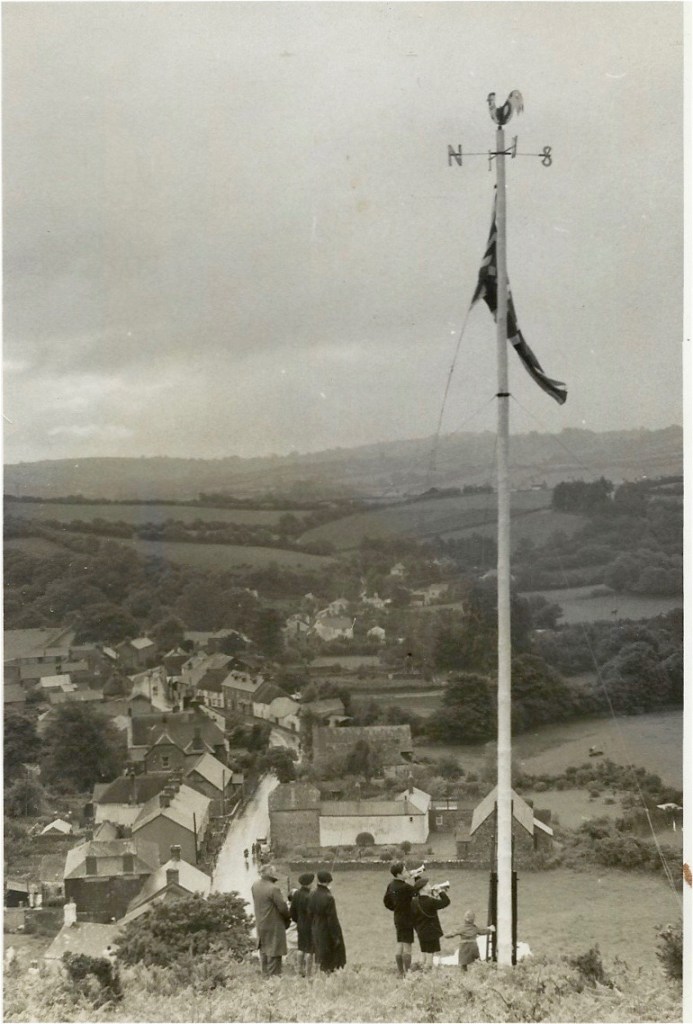
The Flag Pole above white rock looking down over Sticklepath

Looking back to 1937 the Exeter and Plymouth Gazette tells us in April that permission had been given for a bonfire on the common above White Rock to celebrate the Coronation of George VI and his Queen Elizabeth.  Latex balloons became popular in the 1930s so it is likely there were balloons at the village celebration.  I wonder if anyone has any photographs?  This was the first coronation to be filmed live for television and the first outside broadcast. However no cameras were allowed inside Westminster Abbey.

For the third Coronation we take a step further back in time again: 22 Jan 1901 Queen Victoria died.  The Coronation of Edward VII and Alexandra was planned for 26 June the following year.  Local events too were all planned and booked, but at the last minute the King got an appendicitis-type problem, so everything had to be delayed until 9 August.  Imagine the committee members stress and the concerns for the King!  Many sued for loss of rental income from those who had booked at high prices to stay in London for the event. 

On 12 August The Western Times reports that the Coronation celebrations in Sticklepath were carried out in “loyal manner”, commencing with a service in Sticklepath Wesleyan Methodist Chapel conducted by the Rev James Finch at 2.30. I am sure the children would have all sat still under his beady eye!

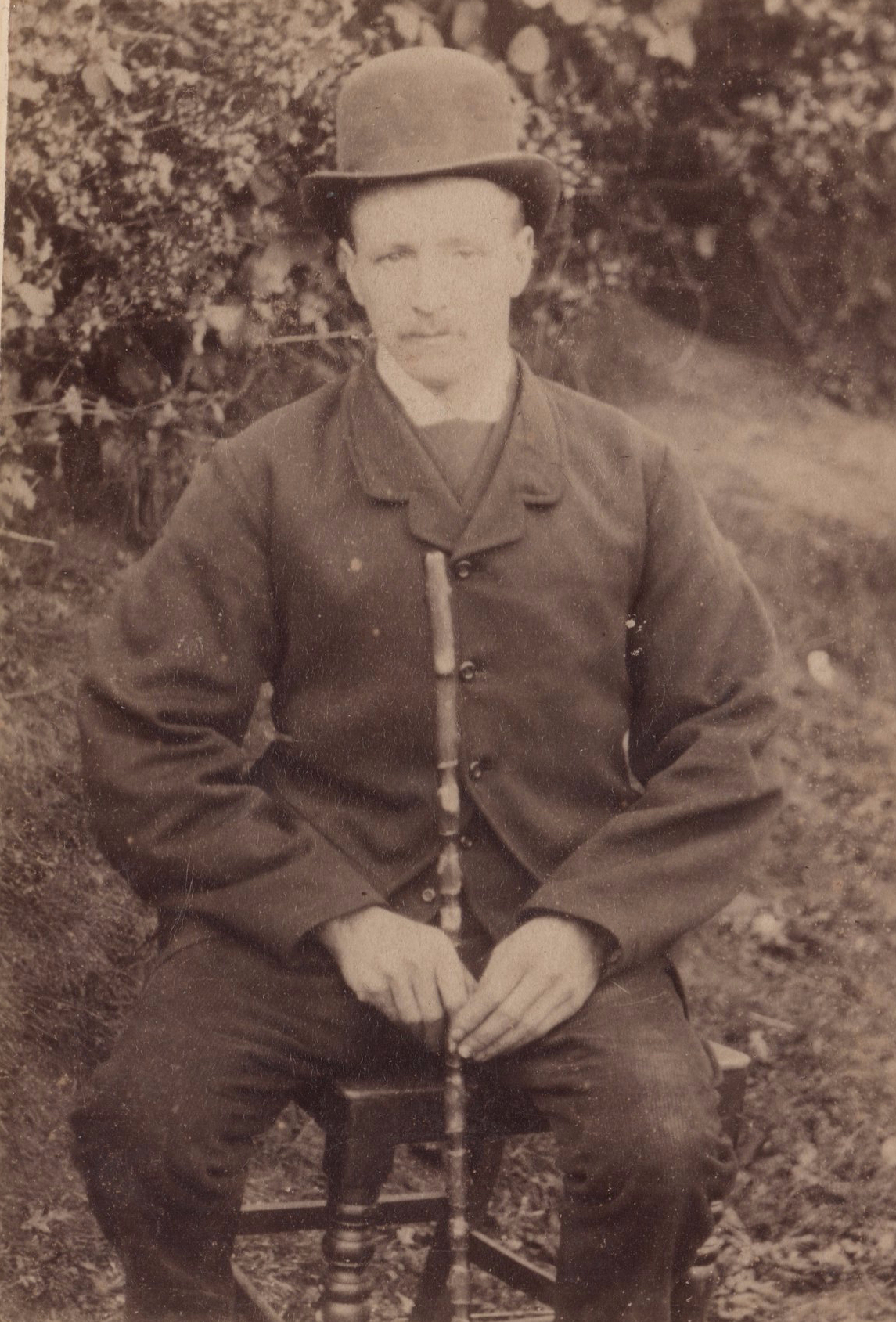
Rev James Finch just 5 years later when Superintendant Launceston Circuit.
Originally a Sticklepath boy, this photo was a Christmas greeting card, documenting all Rev. James Finch’s chapel appointments as a minister.

The itinerary at Sticklepath continued: At 3.30 there was a distribution of Coronation medals to all children under 14 with tea for them at 4pm.  All adult parishioners also had a free tea at 5pm.  At 6pm a wide range of sports took place.  Finally at 9pm the large bonfire was lit and a grand firework display finished the evening in style. I am sure there would have been parades and the very successful Sticklepath Brass band would have been in demand for events across the area.  Decorations for the celebrations may have included flags, banners and bunting. 

I was interested to learn that a staged representation of the coronation was filmed.  Following the postponement however, some of the planned details of the day itself had to be altered. 

A few days after the actual coronation, the film was screened for the King.  Edward VII is said to have commented: “Many congratulations! This is splendid! What a marvellous apparatus cinema is. It’s found a way of recording even the parts of the ceremony that didn’t take place.”

Many thanks to Wikipedia and The British Newspaper Archive for background information.

Quote is referenced on Wikipedia as

Ezra, Elizabeth (2000), Georges Méliès, Manchester: Manchester University Press, pp. 66–68, ISBN 0719053951

Solon Bowden

One of the #Sticklepath Finch foundry workers was Solon Bowden (1857-1933).

Born in Belstone Parish, like his parents and sisters, we find the little family in the 1861 census living at Tongue End Smithy. Father John Bowden was a blacksmith, then aged 42 and mother Elizabeth (formerly Ellis) was 43. Harriett was 6 years old, Solon 3, and baby Lydia just 10 months.

Solon Bowden

Aged 3, the family likely thought Solon was a late talker. No mention of any problem is shown in the disability column. However, by 1871, Solon was described as ‘deaf and dumb’. This was not a derogatory term, as it is today, but simply says the child could not speak due to deafness. Access to speech therapists, hearing aids and other help would have been limited, especially in rural areas. For many, access to education would be difficult, and life’s opportunities severely curtailed. Not only getting a job but the pay may have been reduced. An example of an advertisement in the jobs wanted column of The Leicester Journal Friday 06 October 1882:

‘A Blacksmith, a handy man and good shoer. Being deaf, would take low wages.”

Solon however, was lucky. By the age of 13 the 1871 census tells us he was at the West of England Institution for the Deaf and Dumb in St Leonards, Exeter, over 20 miles from home.  I wonder when he started there. Might he have been there in 1866 when a cholera epidemic hit Exeter. A very worrying time for his parents if so. They had already lost their eldest child, Harriett, at the age of 8 in 1862. Fortunately none of the children at the Institution caught cholera. (Information from South West Heritage Trust shared by Stuart Windsor in a talk for DevonFHS 2021). More surprising, as we scan the next page of the census, we find that his sister Lydia, was also there.  This is strongly suggestive the cause of their deafness was hereditary. It seems highly likely that the Bowden children were funded by the poor law authorities.

The school principal, William R Scott, was 60 y old and he had 3 teachers assisting him (living in) aged 19 – 20.  There was also a work mistress, an upper housemaid domestic, an under housemaid, a cook and a laundress all living in. The adjacent lodge housed a gardener and his family.  There were 65 pupils, boys and girls, aged 8-16y.  Of most interest is the list of causes for deafness –  48 were born deaf and dumb, including Solon and Lydia.  6 were caused by scarlet fever, another 5 by unspecified fever, 2 by measles, 1 by convulsions, 1 by throat disease, 1 from ulcers in the ear, and 1 by a fright in early life. (This paragraph was entirely sourced from the 1871 census accessed via Ancestry. One day I hope to investigate the school records and Belstone Parish records further.)

Childrenshomes.org.uk tells us: “As well as learning communication skills, the pupils were given ‘industrial training’ to enable them to find employment in later life. For the boys, this included instruction in trades such as printing, tailoring, cabinet making, wood engraving and shoemaking, while the girls were taught sewing, dress-making and other domestic skills.

On 21 October 1863, The Institution was authorised to operate as a Certified School, allowing it to receive children boarded out from workhouses by the Poor Law authorities. It maintained this status until 27 September 1909.” (Just in time for Solon to be funded).

Solon was certainly a hard worker and bright intellectually. This photo shows him, and another foundry worker in about 1914 bringing in the harvest at Coombe Head Farm, and later census information suggests he worked at the Foundry in Sticklepath but also helped his father at home in the smithy at Tongue End in any spare time. He married in 1906, a young lady called Hetty Brock I believe. She was working away in 1911, so I hope to glean more from the 1921 census.

Alf Rowe and Solon Bowden helping the Ching twins with the harvest 1914

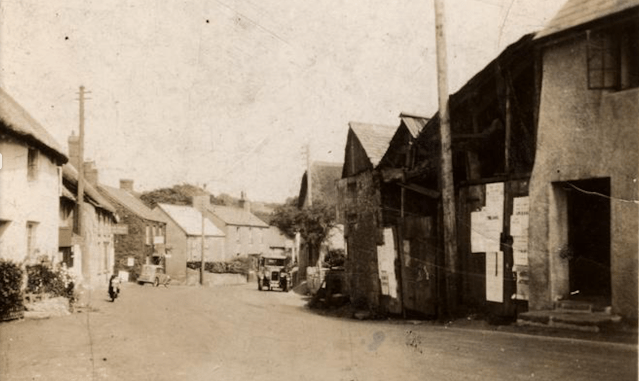
Deafness was very isolating unless family and employers supported you. Potentially dangerous too, if people couldn’t attract your attention to avoid accidents. I have mentioned before the very smoky, smelly, dirty presence of the Foundry, dominating the heart of Sticklepath, right up to the roadside. Perhaps for Solon the very noisy foundry environment actually meant others could hear almost as little as he could and basic hand signals would often be used between the workers. He would have sensed the waterwheels and tilt hammers working. You can still experience demonstrations today and feel the vibrations deep in your chest as the water-powered tilt hammers thud to shape red hot metal at Sticklepath’s National Trust Finch Foundry.  

Finch Foundry Sticklepath on right side. Perhaps 1910-20

Bob Barron tells the story recounted by a visitor to the Foundry in the 1970s who recalled an event 40-50 years earlier, which must surely be about Solon:

“about 1925 he was on his way to Cornwall on his motorcycle when the drive chain broke. There were few garages in those days and he called at the Foundry hoping to get help. He said that a deaf and dumb blacksmith made a new link for the chain and sent him on his way. This was work that would tax the skill of a watchmaker, let alone a blacksmith.” (The Finch Foundry Trust and Sticklepath Museum of Rural Industry by R.A.Barron). See photo of Bob at work

Disability results from the interaction between individuals with a health condition and their environment. For example a person with deafness, perhaps also mental health issues arising, as well as personal and environmental factors including negative attitudes, lack of accessible education and other opportunities, with limited social and financial support can really struggle with that disability. Short sightedness, for example, without suitable glasses potentially becomes a big disability affecting ability to read, limiting job applications, types of work, and lots of other consequences. Given the right support it is not a disability. In his #OnePlaceEnvironment, Solon it seems was not greatly limited by his potential disability.


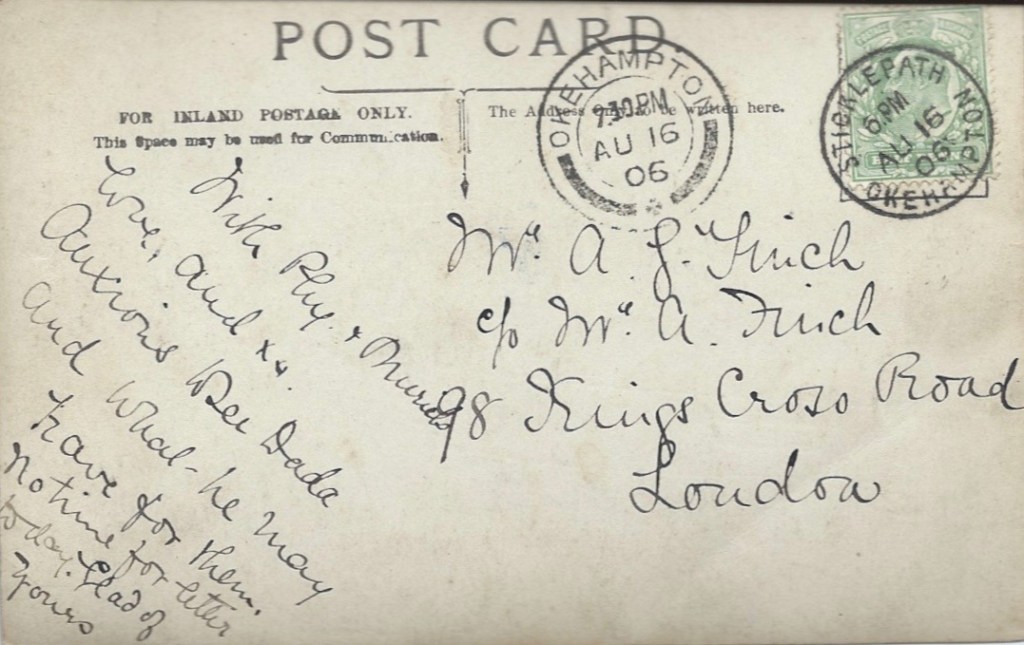
A Message to Dada

With Phyllis and Muriel’s love and kisses.

Anxious to see Dada and What he may have for them.

No time for letter today.

Glad of yours.

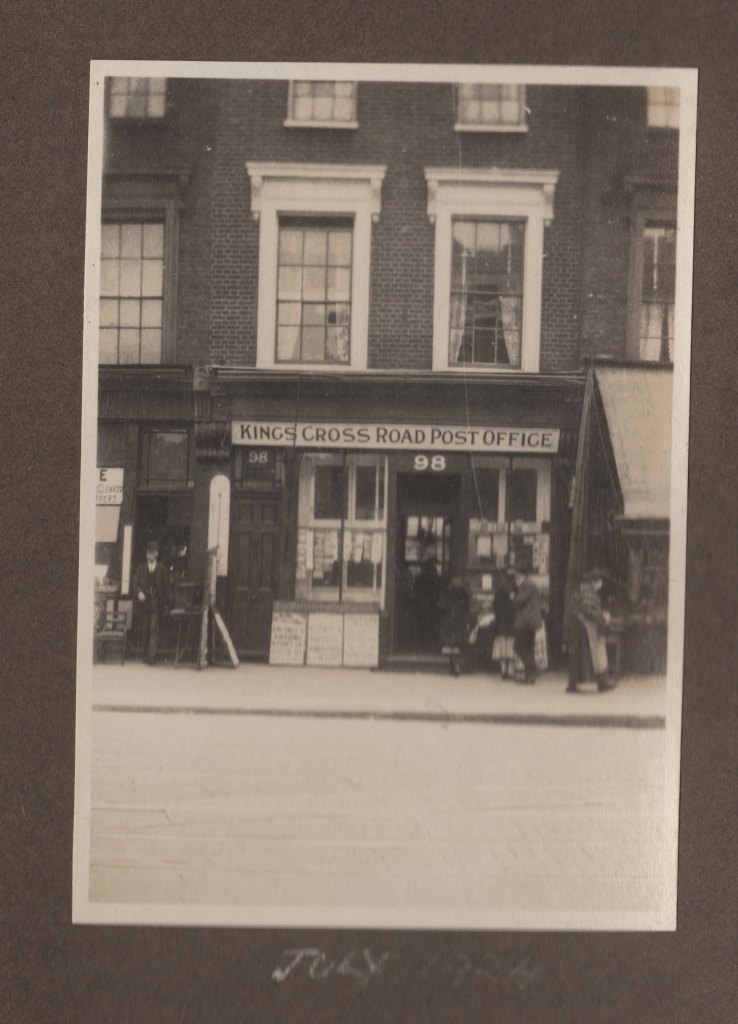
This postcard is addressed to Mr Albany George Finch ℅ Mr Albert Finch at 98 Kings Cross Road, London.

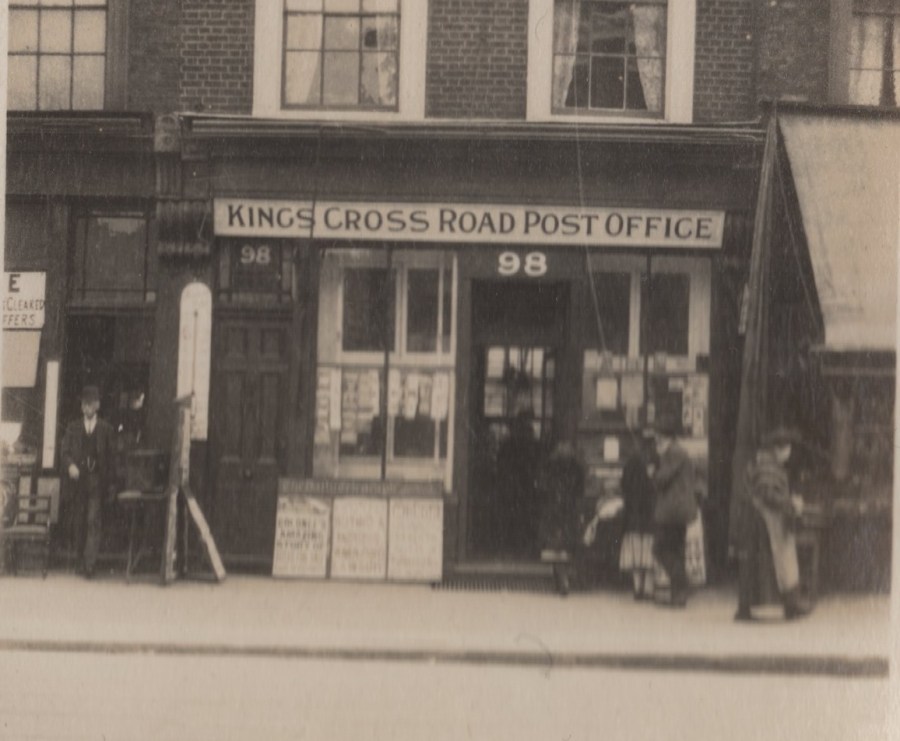
‘Cousin Albert’ Finch and his wife Susan ran the post office at 98 Kings Cross Road. Susan was born Finch too, sister to Albany George. The postcard was posted in Sticklepath, probably at the end of the day, franked 6pm and then travelled to Okehampton where it was franked again at 7.30pm on 16 August 1906. Muriel wasn’t quite two and Phyllis was not yet four years old. It is almost certainly written by their mother, Georgina (nee Ching), wife to Albany, who seems in a rush!

When we think of our ancestors, do we think of them at their age of death? Or perhaps at a particular time associated with a life event or story? Or do we consider all their roles across their lifetime, son, father, friend and so on? In her 80’s Muriel always referred to Albany as ‘my father’ in a rather formal way. I had never before pictured Albany as ‘Dada’.

It feels intrusive to read this intensely personal note, and that sense is not diminished by the 115 years that have passed since it was written.

Then there is that brief message. The children are ‘Anxious to see Dada and What he may have for them’. Do you think this is a veiled instruction reminding him to bring a little something home for his daughters? Or perhaps he often brought something from his travels? As the ‘sales rep’, so to speak, for Finch Bros. Edgetool Makers of Sticklepath he travelled quite extensively in Devon, Cornwall and Somerset.

The postcard tells us that on 16 August 1906 Albany was visiting relatives in the big city. Quite a journey, and for several days it seems. I wonder why he was there? His hosts Albert and Susan were at this address in both the 1901 and 1911 census records, so it was not to assist with a house move. Perhaps Susan was ill or needed his help for another reason? Could it have been a business trip? Perhaps a family matter that Albany preferred to disclose or discuss in person? Or could it have been his faith, his role as a local preacher within the Methodist Church, perhaps a conference that called him to London?

It seems likely he would have travelled by train from Okehampton or possibly Sampford Courtenay station via Exeter to London. Even if he were delivering belongings or collecting tools he would almost certainly have transported them by train.

As usual a small piece of evidence adds to his story but leaves us with more questions than answers! Do please share any other suggestions for his trip.

July 1924 Snap taken when Albany took his two daughters to London, well after both Albert and Susan had died. It will be interesting to see who lived there on the 1921 census when it is released next year.