Do you feel part of the Genealogy and Local History Community?

As “All About That Place” draws towards a close, the event leaves me with a real sense of the huge local and family history community that is ‘out there’. The Facebook group is continuing and all talks remain available until 9th October and some after that.

My question is – how can we build on and feel part of the genealogy and local history community? What do you do?

For those with an interest in place The Society for One-Place Studies provides a great opportunity to chat over Zoom at least monthly with like-minded historians, who don’t all have a One-place study, at least not yet! The monthly webinar, often led by a member, demonstrates different aspects of studying a place, it people, events and so on. Each #OnePlaceWednesday (for more than 24 hour as Wednesday travels around the world) the hashtag brings One-Placers together using a variety of social media, sharing blogs, pleasantries and word play, increasing that sense of belonging to a community. There are monthly blogging-prompts too encouraging people to share research online, in the journal or on the Society blog.

The Few Forgotten Women Project aims to bring stories of those women into the limelight, and provides an opportunity for researching as a group. The #FewForgottenWomenFridays are research days when a particular group or resource is explored, by perhaps around 50 researchers. Each person is given a name to investigate and write up. The referenced stories resulting are put online. Ideally this is a short term project, perhaps completed within the day or week by each researcher. Zoom is used on the day to meet and chat, discuss the research process, seek help, share findings and get to know each other. There is also Few Forgotten Women free event of short talks for International Day of the Girl on 11 October (Details will be available soon).

Reading and sharing blog posts and online articles is another way to keep abreast of interests, new records online, hot topics and so on. I enjoy “How to History”, short articles pointing to different sources. What are your favourites? If you are new to this, a good place to start is someone who gives their top posts of the week or month, for example, Genea-Musings or GenealogyALaCarte, FridaysFamilyHistoryFinds or FridayFossicking. Explore even a few of their links and time flies by!

Others join together with a particular title such as Amy Johnson Crow’s #52Ancestors. This series of weekly prompts asks you to think about an ancestor and share something about them. Some people do every week, others occasional posts but they are interesting for readers too! Those taking part can share their findings in the Facebook group and Amy shares her top choices for each week by email with those who have signed up. Do check out the 2023 weekly prompts, you can join at any time.

Searching with any of the above suggested hashtags can bring a wealth of posts to read and get ideas too. The above are all free or minimal cost (Society for One-Place Studies Membership £10, less if you are under 21). Many Societies are very low cost.

Family History Societies and Local History Societies also provide opportunities to get together, in person and increasingly online, as well as Zoom meetings to increase your knowledge and skills on chilly evenings! You can explore options in the forthcoming Family History Federation Really-Useful Show 17th and 18th November. The Friday is all about exploring the Societies and what they have to offer. Just remember all such voluntary societies are dependant on its members, and that is where you come in too!

There are many other options. The Society of Genealogists have many events, a member’s forum and various ways to ‘get together’. Pharos Online Courses give students have a chance to get to know each other whilst learning more genealogy skills, and Natalie Pither’s Curious Descendants Club shares plenty of information about improving your writing skills and members chip in with ideas as (brave) people bring their stories for comment.

How do you link with other historians?
Follow up from Auntie Kate’s Talk #AllAboutThatPlace 2023

Auntie Kate’s talk goes live at 12 midday today and will be available for at least 2 weeks. I hope people enjoy the talk.

There are three lines of follow up you may be interested in if you have not been a regular reader of this blog, plus news of a follow up talk. Click on the link(s) you want to follow:

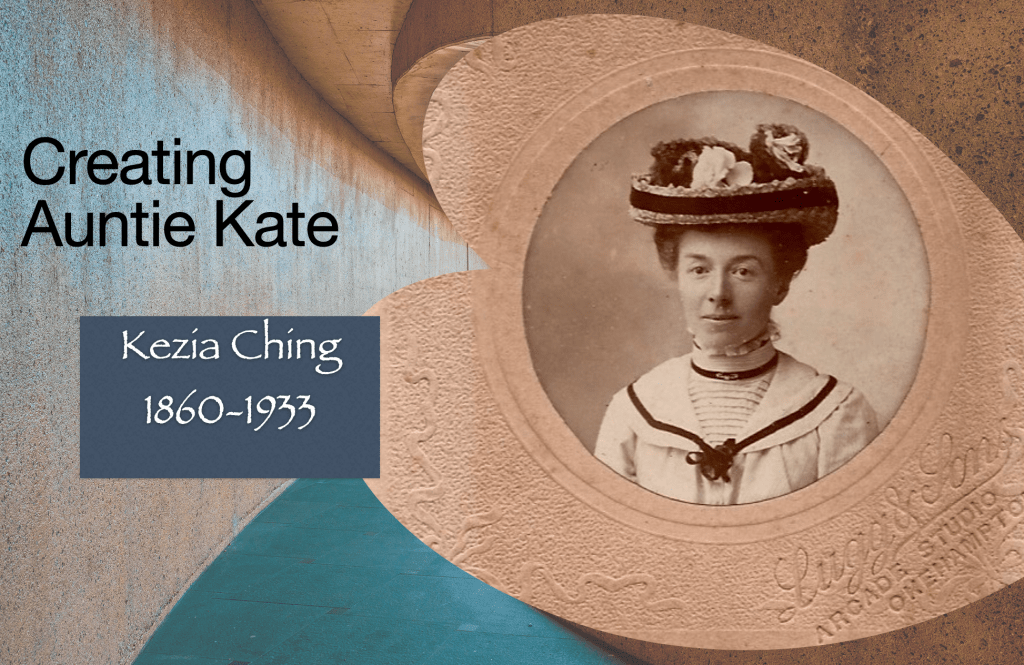
First a series of short blogs “Who was the real Auntie Kate?

Second (in two parts so far) Sources to investigate the school in Your Place

Third an on-going series about Sticklepath School, its teachers, pupils and stories, which you can sign up to follow either here on WordPress or on Facebook on https://www.facebook.com/SticklepathOne

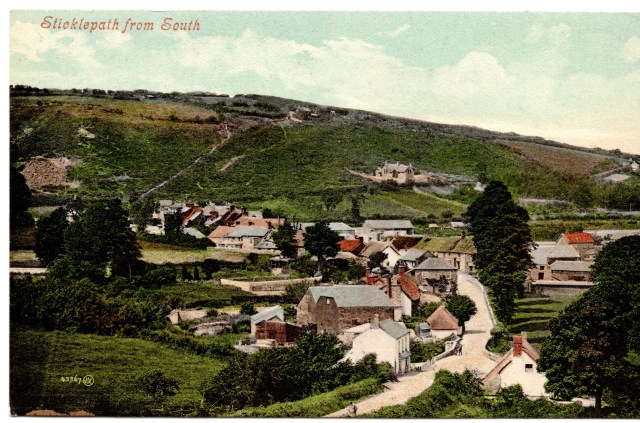
Chapman Postcard showing Sticklepath and the school part way up The Mount

There is a follow up talk, thinking about how Auntie Kate came to be and different ways people might share their own family history. It airs on Sunday at 4pm and will be available for at least 2 weeks.

#AllAboutThatPlace Sunday 1st October 16.00 BST

#AllAboutThatPlace is a great event for both family historians and local historians, whether beginners or experienced. I have enjoyed many of the talks so far – just struggling to keep up with so many fantastic 10 minute talks each day!

I hope you are enjoying it too 🙂

Clues to the Wealth or Poverty of your Ancestors

Watching talks in #AllAboutThatPlace and especially one by Hayley Wright of the Historic Towns Trust prompted me to think about the wealth or, more often, poverty of our ancestors and how we might investigate that.

Kelly’s Trade Directory 1893 for the village of Thornton le Clay and the adjacent village of Foston gives a distinct impression of the relative social class structure:

Kelly’s trade directory 1893 N&E Riding of Yorkshire accessed via
Leicester University Special Collections online 23 Sept 2023

Foston Hall and Foston Lodge are large detached houses with extensive grounds. Foston (91 residents) had the Parish Church. However, there were far more residents (274) in Thornton le Clay, and I have evidence that they needed help. On 7 March 1840 The York Herald reports: the Malton Poor Law Union directed that the “Medical officers for the districts of Welburn and Rillington should attend the wives of J. Potter, of Thornton le Clay and James Wade, of East Heslerton, on their confinement.”

I am pleased to report that little Enos Potter was safely delivered in Thornton le Clay.

So as you can see general records can give an overview of wealth or social structure. Specific records, even if not for your direct relatives can start to paint a picture of the relative wealth of the inhabitants of that place.

Maps, preferably at the time period you are looking at, and investigating changes over time can again hint at what life was like for the residents. Look at what was recorded on the maps (and why they were made). People record what was thought to be important or significant. Street names can in themselves indicate the status or occupations of the area. There is often an indications of housing – tightly packed terraces, back-to-back houses (another great talk there by Jude Rhodes!) or palatial mansions with vast grounds..

In London the ‘Bills of Mortality’ have maps linking ill health with the areas. Of course the Charles Booth Poverty maps for London are well worth viewing, and indicate the relative wealth of households divided into 7 levels of affluence (and associate poverty with criminality). Rowntree’s Reports of Poverty in York are also enlightening.

Maps help us identify the Parish which is important when searching for Parish Registers and records like pauper records and the work of the Poor Law Union, Board of Guardians or Overseers of the Poor. Settlement examinations for local residents can give an idea of a life of poverty at that time in that place. Finding a settlement examination for your own ancestor (often in the Archives rather than online) gives so much thrilling detail, whilst we cringe at what they endured.

Baptism registers indicate unmarried mothers – often associated with financial difficulties. Marriage registers and the census records indicate occupation and suggest likely family income. Census might state the number of employees, ‘living on own means’ or ‘Annuitant’ as well as ‘pauper’, an indication of disability or being in the workhouse. Look at the overseers accounts, how many paupers do they name and what were they given to support them eg coal, funeral expenses etc. Were there many pauper apprentices from your place?

Causes of death within a population may be related to wealth. Medical officers of health reports for the district often point to bad sanitation and housing accompanying poverty as causes of disease. Church accounts may indicate if there was a muffled peel of bells – only the better off (or bell-ringers themselves) would likely merit that.

There are indications of literacy in many records. Signing with an X might not always mean the person never learned to read and write, and signing your signature doesn’t mean you could read Shakespeare, or had great wealth, but it is a clue along the way. A studio photograph or portrait holding a book is not an indication of literacy.

Newspaper reports also indicate when harvests were bad, at a time when poor families relied on the local harvest for their winter’s food. Sales of farms when times were hard, or bankruptcy (See The London Gazette for example gazettes bankruptcy). See the story of George Ching falling on bad times for an example of a farmer selling up and becoming an Ag Lab for a while.

What sources to indicate wealth or poverty have you used?