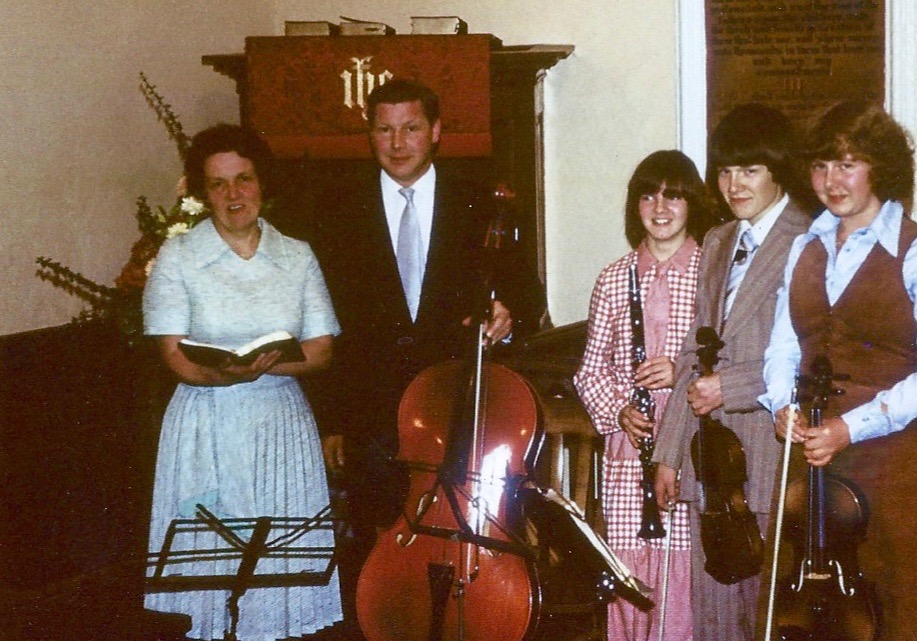
Amy Johnson Crow’s #52Ancestors aims to help us write something about an ancestor each week, with topic suggestions. My metronome timing has slipped somewhat, too busy with other projects! Music played a huge part in Charles Roger Finch Bowden’s life. Roger was a tenor soloist. When he realised his children were learning violin, clarinet and viola he took the hint and started to learn to play ‘cello to complete the quartet. We even gave a family concert in Sticklepath Methodist Chapel with wife Ann doing short readings and poems to keep everyone entertained. Perhaps 1978?
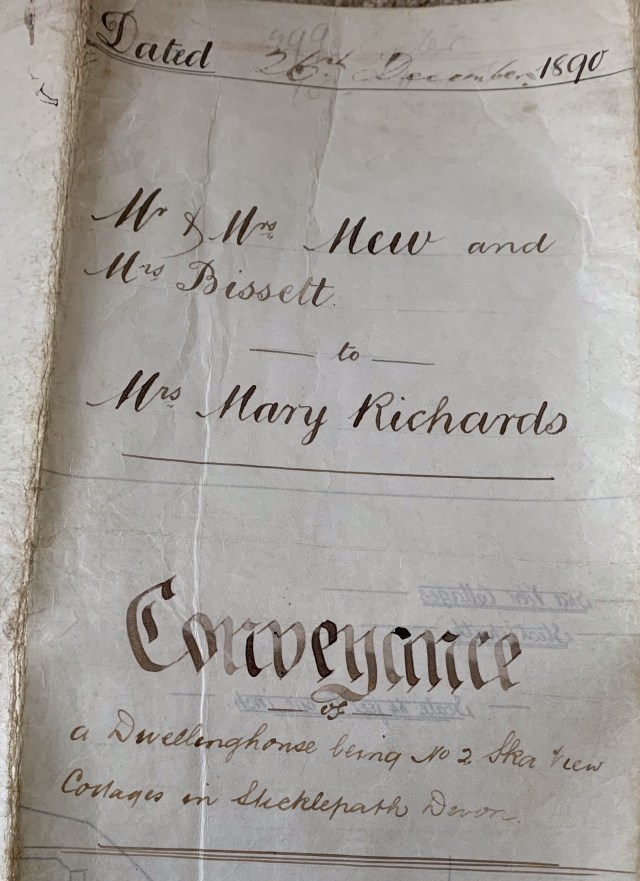
On 24th December 1927 Maria Palmer bought No. 2 Ska View Cottages Sticklepath. The previous owner, her father, Mr James Neill had died in February. Sadly his other daughter Beatrice had died in the interim. (Will dated 7 April 1927, she died on 26 May 1927). Frank Richards, her husband, was the sole Executor and Beatrice left her estate (which included a half share of No 2 Ska View) to her nephew Bernard William Palmer aged 13y, the son of Maria and John Palmer. The conveyance therefore became a little complex legally, with John Palmer representing the ‘infant’ son Bernard in the transaction.
Frank Richards was the headmaster of Sticklepath School and his wife’s death is noted in the school records, just to say that he took a half day because of her death!
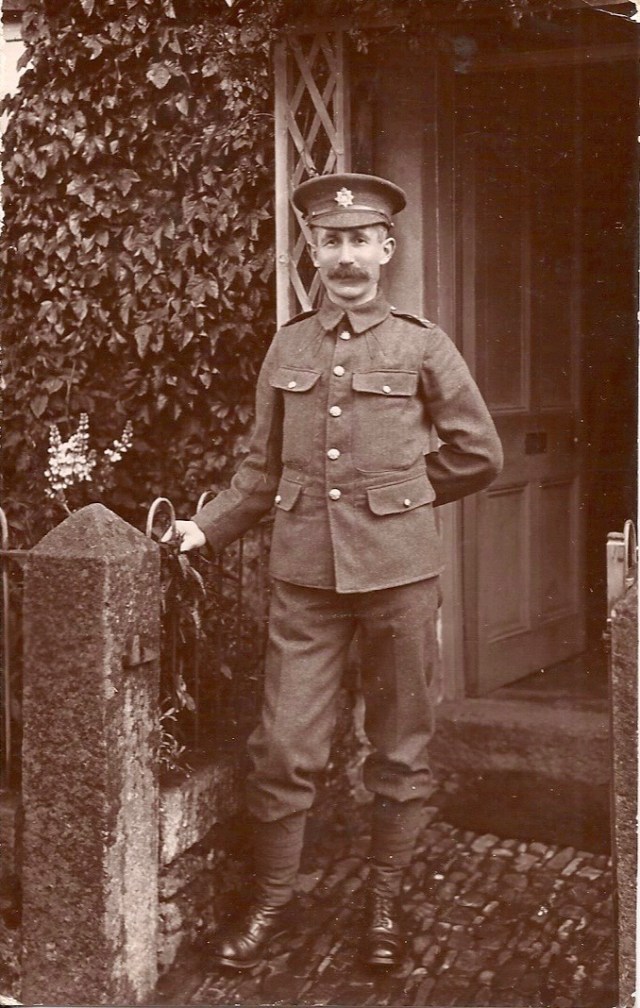
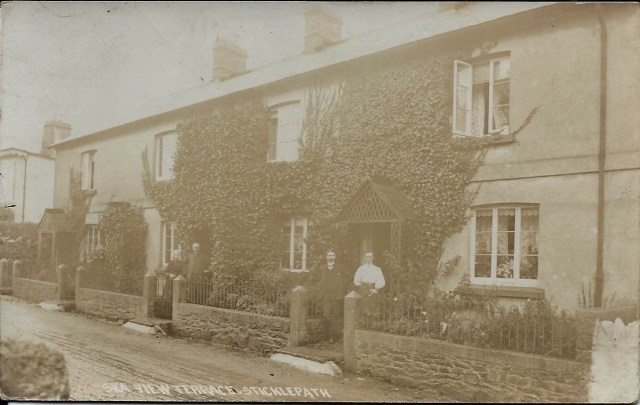
Frank Richards, WW1 uniform. Details seen of cobbled path, granite pillars and ‘trellis’ porch.
No.2 was valued by Mr Arthur John Powlesland of Okehampton, a duly qualified valuer, who fixed the price as £320. The current tenant was a Miss Cann.
I have at this time no evidence to suggest Maria Palmer ever lived in Ska View Cottages. She wrote her Will 12 June 1958. Her son Bernard became a Chartered Accountant, and at the time of Maria’s death lived at 22 Mill Lane Felixstowe, Suffolk. Maria was said to be of the same address and formerly of ‘Kolar’ Okehampton. Maria died at The East Suffolk Hospital, Ipswich on 24th October 1958. She left everything to her son, Probate was granted in Exeter to him 9th January 1959. Assent to the vesting of Number 2 Ska View Cottages from Mrs M Palmer deceased to Bernard William Palmer is dated 22nd April 1959.
At some point Bernard moved to 19 Goyfield Avenue, Felixstowe. 11 December 1959 the cottage was sold again to Mr Charles Bowden, haulage contractor of Cleave House Sticklepath for £550. Witness to the signature was RK Barron of Foundry House Sticklepath, Tool Maker. In March 1965 a further valuation, by Anthony Wonnacott, likely for re-mortgaging purposes shows the property to be valued at £1,500.
A Memorandum appended to the conveyance shows that 26th October 1992 Charles Bowden gave the garden by Deed of Gift to Charles Roger Finch Bowden (his son) in fee simple. Charles died 20 March 1994 and Probate was granted (Bristol) 16 Nov 1995. The property assented to Charles Roger Finch Bowden and his wife Ann Rosalie Lloyd Bowden 28 January 1997. Land Registry Official Copy of Register of Title in 2008 valuation was £140,000 (without the detached garden). The type of joint ownership was amended 12 Dec 2012. Marketing websites show it sold in 2018 for £150,000.
In 1975 plans were submitted to make an interconnecting doorway between No.1 and No.2 Ska View Cottages. At that time Miss Phyllis Finch lived in No. 2 and the doorway and firecheck door enabled her to visit her sister in No.1 without venturing outdoors in the final weeks of her life. Planning was approved 17 October 1975. She died in March 1976. The doorway has since been blocked up.
I have not included much detail of the owners themselves, and even less of other occupiers. Perhaps another time. I am also aware that there may be other connections – I spent many hours in the Ska View Cottages as a child, visiting relatives or with my ‘child-minder’ after school, which is of course not documented. Nor do the papers survive to tell us how the houses were financed, how much mortgage was payable. I do not have any insurance documents for No. 2. ‘Official searches’ in 1959 do not add anything specific. Several documents declare no land tax was payable on these small properties.
It is interesting to see the increasing valuation or sale prices:
1890. £100. Sale
1924. £380 Sale
1927. £320 Valuation/Assent
1959. £550 Sale
1965. £1,500 Valuation
2008. £140,000. Valuation
2018. £150,000 Sale
One might surmise that the assent value in 1927 was on the low side but market fluctuations may mean it was accurate, and there was a tenant in situ.
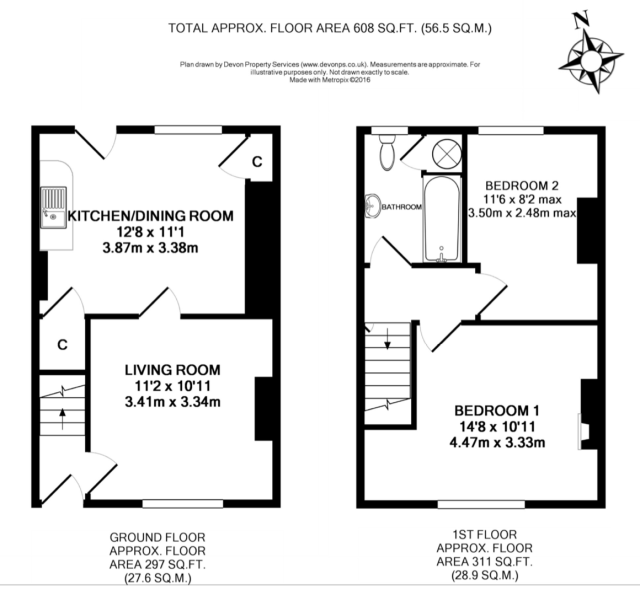
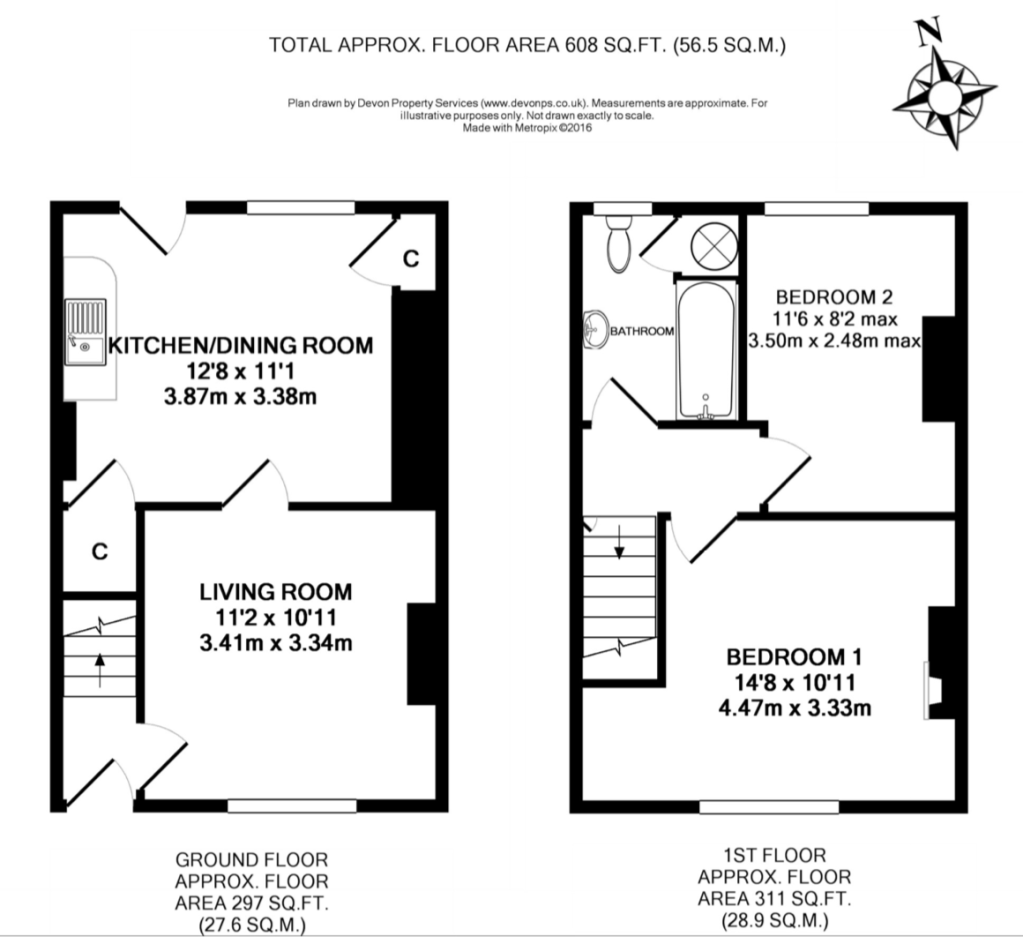
Perhaps equally interesting is to understand the size and type of housing of a headmaster and mine manager in the 1920s, perhaps some of the better off villagers, with a total floor area of 56.5 sq m . The plan prepared for Stags estate agent Okehampton 2017 shows there were two downstairs rooms and two upstairs.
There was no bathroom in their time. It is not clear when a bathroom was added to No. 2, planning was sought for indoor bathrooms in other cottages in 1972. The outdoor toilet across the yard was certainly in regular use in 1960s. They did not have covered sewerage or electiricity, so no electrical appliances. (Details of how the drains were ‘flushed ‘ see Ladywell).
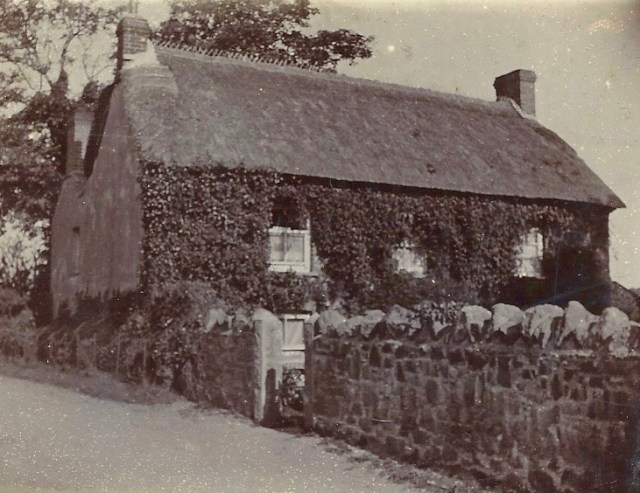
The open drain can be seen just infront of the wall with a step from each Cottage bridging the gap. (Chapman of Dawlish Postcard)
The detached garden was a small allotment used to grow vegetables, a necessity not a hobby. Compare that to expectations of families today both in terms of space, amenities and services.
The row of 4 Ska View Cottages with stone outbuildings behind. The Old Cottage and Village Hall are seen to the right. Between these two the Back Lane leads to the electricity sub-station (black)and just past this, off the picture would be the garden allotment.
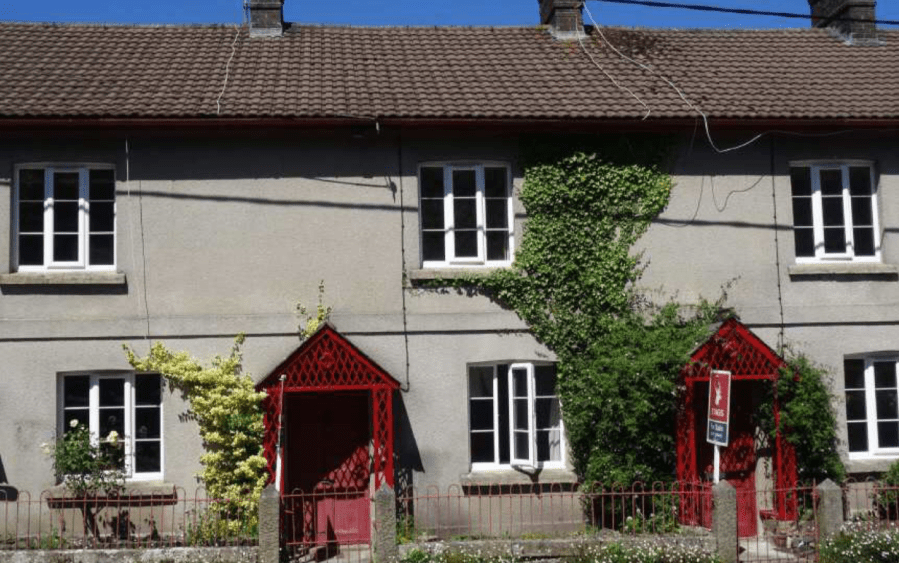
Tiled roof and chimney detail No.1 and No.2
Sticklepath has several small terraces of houses running parallel to the road. The cottages are well built of solid masonary. Originally they had a shared roof space – as with many old rural houses this has provided a roost for bats (myotis sp.).
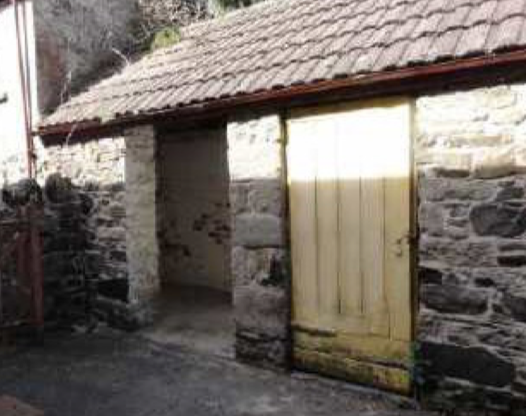
Stone built out-house believed to have stabled a pony at one time. Later W.C.(water closet or toilet)
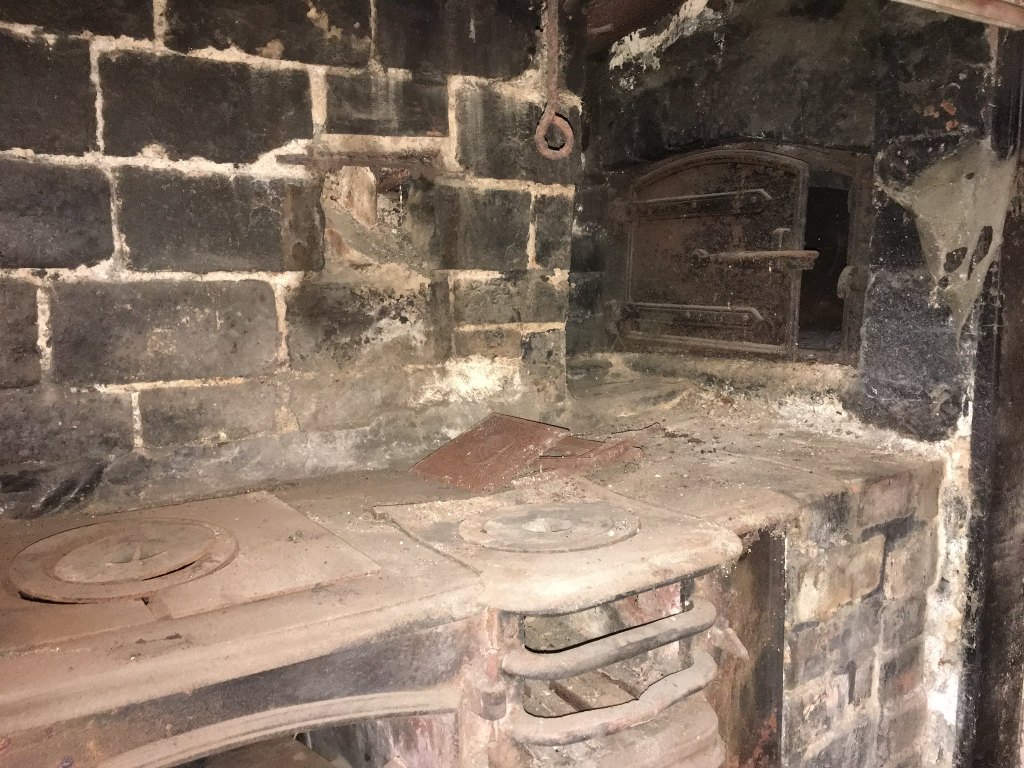
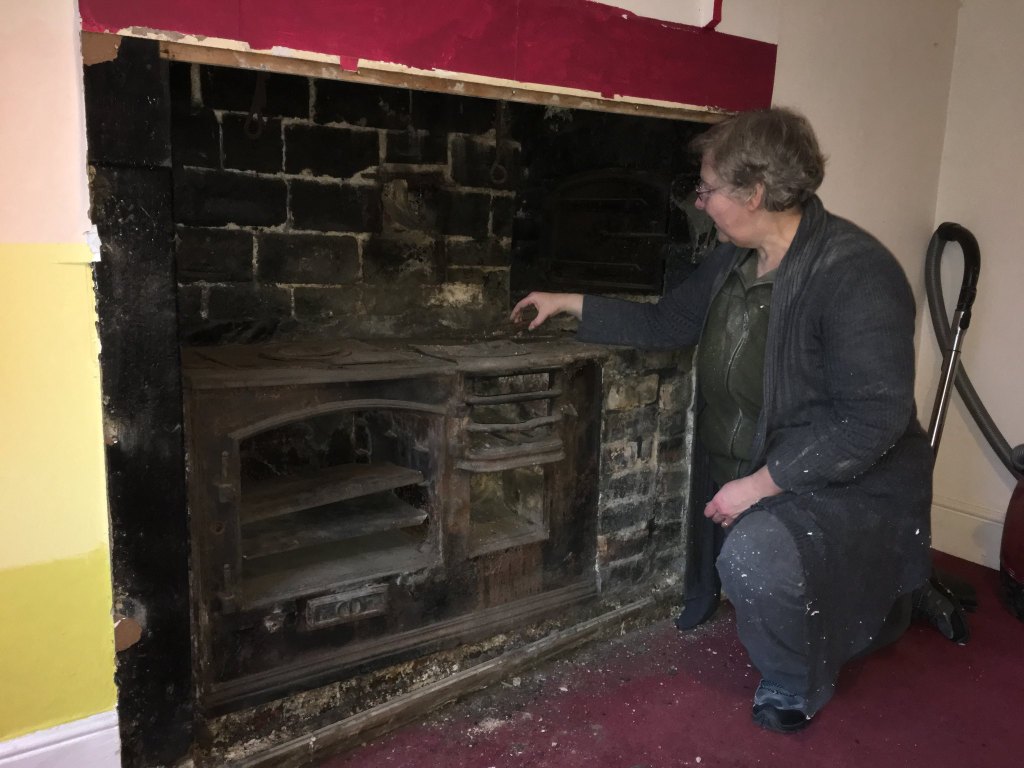
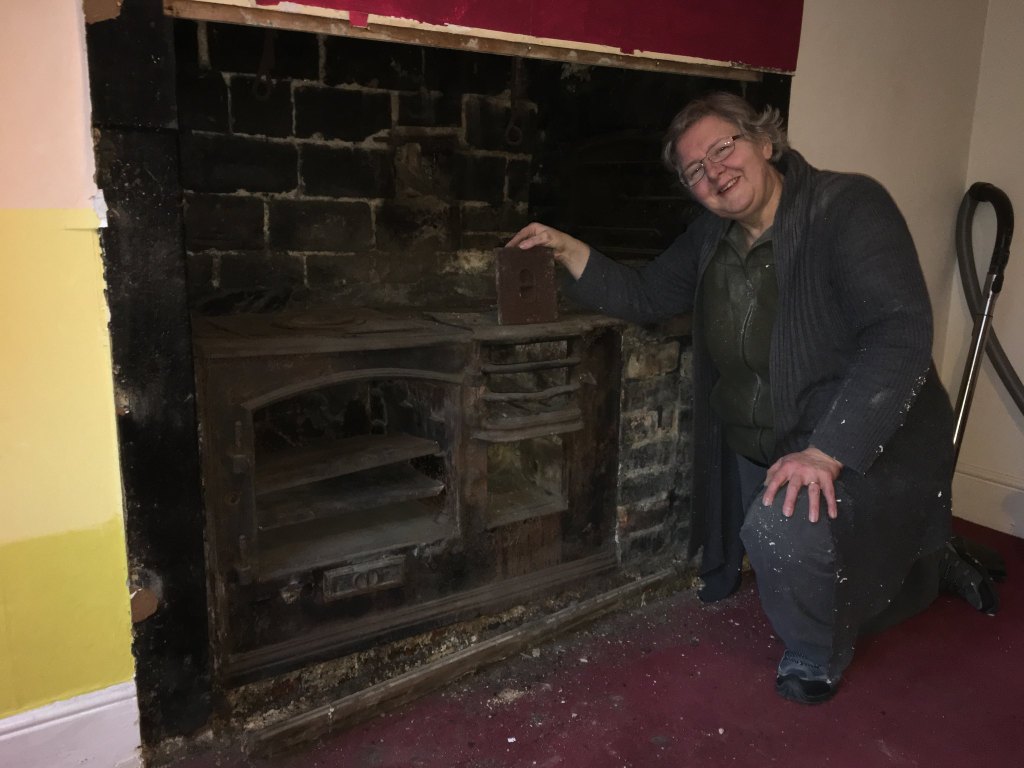
During renovation work in 2017 a small Victorian range was found in No. 2 kitchen. The plaque above suggests it was made or at least sold by an Okehampton firm. It was in a poor state and Okehampton Museum were not interested in preserving the remains. It seems very likely Captain Neill and his family would have benefitted from food cooked in such an oven, on the hob, a fire in the grate and bread from the bread oven. A family with these facilities may have made extra to sell to other villagers.
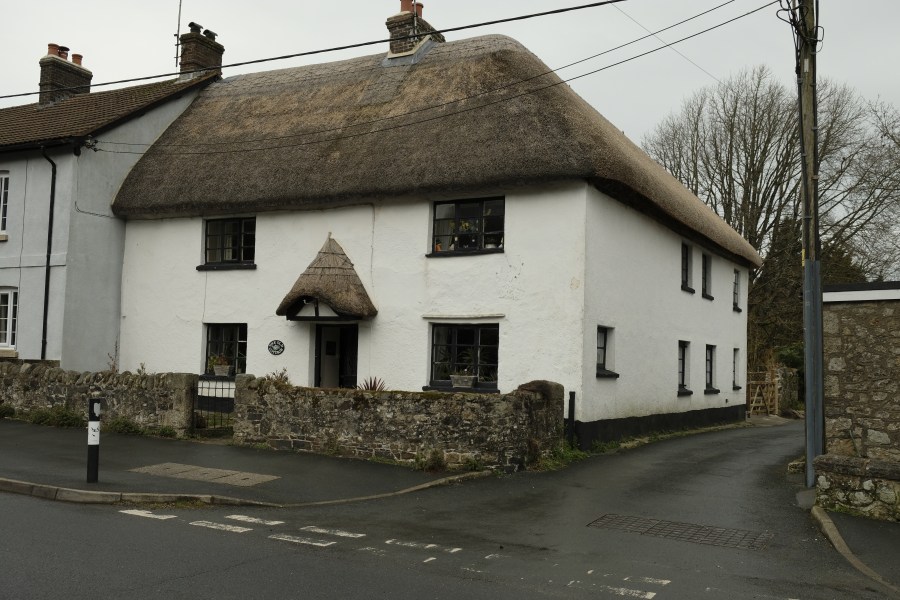
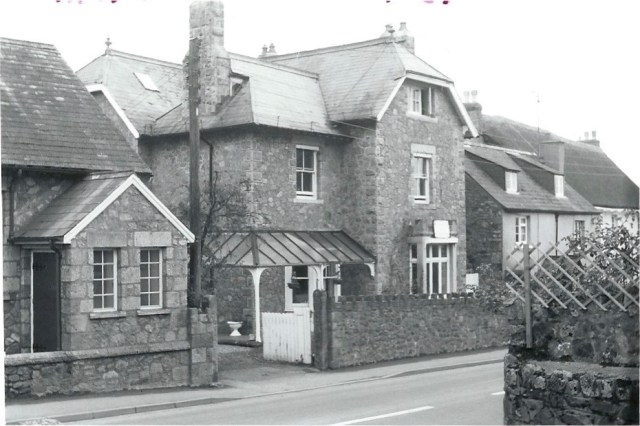
Times change and No.2 is now a holiday cottage, no longer accomodation for local residents. The railings and matching porches (also seem on Farley Cottage and previously on Effra, opposite the Methodist Chapel) give some character and unity to this row of cottages.
I have been contacted by a number of people who are asking about their #Sticklepath House. I recommend the book “Tracing Your House History: A Guide For Family Historians” (Tracing Your Ancestors) by @GillBlanchard
For those willing to splash out a bit more there is the Zoom House History Show and follow up lectures (it looks like the 15th May show will be recorded for those signing up who can’t make it on the day). Watch out for free zoom lectures too! IF you are on Twitter join #househistoryhour on Thursdays 7-8pm.
Higher Coombe Head
YOUR HOUSE – There is so much to explore. What can you learn from the construction – bricks and mortar, granite, or wattle and daub. What are the windows like? Some old ones in Sticklepath slide sideways to open. Thatch or slate? What gutters are there? (It is unusual to have gutters with thatch but several Sticklepath houses have them). What evidence is there of extensions or other changes? Can you find old photographs or postcards showing your house? Are there some in your family album if you have lived there for a while, that show old decor or changes to the rooms? What are the names of people who have lived in the house? What can you find out about them? Is your house shown on old maps or can you start to date when the house was built from maps?
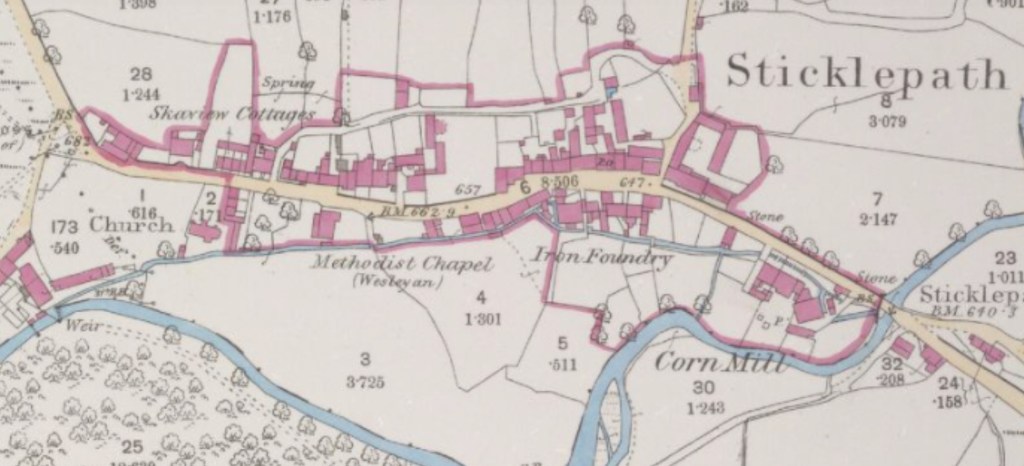
Trying to find your house site on old maps is a good place to start – try the National Library of Scotland Ordnance survey 25 inch to mile and other maps on that site. They make great illustrations for your file too:
Satellite images too can be useful, from the same website or Google maps etc.
Try a simple Google search using your house name and Sticklepath. You may be lucky! If your house is listed some details will be found online. In any case reading about those listed houses (the ones in our Sticklepath!) and the conservation area character appraisal 2017 can add other background.
Do you have your house deeds? If so go through each document to see what names and dates and changes to the building/garden you can find. If you don’t have the deeds, try to locate them, ask the previous owners. Try putting your house name into Devon Archive search or The National Archive Discovery search – you never know if something might pop up. A key part of deeds are the Wills or administration of those owners who died and state in their Will what is to happen to the property. IF you don’t have access to the deeds but have names of owners, search the above archives online or Gov.uk for the Wills and Probate of known owners Note there are tabs for different dates and for soldier’s wills (small charge).
You can research previous owners or occupiers lives through the census records or newspapers. What was their occupation? Did they have servants? Reports of funerals or obituaries can be especially helpful. There are many free genealogy sites, see Cyndi’s list for example. Some allow you to see there is a document but charge for seeing them. Make a note of the reference. Libraries often have free access to subscription genealogy websites. (During lockdown some were giving access at home if you had a library card).
Tawburn
House sale details – modern ones may still be found online. Again photos and plans can be useful images in your ‘report’. Auction details in old newspapers may be found, both for the building and lists of furniture for example. Planning documents can also be interesting and provide more details.
The Experts recommend starting from today and documenting who lives there now. Perhaps make a note of who was there on census night 2021! How long have you lived there? Where did you or your family come from and why? Are there any particular features of your house? Photograph and explain them. Or make a note to try to find out about them later if you are not sure what their origins were – showing photographs to interested people might get you answers. Photos of your rooms and garden today will certainly be interesting in 5, 10, 50, 100 years! Perhaps keep a piece of wallpaper if you change it or make a note of any structural changes you make or have made for future reference.
The Heritage
You can work backwards through the 1939 register and census records 1911 backwards every 10 years. (Check for the 1921 census in a year’s time!) The house may not be named though so occupier’s names may be needed. You also need to know which Parish to search, and can find helpful links on Genuki – Sampford Courtenay for most of Sticklepath, South Tawton for those on the Exeter side of the bridge, Belstone Parish for those up Skaigh Valley. The Sampford Courtenay enumerator for Sticklepath seems to have largely kept his papers in the order he visited the houses. This is not true for all. Trade Directories can also state names and addresses (look under Sampford Courtenay or the Parish as above).
Chat to current neighbours and long standing members of the community. Do they know who lived there before you? What do they remember about them? Would your close neighbours be willing to let you look at their house deeds? Deeds often note information about party walls, access rights and names of then current neighbours.
After lockdown, chat to members of Sticklepath Heritage Group who may have more ideas. Many Sticklepath houses were photographed in 1983 and the photos are in the Village Hall archive. There is also a roll of wallpaper on which most house names were written in that year, with a list of who people at that time remembered to have lived there.
Searching Google for ‘How to’ and ‘House History’ reveals many websites. For example:
Please do contact me to see if I have anything about your house – shields_h_f@hotmail.com (giving as much detail as you can), and I would love to hear about your progress too!
Please follow the SticklepathOne facebook page to know when more blog posts appear that may help with knowledge of Sticklepath History!








 Sticklepath a Village and its People