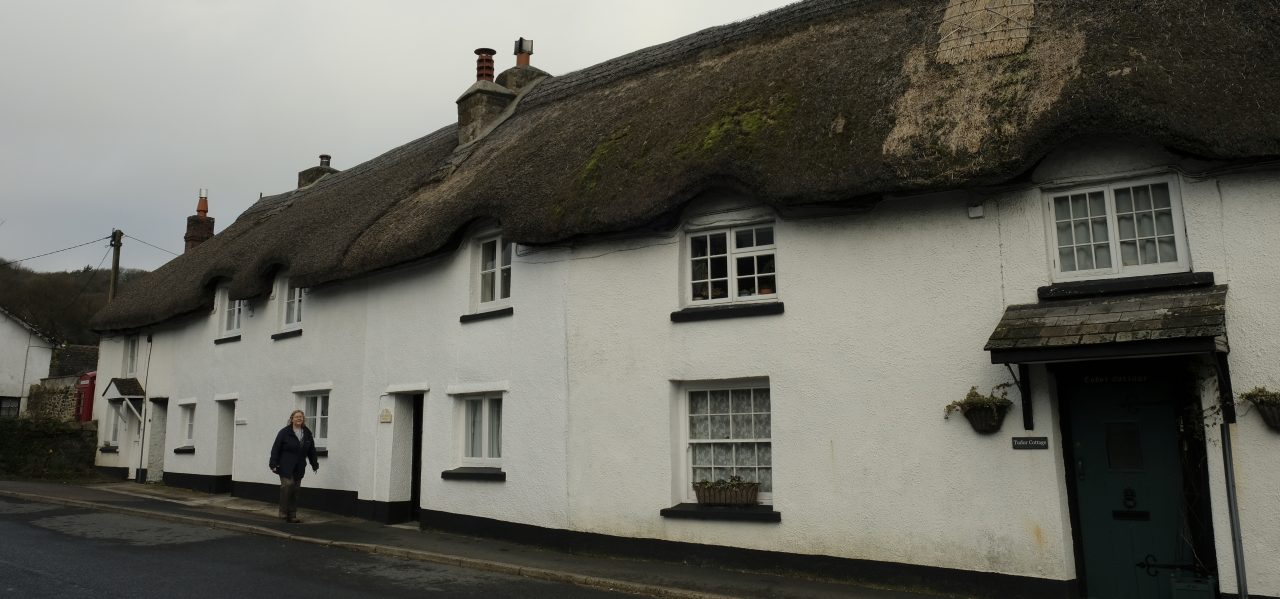
Headmaster of Sticklepath School 1883-1890

One of the joys of One-Place studies is making links, as Steve Jackson said in his OPS micro focus talk yesterday for #AllAboutThatPlace, weaving a web if you like, so you start to understand how things are interconnected. This week when re-investigating headteachers I found that my own Great Grandfather was best man to the headmaster of #Sticklepath School, and their wives were sisters. He also attended the funeral of Auntie Kate.

I believe the second headmaster of Sticklepath School was Mr William Avery. I have not found his appointment, but early school records do not exist. Research at this time relies heavily on the newspapers accessed through the British Newspaper Archive September 2023.

Mr Avery attended the Mid-Devon Teachers Association on behalf of Sticklepath school in 1887. By 1888 he was well established in the community often giving readings and recitations at Sticklepath Village Hall entertainments, and playing Mr. Sergeant Buzfuz in a musical entertainment “Breach of Promise – Pickwick v Bardell”. Such entertainments were sometimes part of the Working Men’s Institute (established 1885) and sometimes on behalf of the Reading Room, which was at the village hall. It appears he was active in both organisations.

There was a celebration at the end of 1889 when William Avery married Emma Trace in South Tawton:

North Devon Herald – Thursday 05 December 1889. SOUTH TAWTON 

Sadly he was to leave shortly after that with his wife.

Western Times – Friday 03 January 1890

STICKLEPATH. The dance held in the Village Hall last week was numerously attended, there being about 100 present, and It proved a most enjoyable and social gathering. Dancing waa continued to 4 a.m., an excellent supper being laid at the Taw River Hotel by Mr. and Mrs. Knapman, the place being tastefully decorated for the occasion and the catering being as usual much appreciated. The members of the reading-room and their friends numbering about 70 were kindly invited to a tea and social evening by Mrs. Symington, in the village hall. After tea games, songs, recitations etc., were indulged in. Songs were glven by Mrs. Avery, Messrs. Blampey, Cann and Ellis.

During the evening Mr. Avery, schoolmaster of the village, was presented with an electro teapot by his fellow members on his marriage, and his leaving the neighbourhood for a school near Bath. Mr. W. W. Symington kindly made the presentation, and Mr. Avery suitably replied. The amusements, kept up until midnight, when coffee and cake were handed around. Before leaving, the Rev.Lucas of Belstone, member, proposed a vote of thanks to Mr. and Mrs. Symington for their extreme kindness, spoke in high terms of the good feeing existing between Mr. Symington and the working class of the neighbourhood, he being always ready to lend them a helping hand. Mr. Symington having replied ‘Auld Lang Sine” and “God save the Queen.” being sung all returned to their homes having thoroughly enjoyed themselves.

Mr. Avery has also been the recipient of a marble clock and handsome biscuit box, presented by friends of the village, also a beautiful inkstand from Mrs. Cook, the schoolmistress, and scholars, showing the high respect in which he is held. He leaves with many good wishes for his future welfare.

However, by 1891 they had returned to Devon with Mr Avery now head master of South Zeal board school, in the next village to Sticklepath, where he was to stay for many years. In the 1891 census his wife Kate is also mistress at a board school, despite having a 7 month old daughter Kate. (We do not know if she was actually working at that time.)

Sadly Emma died when Kate and her younger brother were still infants. William Avery lived a very active life, being vice-president of the Mid-Devon Teachers asssociation and often auditing their accounts alongside the later head of Sticklepath School. His sister-in-law Miss Tucker came to live with him the care for the children. William lived to a grand old age, as the newspapers again tell us:

Western Times – Friday 30 September 1949

Work For South Zeal The death occurred on Saturday at Beacon View, South Zeal, of Mr. William Avery (86), who was for years head master of the village school. For many years he was a member of South Tawton church choir, and he taught regularly in the Sunday School. The evening wood carving classes, which he conducted under the scheme of technical education were much appreciated by the young men who attended. He took a keen interest in the Men’s Reading Room (Of which he was secretary). Later he acted as honorary treasurer of the Victory Hall fund. He was an enthusiastic gardener and in former days worked hard for the success of the local horticultural shows.

Back at #Sticklepath School in January 1890: Time to advertise for a new headmaster…

The Journey to becoming a Genealogist

Genealogy has developed almost out of recognition in my lifetime. Digitisation and expanding availability of records brings scans and transcriptions literally to our fingertips, with sophisticated search and analysis functions.  Rapid DNA sequencing, “a unique new tool”(Holton 2019) started as a niche interest but DNA analysis is now part of the Genealogical Proof Standard. Techniques to manipulate the data are expanding. Family trees which primarily focused on going ‘up’ or back in time now expand ‘out and down’.  My autosomal DNA test (2021) plus very recent sibling and first cousin’s tests may help confirm relationships and expand our tree.  @JanetFew’s article in @familytreemaguk (Feb 2023) reminded me that in 1989 I did not have a home computer and my grandfather did not comprehend the ability to video him talking about his life and show it on a TV screen. (“Are you going to send this up to the BBC then chiel?”)

Our history may be in the past, but ideas and research techniques continue to develop; ways to analyse and present history continue to evolve.  Collaboration with other hisstory ‘specialisms’ is perhaps increasing – local history, social history and academia for example. Current challenges to the concept of family include how to record sex and gender for example.   GenZ genealogists and the wider range of cultures and ethnic groups now utilising archive resources may well challenge traditional family history wisdom.  Whilst often thought of as an innately personal activity, the genealogy community and academics have clear up-to-date guidance for best practice. Traditional family history societies may have struggled during ‘lock-down’, but Zoom and similar programs have facilitated innovative group activities and interaction. Small groups of genealogists don’t just share findings but actively research together over zoom, sharing resources and expertise. Discussions abound about how to convert dates and places into engaging personal stories, with participants from around the world bringing new aspects. Digital technologies to present and illustrate our findings proliferate.

So, taking a step back, how do we acquire ‘expertise’? How does one assess achievement or ‘level’ in genealogy?  By the earliest ancestor we can identify, numbers on your tree, or numbers reading your FH blog? Not really.

Percentage of ancestors identified in each generation is a possible progress tool. I started 2022 with 3 unknown Great Great Grandparents and rapidly diminishing numbers in earlier generations.  Revisiting the research, with the ever expanding online sources and increased experience, improved my findings.

Genealogy ‘Score’ by generation (2022) :

Parents 2/2 or 100%
Grandparents 4/4 or 100%
Great Grandparents 7/8 or 87.5%
2x Gt Grandparents 14/16 or 87.5%
3xGt Grandparents 15/32 or 46.8%

Ancestry has a simple self-assessment tool, hinting at the value of time spent:  

Ancestry Website Profile – A self-assessment tool

(Accessed August 2022, *my profile)


Family History Level
Beginner
*Intermediate
Advanced Professional Genealogist

How Often?
*Almost every day
Once a week
Once a month
Twice a year
Once a year
Never

Researching since Year (*2013)

For many sports and hobbies it is the number of hours spent training, practising, learning the art which really counts (10,000 hours perhaps).  Acquiring different skills and knowledge of a wide variety of aspects. External assessment through a recognised qualification denotes time applied to achieving standards and learning as well as summative assessment. The Institute of Heraldic and Genealogical Studies @IHGS Correspondence Course in its initial assignment combines many of the above ideas. Consideration of numbers found (fourth generation back) with evidence of research skills before and after civil registration, use and citation of sources, alongside student reflection on the process, to establish a student’s understanding.  The on-going course then seeks to expand knowledge and skills across a wide range of areas with assignments and exams to prove individual achievement.

DNA analysis has a huge learning curve of its own. Many of us struggle to get to grips with our ‘matches’. Courses, lectures and Facebook help groups abound, including the aptly named DNA Bootcamp! Family tree preparation recommended for DNA purposes by @GenealogyLass Michelle Leonard would include building forward all collateral lines. Such a checklist would ask:

DNA Progress Checklist
Have I traced my grandparents, their siblings and descendants? 
Have I traced my great grandparents their siblings and descendants?
Have I traced my 2x great grandparents their siblings and descendants?
Etc.

Any assessment includes reflection, identification of weaknesses and areas for improvement.  My research in physical archives is limited, just three half days spent in one archive, practical experience of physical research lags somewhat behind my theoretical knowledge gained through multiple Zoom lectures online and a range of @PharosTutors Online courses. I easily succumb to temptations, distracted by ‘bright shiny objects’ and of course rapid access to multiple records online invites haste and failure to cite sources. I love to start projects… too many on the go not finished. My organisational skills, knowledge and use of research plans, and therefore records of research undertaken, both positive and negative, is limited.  For each research question (and ‘project’) the ideal would include:

————————————— 5  Thorough & Clear Write Up——–

——————————- 4  Citation of all Sources———————–

———————- 3  Conflicts Resolved————————————-

————–2  Analysis & Correlation—————————————–

—–1  Thorough & Exhaustive Research————————————-

Elements of The Genealogical Proof Standard described by Osborn

For many of course our genealogy skills are used is other ways such as volunteering for various projects and societies, a one-name study or one-place study. Findings are shared through books, websites, u-tube or podcasts etc. We can always find further developments to explore in our genealogical journey.

CONCLUSION

Lots of progress in 2022 but … Plenty of room for ‘improvement’ in 2023!

I do not view genealogy as primarily a solo activity. As an apprentice family historian, I have greatly enjoyed the company of genealogists and aspiring genealogists along the way, and look forward to meeting many more “travellers  on  the  educational route  to  becoming  historians” in coming years.

Bibliography

Tracing Your Ancestors using DNA A Guide for Family Historians 2019 Ed. Graham S. Holton Pen & Sword Family History, Barnsley p1

GENEALOGY STANDARDS 2nd edition Board for Certification of Genealogists 2021: “The Genealogical Proof Standard requires researchers to consider all relevant evidence.  Such consideration includes DNA evidence” Introduction to 2nd Edition page xiv. 

Janet Few ‘The Family History Revolution’ Article in Family Tree magazine Feb 2023 warners Group Publications

Example of podcast describing collaborating in research over Zoom for Few Forgotten Women project

Example of story writing group Natalie Pithers Curious Descendants.

The 10,000 hour rule

 LEONARD Michelle 2022 DNA Workbook and DNA Bootcamp in conjunction with Family Tree

 Osborn, Helen, Genealogy Essential Research Methods.  2017.  Robert Hale. Page 244

Becoming a Historian  An Informal Guide. Penelope J. Corfield & Tim Hitchcock  LONDON INSTITUTE OF HISTORICAL RESEARCH UNIVERSITY OF LONDON PRESS 2022

New Experiences for 2023?

Do you have plans to do something different in 2023? My new experience is appearing on a podcast. (I will know to sit still next time!) Do check it out here I am the one just below Helen Tovey… many thanks to http://www.family-tree.co.uk. Meanwhile the Few Forgotten Women website has more new stories. Do have a look 🙂