A Headmaster for Sticklepath’s New School 1879

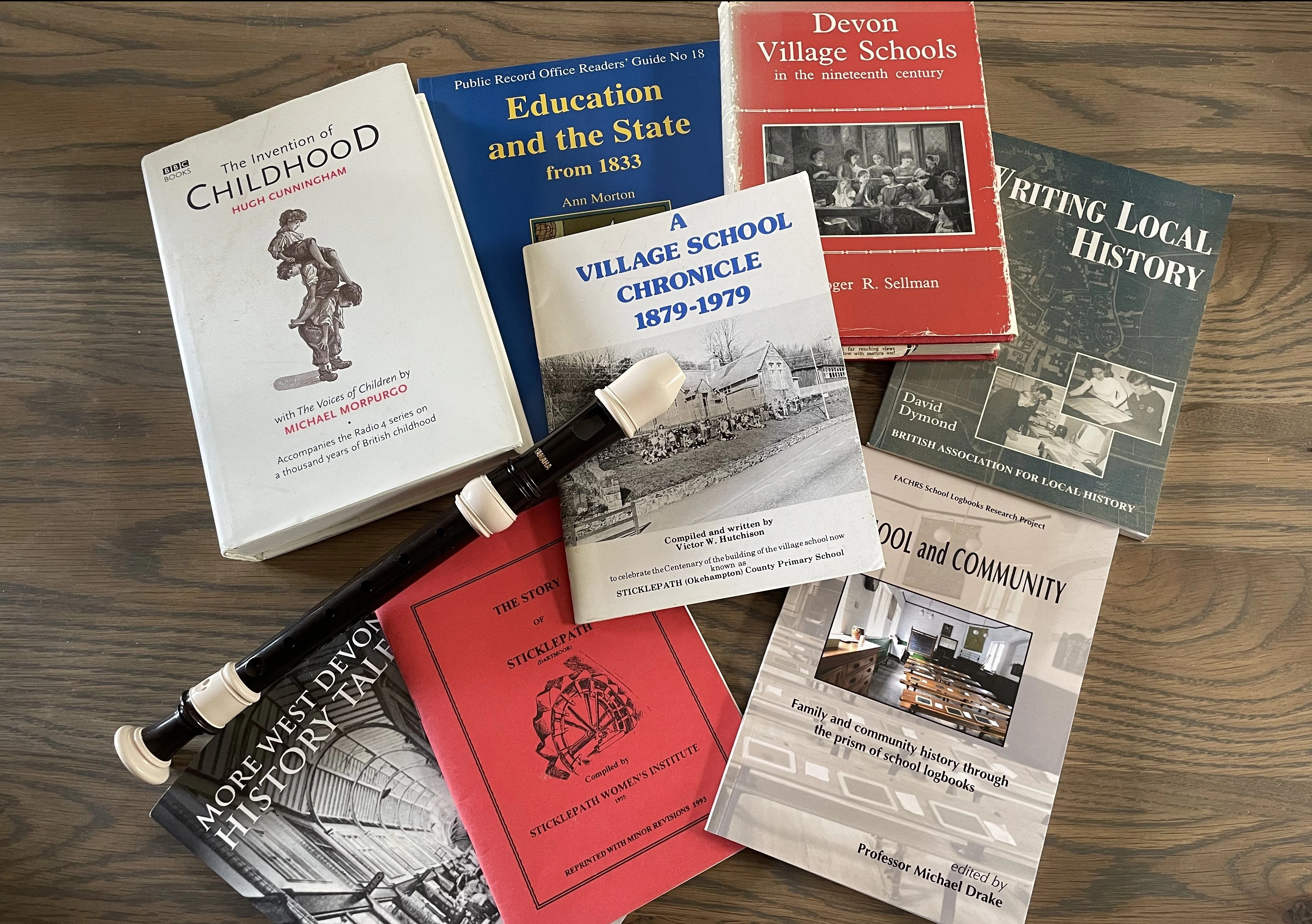
A Village School Chronicle 1879-1979 by Victor W Hutchison forms the backbone of my information about Sticklepath school, supplemented where possible by other sources. We rely on the British Newspaper Archive for early reports of the school.

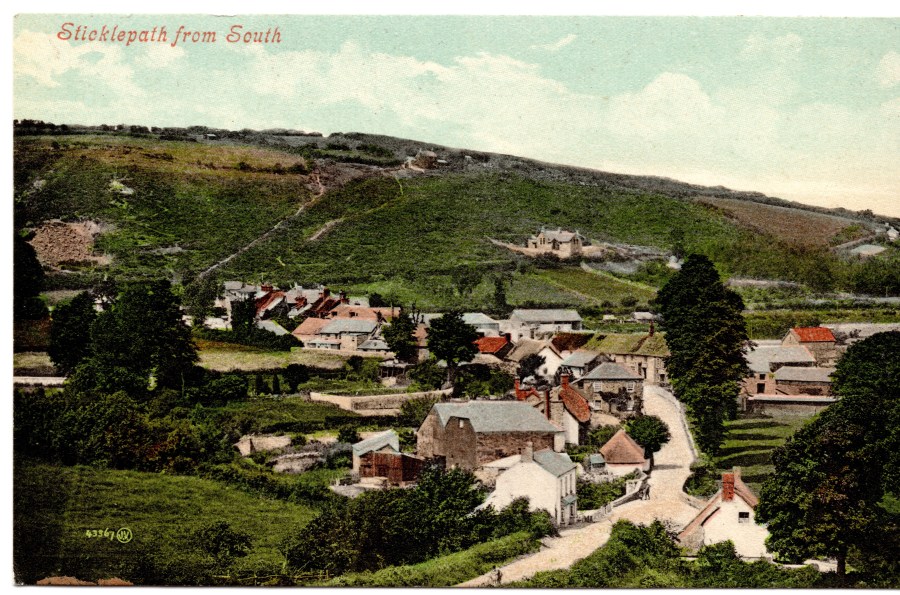
Chapman postcard of Sticklepath School

Following the Forster Education Act of 1870 each district was obliged to set up a school board with the power to build any “Elementary Schools” required in its district. The money was raised through local rates and in addition parents were required to pay nine pence (9d) per week for each child, except the very poor.

Kelly’s Directory tells us “A school board of five members was formed in 1874 for the united district of Sampford Courtenay and Honeychurch with Belstone contributory with two members”. Sampford Courtenay Parish included Sticklepath but Sticklepath village was 5 miles from the Parish church. Sampford Courtenay village already had a voluntary school which was taken over (1). A new school was needed in Sticklepath for the children of the village and of Belstone. Children still needed to walk 3-4 miles from surrounding farms or across the moor to get to school.

Chapman postcard showing Sticklepath School on the lefthand side of the road part way up the hill

The conveyance of the site for Sticklepath School, dated 18 April 1878, is signed by George Underhill Wills, who was the closest we had to Lord of the Manor. The site is up on the hill to the West of the main houses of the village street. The school was built in the following year to accommodate 80 children.

The following year 1880 the Mundella Education act made it compulsory for children to attend school from age 5 to 10.
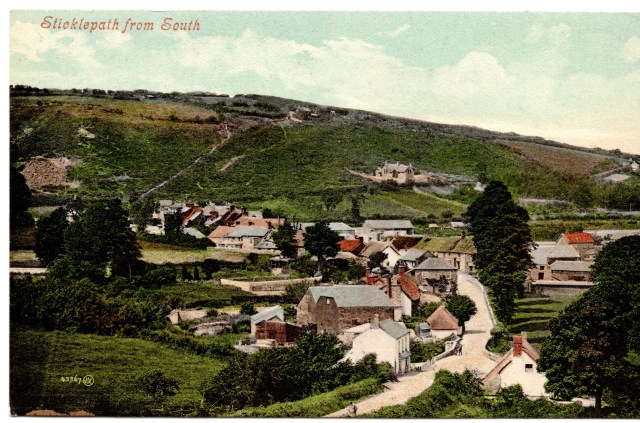
Chapman postcard from the far side of the village showing Sticklepath School up on the hillside (just to right of midline)

A headteacher was needed. We can find the advertisement in The Western Times – Friday 20 June 1879

SAMPFORD COURTENAY AND HONEYCHURCH, WITH BELSTONE, SCHOOL BOARD.

WANTED immediately a CERTIFICATED MASTER for a mixed school at Sticklepath for 80 children.

Applications, stating certificates held and salary required,

with testimonials and Inspectors’ reports,

to be sent on or before the 24th inst., to ROBERT FULFORD, Clerk.

North Tawton, North Devon. 11th June, 1879.

Whilst no school records have been found, we know Mr John Arbory was appointed as he is listed in newspapers as attending the Devonshire Union of School Teachers from Sticklepath alongside William Manuell of Sampford Courtenay (for example The Western Times of Monday 14 June 1880). There is also mention of the school inspector’s report:

Western Times – Thursday 30th September 1880

Sticklepath Board School.—The Report of Her Majesty’s Inspector on this school has just come to hand The Inspector reports as follows :— “The buildings are remarkably nice and are well furnished, and the school has made a very satisfactory start. The order of the scholars and their instruction are creditable.” Mr. John Arbory, late of Prince Town is the master. ‘

4 years after the school opened Mr Arbory is moving on:

Western Times – Friday 02 November 1883. STICKLEPATH.

PRESENTATION. An event of a very interesting character occurred Saturday evening, when a crowded meeting was held, W. W. Symington, Esq. J.P., in the chair, for the purpose of presenting Mr. John Arbory, the schoolmaster, with an elegant dressing case and set of gold studs and sleeve links, on the occasion of his leaving the town to take the post of schoolmaster in her Majesty’ convict prison, Chatham.

Mr. Arbory has done duty in Sticklepath for four years, and is held in high esteem by all with whom he has been brought in contact. Mr. Symington remarked that Mr. Arbory was leaving the neighbourhood to the regret of the inhabitants of the district after four years service. During this time the children of the school had made great progress in their studies, and the report of the inspectors was highly satisfactory each year.

Mr. Arbory had outside his school duties won the esteem of the whole neighbourhood by his honourable and upright character in private life. He wished to convey to him the hearty wishes of all the village for his future welfare. Mr. Arbory, accepting the presents and returning thanks, remarked that ha had spent four happy years amongst them. He was surprised to find himself in such a position, as he could not think of anything, he had done to call forth such a warranty of the good feeling existing towards him. A hearty vote of thanks to the chairman brought the meeting to a close

Vacancy has arisen. Who will fill Mr Arbory’s shoes?

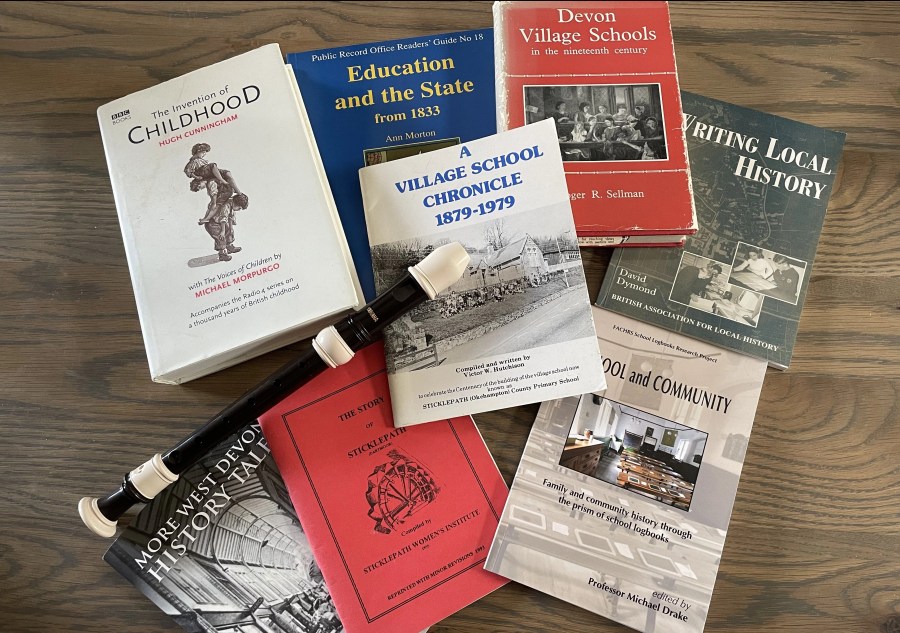
  1. Sellman, Roger Devon Village Schools in the nineteenth century 1967 Latimer Trend & co.
More School Sources

Depending on the school there may be a wikipedia page or for current schools the school website. Some schools still store their old documents and especially old school magazines.

Peter Higginbotham’s Children’s Homes website covers many types of school set up to look after paupers and criminals, check under “All About…” on the left hand side menu, or search for a specific school. Check out this short video for how to explore the website and the range of information shown.

One-Place Studies (OPSs) may have detailed information about a school and its pupils and teachers. Some OPSs focus entirely on the school – for example this study of an orphan school in Hull

Check out some blogs eg Children in Victorian Times, this one on Schooldays or short videos, consider visiting local museums with a focus on education to get an idea of the desks and equipment used in the past.

Newspapers add colour and many different types of information regarding events, fund raising, absences, advertisements for teachers or other staff, regional teachers meetings, retirements, marriages of women teachers (which usually meant they stopped work), appointments of governors or managers, awards won, scandals, changes to the buildings. etc.

The National Archive and county or more local archives may well have more specific advice leaflets regarding how to research the school and teachers in their area and sources available.

The Modern Records Centre, University of Warwick, houses teacher’s union resources and National Union of Students information. Remember to check nearby University Archives too.

There is also a register of teachers 1914-1948

What you really want, are school admission registers, punishment books and minutes. These are usually found in the archives. There its usually a ban on accessing those records for 96-100 years.

More specific information about Sticklepath School follows …

Preparing to Tell Tales of Sticklepath School

Auntie Kate is gearing up to tell you a bit about Sticklepath Board School at the #AllAboutThatPlace Event (26th Sept at 12 non BST and available for the following 2 weeks, subscribe for free to find out about the 130 free talks). So today we are starting to think about how to investigate a school. My experience is of board schools in England, which were established around the 1870s.

Where do you start when investigating a school? Here are some suggestions:

“Explore Your Genealogy” has some useful background to schools in England. Lots of other good links here too but scroll on down to “Exploring Education Records” right at the bottom.

This recent blog from My Heritage tells you something of schools around the world (and demonstrates photo enhancement for school photographs).

For a fantastic timeline re: education (UK) see Gillard D (2018) Education in the UK: a history www.education-uk.org/history

Libraries and online sellers may have local leaflets with information about your school. Since English board schools were all built around the same time, those that survived celebrated a centenary around the 1970s and you could be lucky to have a publication like Sticklepath’s “A Village School Chronicle 1879-1979”. Other local history booklets might include the school. Look for those covering the districts or county and perhaps even national too.

Trade directories give a fantastic insight into a place. Many are available through the University of Leicester Special Collections – the introduction to the place often states the school’s name, the teachers, perhaps secretary, and even pupil attendance numbers. Average attendance, not numbers of pupils who should be attending was a vital statistic as it formed the basis of the school’s funding.

People love talking about their school and time spent there. IF you live locally make some enquiries. Otherwise local Facebook groups can be very informative. When it comes to writing it up there is plenty of advice. Often smells and sounds evoke memories, and start to engage the reader or listener – the school bell or recorder lessons for example. The smell of poster paint or taste of non-refrigerated full cream milk. What would the hit the senses in your school at that time?

Reading how others have written is also a great way to get ideas of what you like. “The Few Forgotten Women” have looked at some records and researched pupils who were at the Leeds Girls Industrial School and The Mount School in York, and looked at Teachers from Crewe Training College . Do read a few stories. Reading around the topic not only demonstrates what can be found and perhaps sparks some ideas of new sources you could look for, but you start to get a feel for what was usual at that time and place and how your research demonstrates the norm or was exceptional.

IF you are not familiar with options for collaborative genealogy research do explore their website further and learn about the Friday Research days.

Wider reading about childhood and how that has changed can also be informative. Children should be seen and not heard? The changing expectations of children working or earning their keep. Differences between social classes.

Academic articles can give a different perspective too. The Family and Community Historical Research Society have covered many topics in their projects too, encompassing a wide range of researchers.

For a much more detailed insight check out this course from Pharos Tutors. Highly recommended by many amateur and professional genealogists.

Today’s challenge is, of course, to check out some of the links above and think about the educational institutions in your place of interest. More sources follow