
Auntie Kate is gearing up to tell you a bit about Sticklepath Board School at the #AllAboutThatPlace Event (26th Sept at 12 non BST and available for the following 2 weeks, subscribe for free to find out about the 130 free talks). So today we are starting to think about how to investigate a school. My experience is of board schools in England, which were established around the 1870s.
Where do you start when investigating a school? Here are some suggestions:
“Explore Your Genealogy” has some useful background to schools in England. Lots of other good links here too but scroll on down to “Exploring Education Records” right at the bottom.
This recent blog from My Heritage tells you something of schools around the world (and demonstrates photo enhancement for school photographs).
For a fantastic timeline re: education (UK) see Gillard D (2018) Education in the UK: a history www.education-uk.org/history
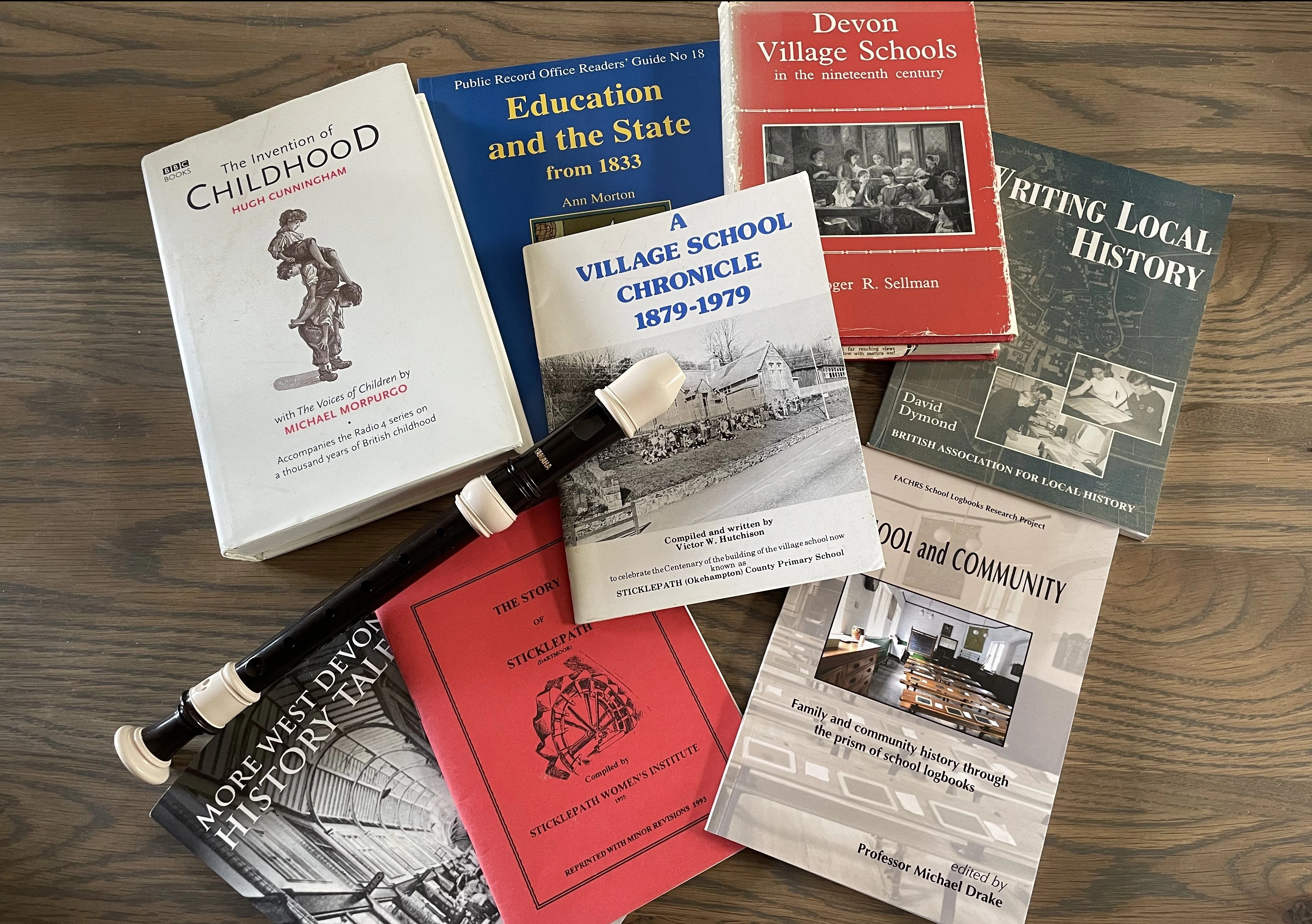
Libraries and online sellers may have local leaflets with information about your school. Since English board schools were all built around the same time, those that survived celebrated a centenary around the 1970s and you could be lucky to have a publication like Sticklepath’s “A Village School Chronicle 1879-1979”. Other local history booklets might include the school. Look for those covering the districts or county and perhaps even national too.
Trade directories give a fantastic insight into a place. Many are available through the University of Leicester Special Collections – the introduction to the place often states the school’s name, the teachers, perhaps secretary, and even pupil attendance numbers. Average attendance, not numbers of pupils who should be attending was a vital statistic as it formed the basis of the school’s funding.
People love talking about their school and time spent there. IF you live locally make some enquiries. Otherwise local Facebook groups can be very informative. When it comes to writing it up there is plenty of advice. Often smells and sounds evoke memories, and start to engage the reader or listener – the school bell or recorder lessons for example. The smell of poster paint or taste of non-refrigerated full cream milk. What would the hit the senses in your school at that time?
Reading how others have written is also a great way to get ideas of what you like. “The Few Forgotten Women” have looked at some records and researched pupils who were at the Leeds Girls Industrial School and The Mount School in York, and looked at Teachers from Crewe Training College . Do read a few stories. Reading around the topic not only demonstrates what can be found and perhaps sparks some ideas of new sources you could look for, but you start to get a feel for what was usual at that time and place and how your research demonstrates the norm or was exceptional.
IF you are not familiar with options for collaborative genealogy research do explore their website further and learn about the Friday Research days.
Wider reading about childhood and how that has changed can also be informative. Children should be seen and not heard? The changing expectations of children working or earning their keep. Differences between social classes.
Academic articles can give a different perspective too. The Family and Community Historical Research Society have covered many topics in their projects too, encompassing a wide range of researchers.
For a much more detailed insight check out this course from Pharos Tutors. Highly recommended by many amateur and professional genealogists.
Today’s challenge is, of course, to check out some of the links above and think about the educational institutions in your place of interest. More sources follow…

 Sticklepath a Village and its People
Pingback: Follow up from Auntie Kate’s Talk #AllAboutThatPlace 2023 – Sticklepath a Village and its People